
During a process audit of a pharmaceutical packaging line, an auditor pulls a batch record completed six months ago and notices a tolerance limit that differs from the current work instruction posted at the station today. What should the auditor verify first?
Select an answer to reveal the explanation.
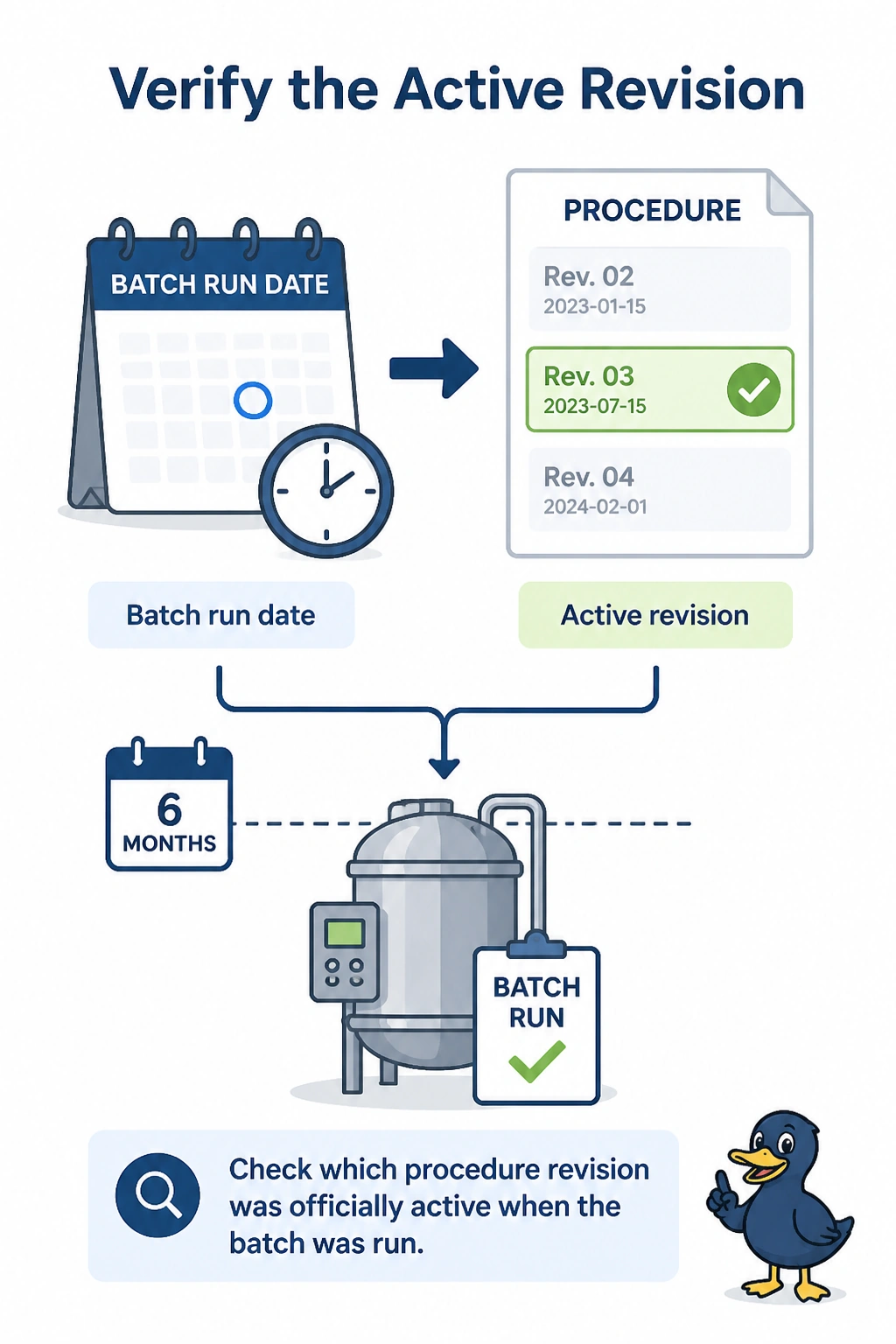
Short Explanation
Judging a six-month-old batch against today's newly revised spec is like ticketing a driver for yesterday's speed limit change. You have to check which controlled revision was actually in force on the day the work happened. The trap is assuming the current posted instruction has always been the rule.
Full Explanation
Fair and accurate record verification requires the auditor to Check which procedure revision was officially active when the batch was run. Processes evolve through controlled engineering changes, so a historical batch record must be evaluated against the authorized specification and work instruction in effect on its production date. Choosing to Issue an immediate nonconformity because every past batch must match today's revision applies current criteria retroactively and risks writing a false finding. Choosing to Ask the line operator to update the six-month-old batch record to match current limits would promote falsification of historical quality records. Choosing to Judge the old batch against the work instruction posted at the station today and cite every difference applies today's posted instruction retroactively and ignores document-control effective dates. One caveat is that if the procedure was revised because of a safety or regulatory defect, the auditor should also check whether affected prior lots were properly evaluated for impact. As a concrete operational check, cross-reference the batch manufacturing date against the document-control revision history log to confirm the exact effective date of the change.
Prefer to study offline? Printable PDF study book + test engine ($7.50, unofficial). These questions stay free here.