
A newly qualified auditor begins a one-day process audit of a circuit-board soldering line by asking for six months of binder logs in a conference room before ever visiting the shop floor. Why should the lead auditor recommend walking the line first?
Select an answer to reveal the explanation.
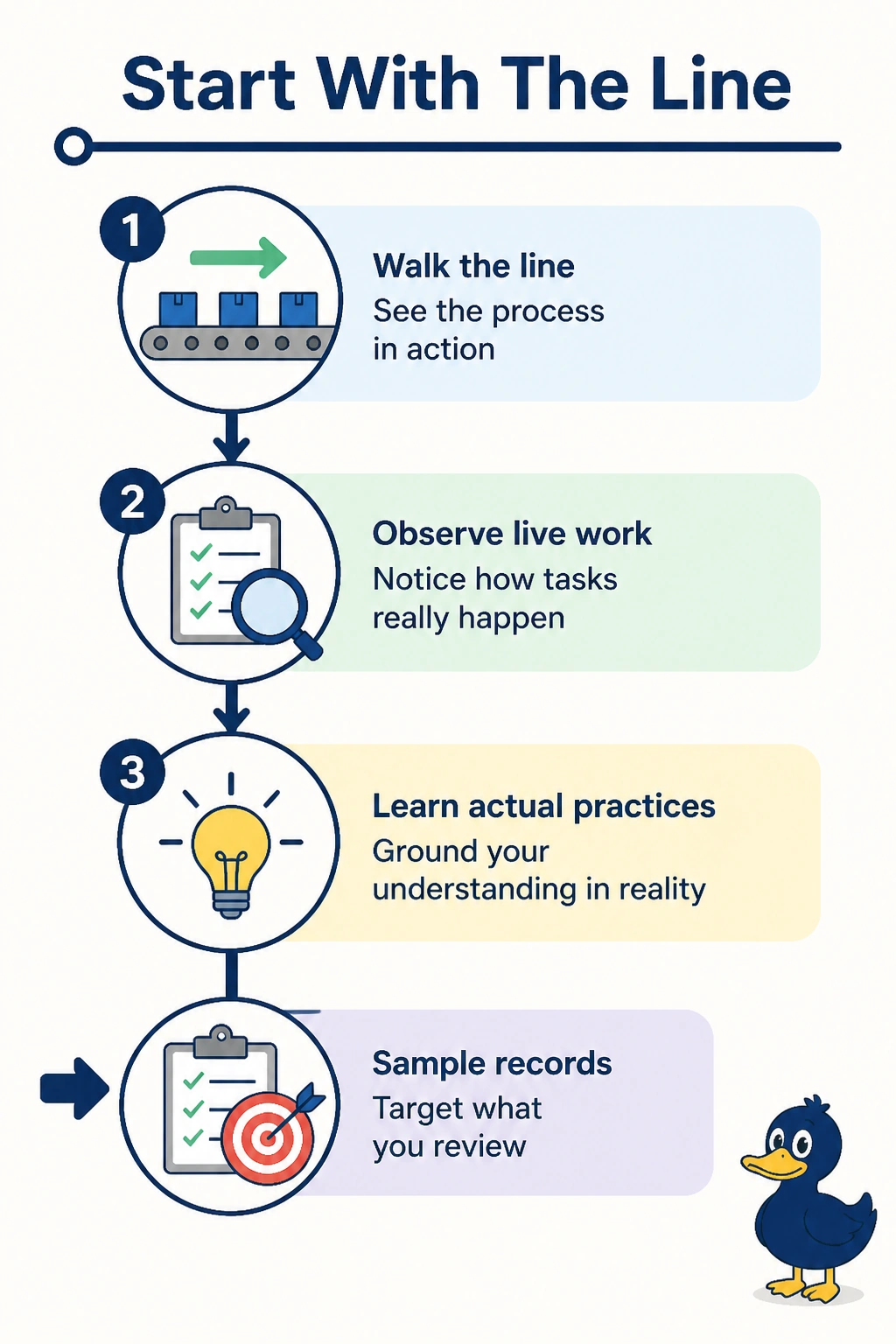
Short Explanation
Reading binders in a conference room before seeing the line is like studying a restaurant menu without peeking into the kitchen. You want to watch how the work actually flows first so you know which records and edge cases to test. The trap is thinking paper tells the whole story on its own.
Full Explanation
Walking the process early anchors the audit in reality rather than theory, because Observing live workflow reveals actual practices and informs targeted record sampling. Seeing how operators handle boards, where workarounds appear, and which stations show bottlenecks lets the auditor select high-value records and ask sharper follow-up questions. The claim that Conference-room document reviews are prohibited once an on-site audit has started is false, since record reviews are a standard part of fieldwork once context is established. The idea that Inspecting physical equipment eliminates the need to verify historical production records fails because live observation only captures a brief snapshot in time and cannot confirm sustained compliance over past batches. The idea that Walking the floor early lets the auditee choose which stations will be sampled fails because sampling decisions must remain with the auditor to preserve independence and avoid bias toward only clean areas. One caveat is that auditors must follow site safety and ESD rules before stepping onto the production floor. As a concrete operational check, note specific machine IDs, work-order numbers, and operator steps during your initial walkthrough so you can pull matching records afterward.
Prefer to study offline? Printable PDF study book + test engine ($7.50, unofficial). These questions stay free here.