
During a process audit of an aerospace fastener line, an operator is using a temporary alternate heat-treat cycle that differs from the standard work instruction. When asked, the supervisor presents an internal temporary deviation form. What should the auditor verify next?
Select an answer to reveal the explanation.
Short Explanation
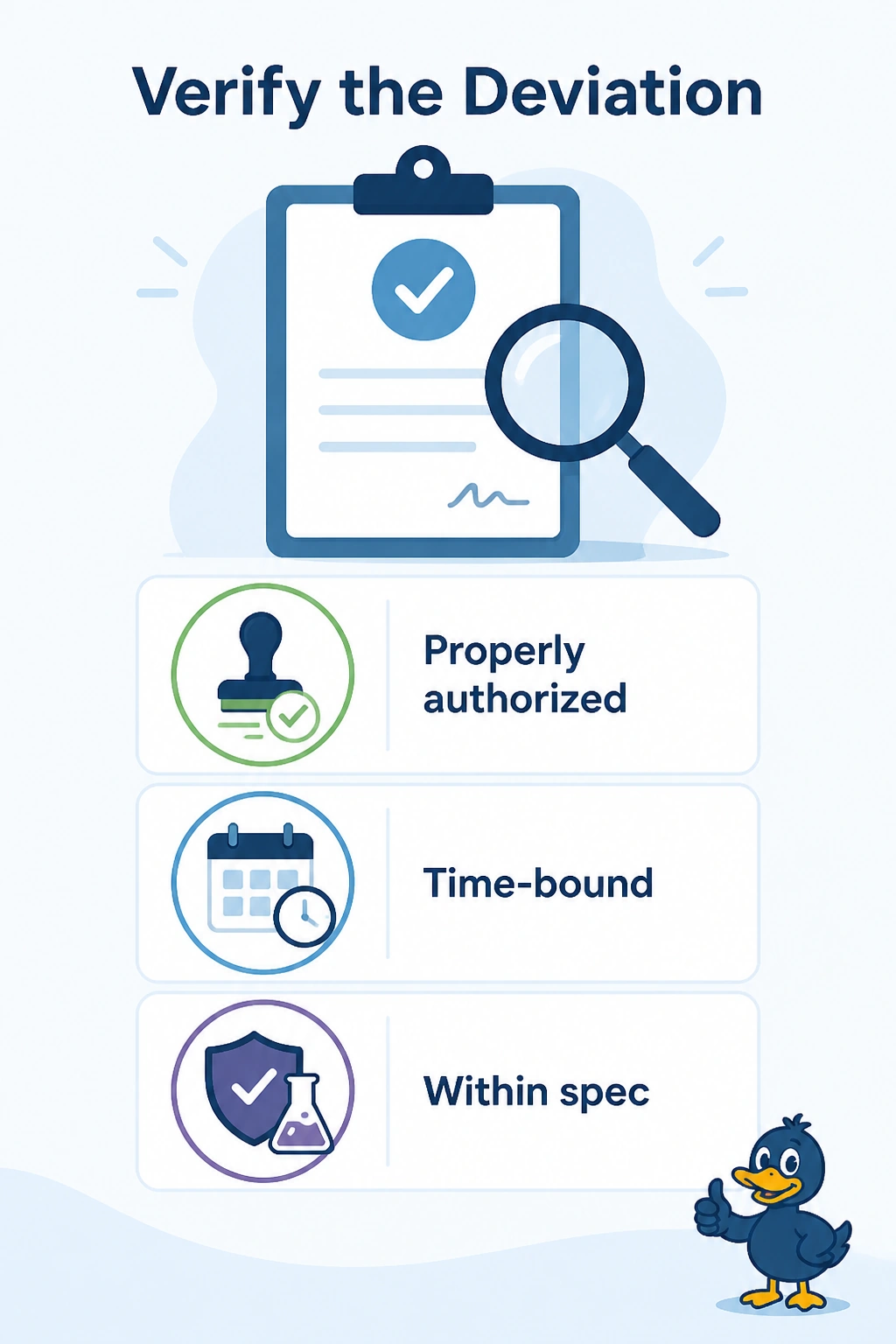
A temporary deviation form is not a free pass to ignore the rules. The trap is taking the form at face value or assuming any deviation is automatically a failure—you must verify that it was properly authorized, remains within its active expiration window, and still meets customer and engineering requirements.
Full Explanation
Controlled temporary deviations are legitimate when governed properly, so the auditor must check Whether the deviation is properly authorized, time-bound, and within spec. Confirming sign-off by the designated engineering or quality authority, an active expiration date, and required customer notification—where applicable—determines whether the practice is compliant or an uncontrolled nonconformity. Accepting Whether the alternate cycle was informally approved by the shift lead verbally fails basic document-control criteria because verbal overrides bypass engineering risk review. Relying on Whether the supervisor promises to retire the deviation after the audit closes ignores whether parts produced today meet requirements and whether the current control is valid. Checking Whether other lines also use undocumented shortcuts during busy shifts may be useful if the deviation turns out to be invalid, but it does not first establish whether this documented deviation is legitimate. As a caveat, an expired deviation still in active use must be recorded as a nonconformity even if it was once properly approved. For an operational check, compare the deviation form's lot range and expiration date against active traveler records on the shop floor.
Prefer to study offline? Printable PDF study book + test engine ($7.50, unofficial). These questions stay free here.