
Two days after an internal audit cites a hospital pharmacy for missed refrigerator-temperature sign-offs, the pharmacy manager installs an automated digital alert and asks the lead auditor to close the finding as verified effective the next morning. How should the lead auditor respond?
Select an answer to reveal the explanation.
Short Explanation
Flipping the switch on a new alarm proves installation, not effectiveness! Your trap here is closing a finding after one quiet morning before staff actually respond to alerts over real shifts. Give the fix enough operating days so you can verify it holds up under pressure.
Full Explanation
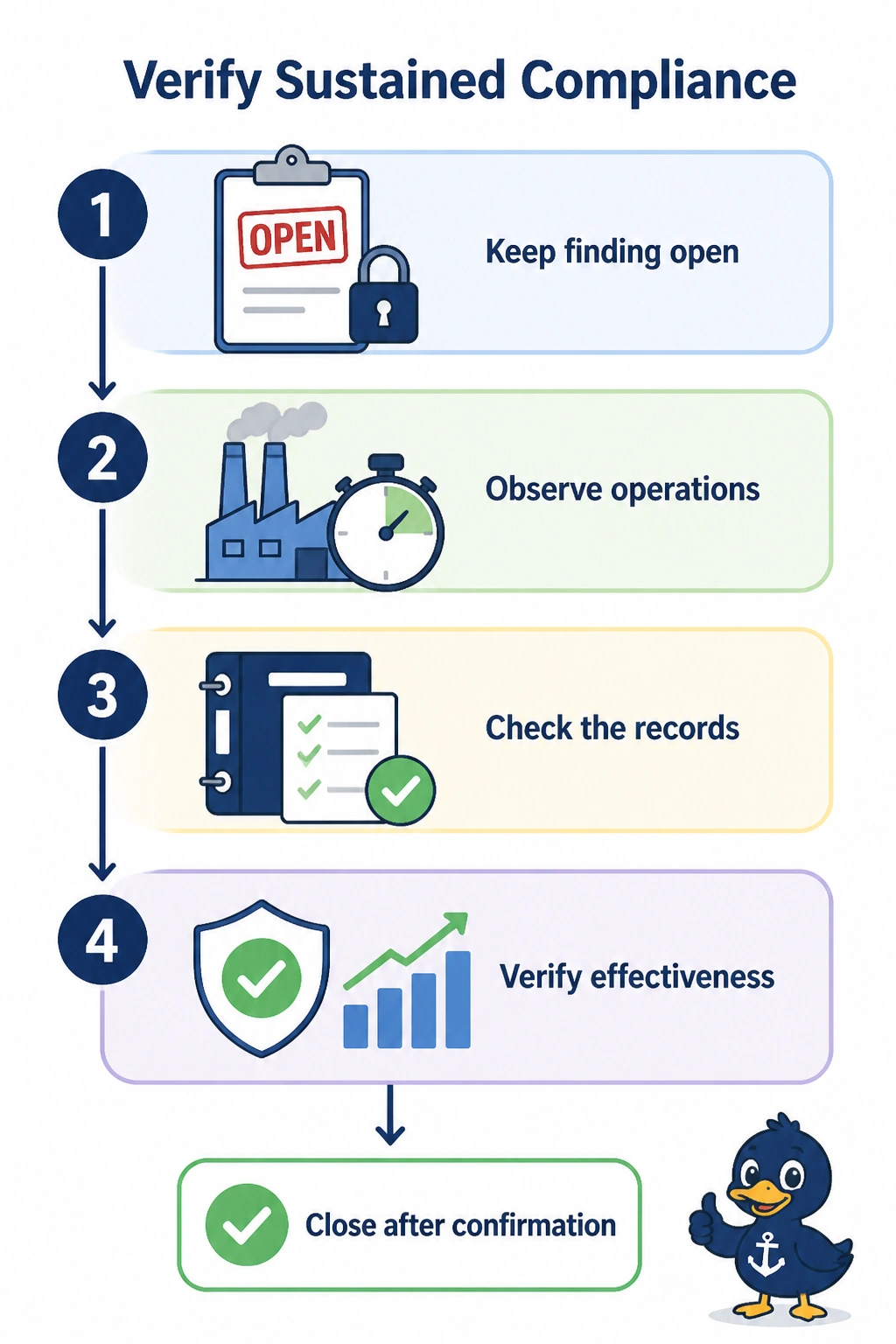
Corrective action closure requires two distinct confirmations: implementation of the fix and sustained operational effectiveness over time. The lead auditor should keep verification open until enough operating days confirm sustained compliance, allowing time to review alert logs, staff escalation responses, and temperature records across multiple shifts. Choosing to close the finding immediately because the digital alert prevents future manual omissions mistakes hardware installation for proven process control, since alarms can still be ignored, muted, or misconfigured. To downgrade the nonconformity to an observation and defer verification until next year's audit leaves a known patient-safety control unverified for months. Deciding to accept a signed memo from the pharmacy manager confirming the digital alert was powered on today relies on an uncorroborated internal statement rather than objective operating evidence. Caveat: the required observation window should match the process risk and cycle frequency—high-frequency daily tasks need fewer calendar weeks than monthly or batch-based processes. As an operational check, define the exact number of consecutive compliant days and alert-response records needed before scheduling the follow-up review.
Prefer to study offline? Printable PDF study book + test engine ($7.50, unofficial). These questions stay free here.