
Sixty days after an internal audit cited a contract electronics assembler for outdated soldering profiles, the quality manager submits a revised work instruction with a new approval date and asks to close the corrective action. Before closing the finding, what must the auditor verify?
Select an answer to reveal the explanation.
Short Explanation
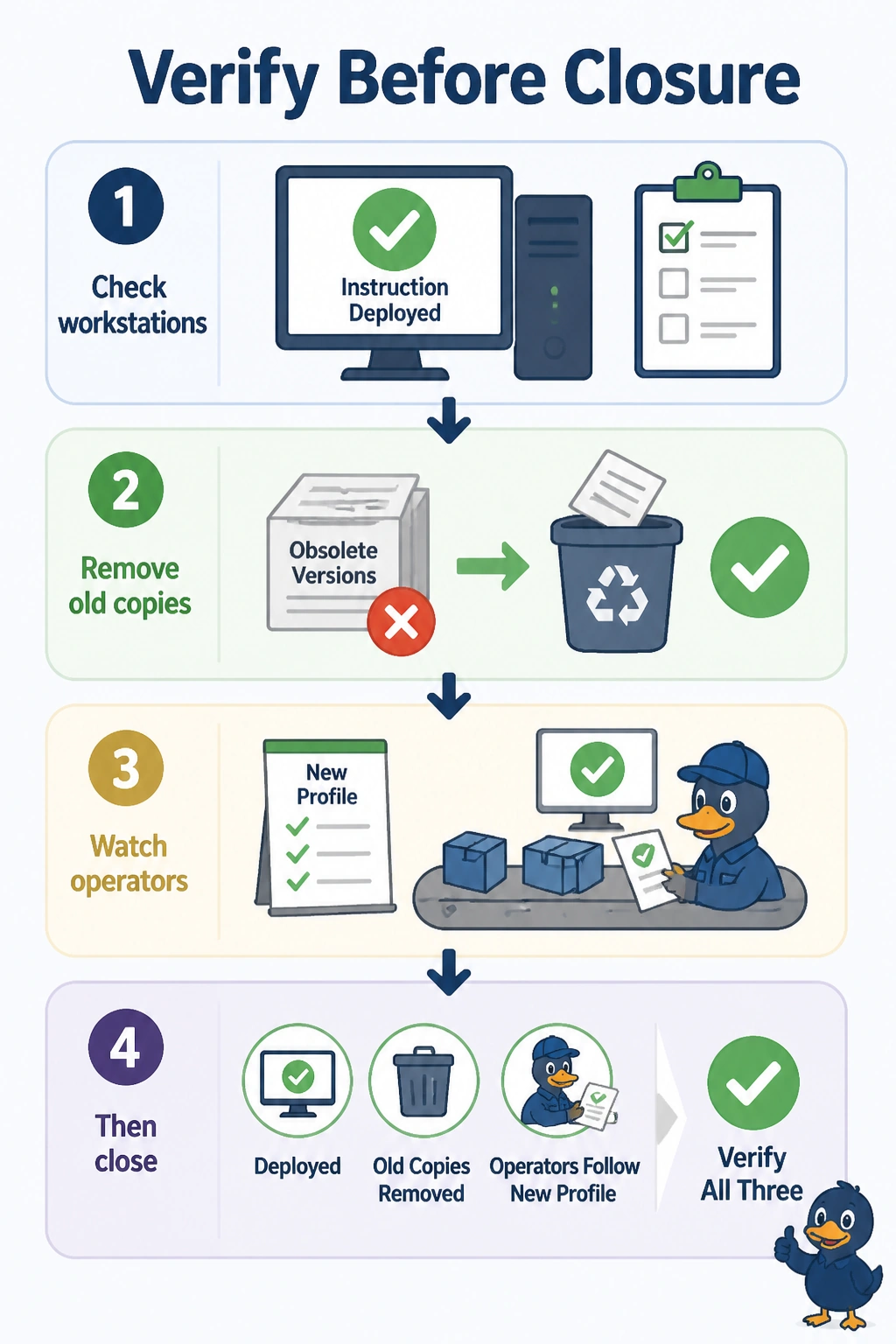
A fresh approval date on a shared document does not fix the soldering process at the bench—you need to verify the new instruction reached the point of use. Before closing the corrective action, check that active workstations have the updated instruction, obsolete copies are removed, and operators follow the new profile.
Full Explanation
Before closing the corrective action, verify that the updated instruction is deployed at active workstations, obsolete copies are removed, and operators follow the new profile. A revised document addresses the root cause only when it reaches the point of use, replaces superseded versions, and results in consistent execution. Confirming that the instruction uses the company’s standard template and has a new number establishes administrative control, but does not show that it was implemented on the shop floor. Checking that the quality manager personally signed the closure form within the thirty-day response window addresses paperwork timeliness, not whether the corrective action works. Confirming that engineering archived the previous revision in an off-site folder supports historical retention, but does not establish that obsolete copies have been removed from assembly benches. As an exam caveat, if the revised profile requires new equipment settings or operator qualification, check the relevant setup and training records as well. As a practical check, inspect the soldering stations directly and compare their posted revision levels with the master document register.
Prefer to study offline? Printable PDF study book + test engine ($7.50, unofficial). These questions stay free here.