
While planning fieldwork for a quality audit of a high-volume contract packager, a junior auditor proposes reviewing a flat 10% of all batch records across every packaging line regardless of product risk or defect history. How should the lead auditor adjust this sampling approach?
Select an answer to reveal the explanation.
Short Explanation
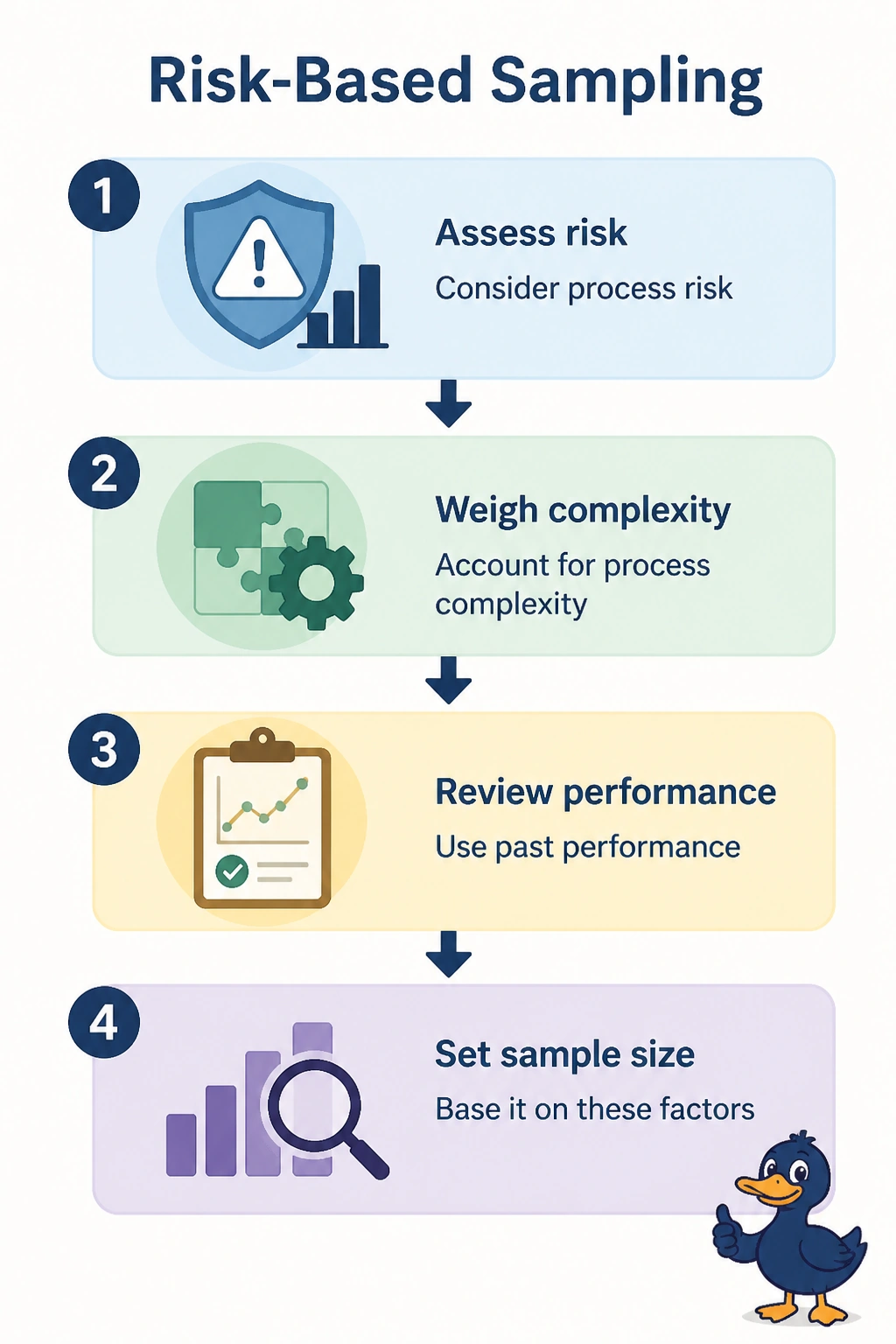
Using a flat 10% rule for every line is like giving every patient the exact same dose of medicine regardless of symptoms. The trap is thinking a fixed percentage guarantees fairness, when you should size samples according to risk, complexity, and past performance.
Full Explanation
Choosing Base sample sizes on process risk, complexity, and past performance rather than a flat rule is sound because risk-based sampling concentrates limited audit hours where errors are most likely or most severe, while avoiding wasted effort on stable, low-risk lines. By contrast, Increase the flat sample to 25% across every line so all shifts receive identical statistical weight still ignores risk differences and can overwhelm the audit schedule on high-volume lines without improving assurance on critical ones. Sample only the single highest-volume packaging line and omit low-volume specialty lines entirely creates blind spots where specialized, infrequently run products often carry higher setup and changeover risks. Ask the packaging manager to pre-select 10% of representative records before the audit team arrives surrenders auditor independence and invites cherry-picking of compliant batches. Caveat: if initial targeted samples uncover unexpected nonconformities, expand the sample size to determine whether the issue is isolated or systemic. As an operational check, document the rationale, population size, and selected identifiers for each line in the audit working papers.
Prefer to study offline? Printable PDF study book + test engine ($7.50, unofficial). These questions stay free here.