
While planning a two-day internal quality audit of a medical-device assembly plant, the lead auditor notices that last year's audit closed three findings on incoming inspection and training records. How should the lead auditor incorporate those prior audit results into the current audit plan?
Select an answer to reveal the explanation.
Short Explanation
Just because a leaky pipe was patched last year does not mean you skip checking under the sink today. You can avoid both ignoring closed findings and assuming they failed again without evidence: build targeted verification into your plan to see whether the fixes still work.
Full Explanation
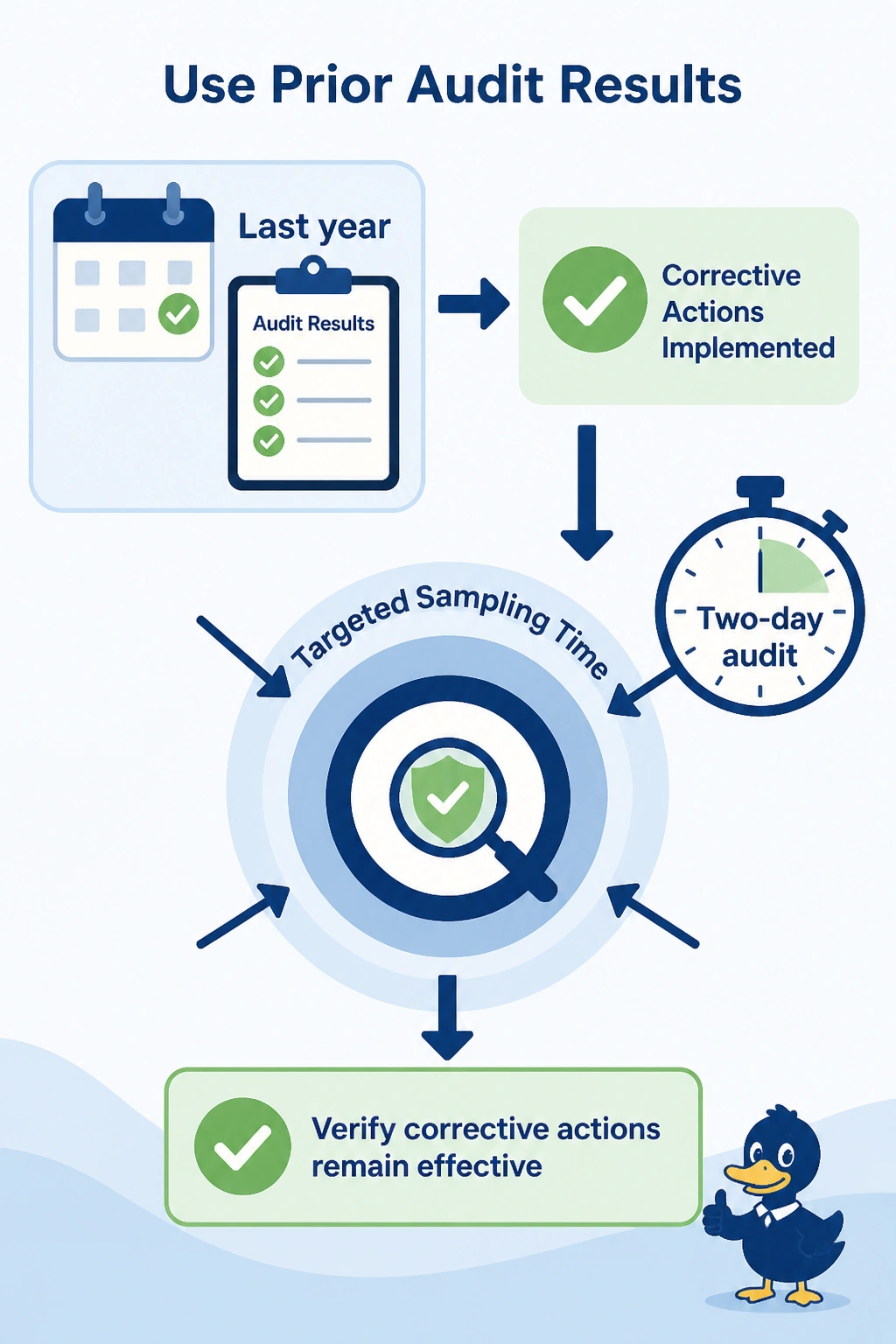
Prior audit results are a primary input to risk-based audit planning because closed corrective actions can drift back into old habits over time. Allocating targeted sampling time to verify that the previously implemented corrective actions remain effective lets you check whether last year’s fixes in incoming inspection and training records are still operating as intended under current conditions. Excluding incoming inspection and training from the current audit plan because those findings were already closed assumes permanent compliance without evidence and leaves known historical weak spots unmonitored. Automatically re-issuing the same nonconformities before fieldwork begins to save time violates objective-evidence principles by creating findings without current observation. Delegating verification of those areas entirely to the department manager via an unverified email confirmation gives up independent audit verification in favor of self-reporting. As a caveat, you should still cover new processes and emerging risks rather than spending the entire audit solely rechecking old findings. As a practical check, review the prior audit report and corrective-action closure records during planning, add targeted follow-up samples to the schedule, and test current records during fieldwork.
Prefer to study offline? Printable PDF study book + test engine ($7.50, unofficial). These questions stay free here.