
A lead auditor is preparing the detailed audit plan for a three-day assessment of a pharmaceutical packaging plant using a four-person audit team. Which criterion should primarily govern how the lead auditor assigns specific departments to each team member?
Select an answer to reveal the explanation.
Short Explanation
Building an audit team schedule is like assigning referees to a tournament—you need people who know the sport and have no stake in the outcome. The trap is prioritizing convenience or manager preferences, when competence and independence must drive every assignment.
Full Explanation
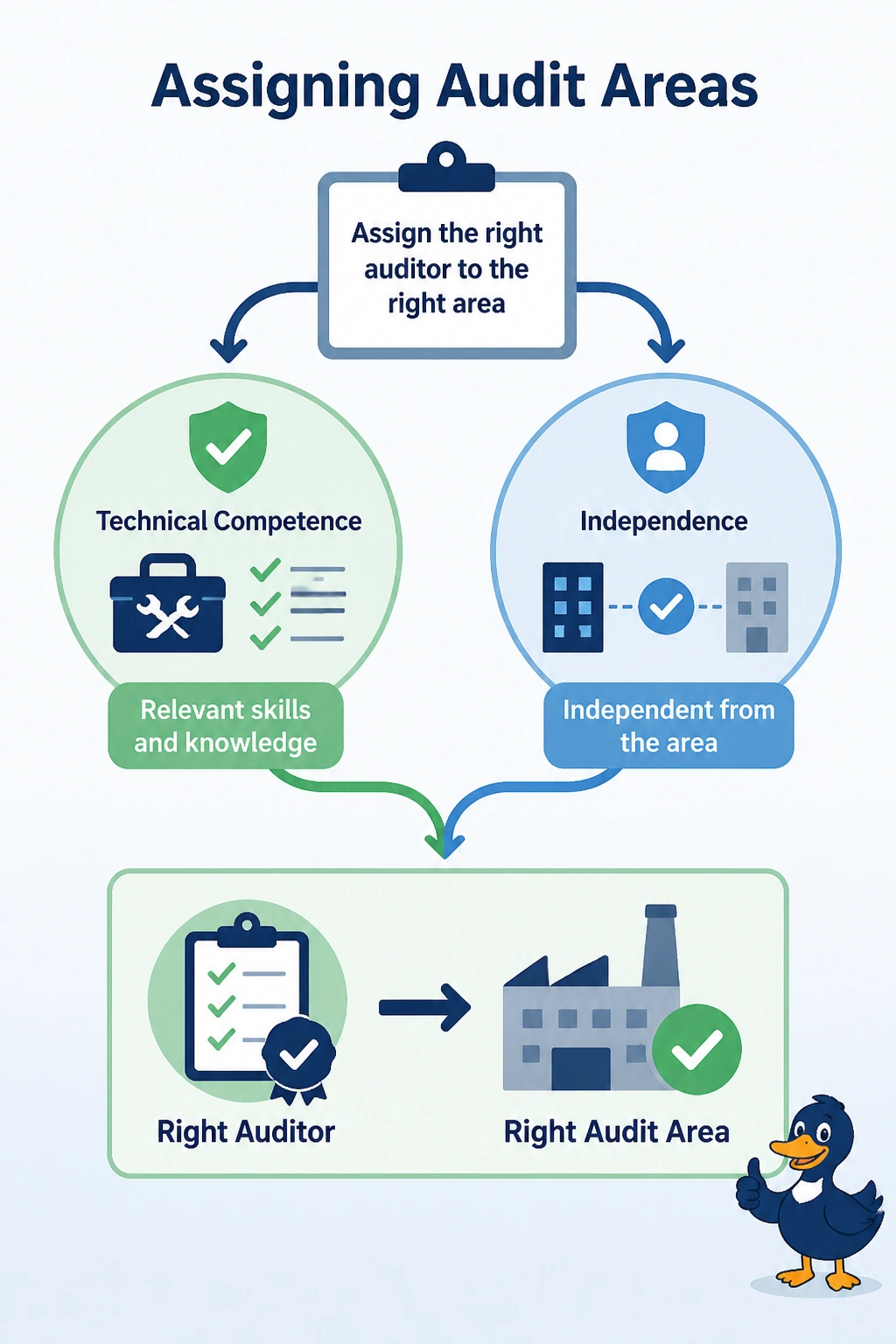
Assigning work based on Each auditor's relevant technical competence and independence from the assigned area ensures the team can accurately evaluate complex technical controls without bias or conflict of interest. Competent, independent auditors ask sharper questions, interpret records reliably, and defend findings objectively. Choosing Rotating all auditors evenly across every department regardless of prior background risks placing an unqualified auditor in a specialized technical area such as sterile validation or automated vision systems, weakening evidence evaluation. Choosing Assigning the most senior auditor to whichever department had the fewest past findings misallocates experienced talent away from higher-risk or historically troubled processes that need deeper scrutiny. Choosing Allowing each department manager to select the auditor they prefer to work with most compromises audit impartiality and creates the appearance or reality of auditee-controlled leniency. Caveat: if no available auditor holds specialized technical knowledge for a complex area, pair a qualified auditor with a technical expert who advises without issuing independent findings. As an operational check, verify conflict-of-interest declarations and training records for every team member before finalizing the audit plan.
Prefer to study offline? Printable PDF study book + test engine ($7.50, unofficial). These questions stay free here.