
During a scheduled second-party audit of a contract sterilizer, the site quality manager refuses to let the auditor inspect the previous quarter's biological-indicator failure log, citing internal legal review. What should the auditor do next?
Select an answer to reveal the explanation.
Short Explanation
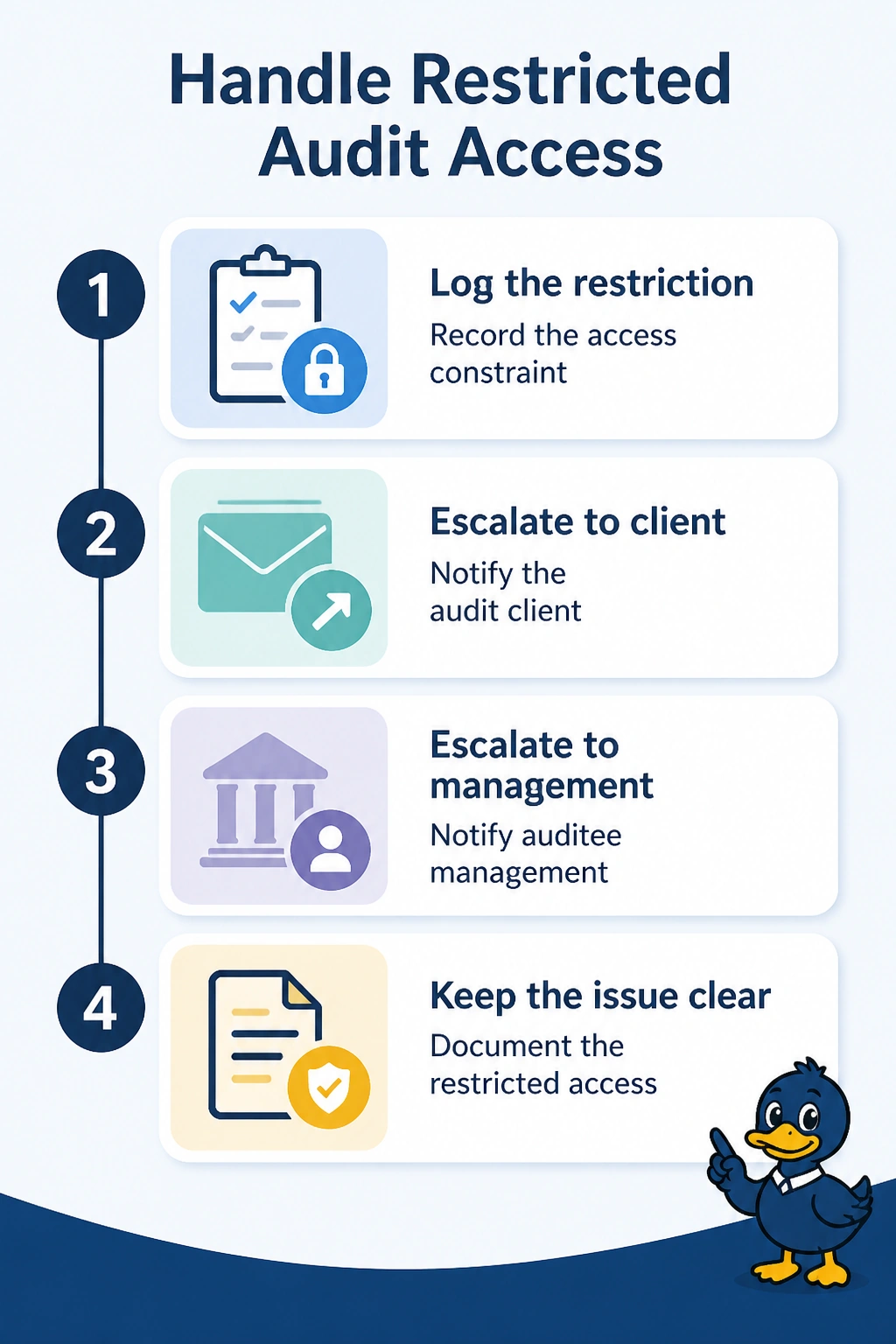
When an auditee locks the door on key evidence, you cannot just guess what is behind it or quietly skip past it. Your job is to record the barrier clearly and escalate it to the people who commissioned the audit rather than improvising a verdict.
Full Explanation
When access to required evidence is denied, the right response is to Document the access restriction as an audit constraint and escalate it to the audit client and auditee management. Recording the scope limitation preserves transparency so the audit client can decide whether to resolve access, reschedule, or restrict reliance on the audit conclusions. Choosing to Bypass the log and issue a clean report based only on available batch records misleads stakeholders by implying full verification where critical safety evidence was never examined. Deciding to Treat the refusal as an automatic major nonconformity without notifying the audit client confuses an unresolved scope constraint with verified evidence of a process failure, even though the client holds authority over scope changes and contractual access. Opting to Close the audit immediately and leave the facility before completing remaining interviews prematurely abandons other planned audit areas that can still yield valid evidence. As a caveat, if the restriction affects a regulatory or safety-critical area, the client may still require a targeted follow-up once legal holds clear. In practice, log the exact record title, time, and stated reason for refusal in your notes, then inform the auditee's senior representative and the audit client before the closing meeting.
Prefer to study offline? Printable PDF study book + test engine ($7.50, unofficial). These questions stay free here.