
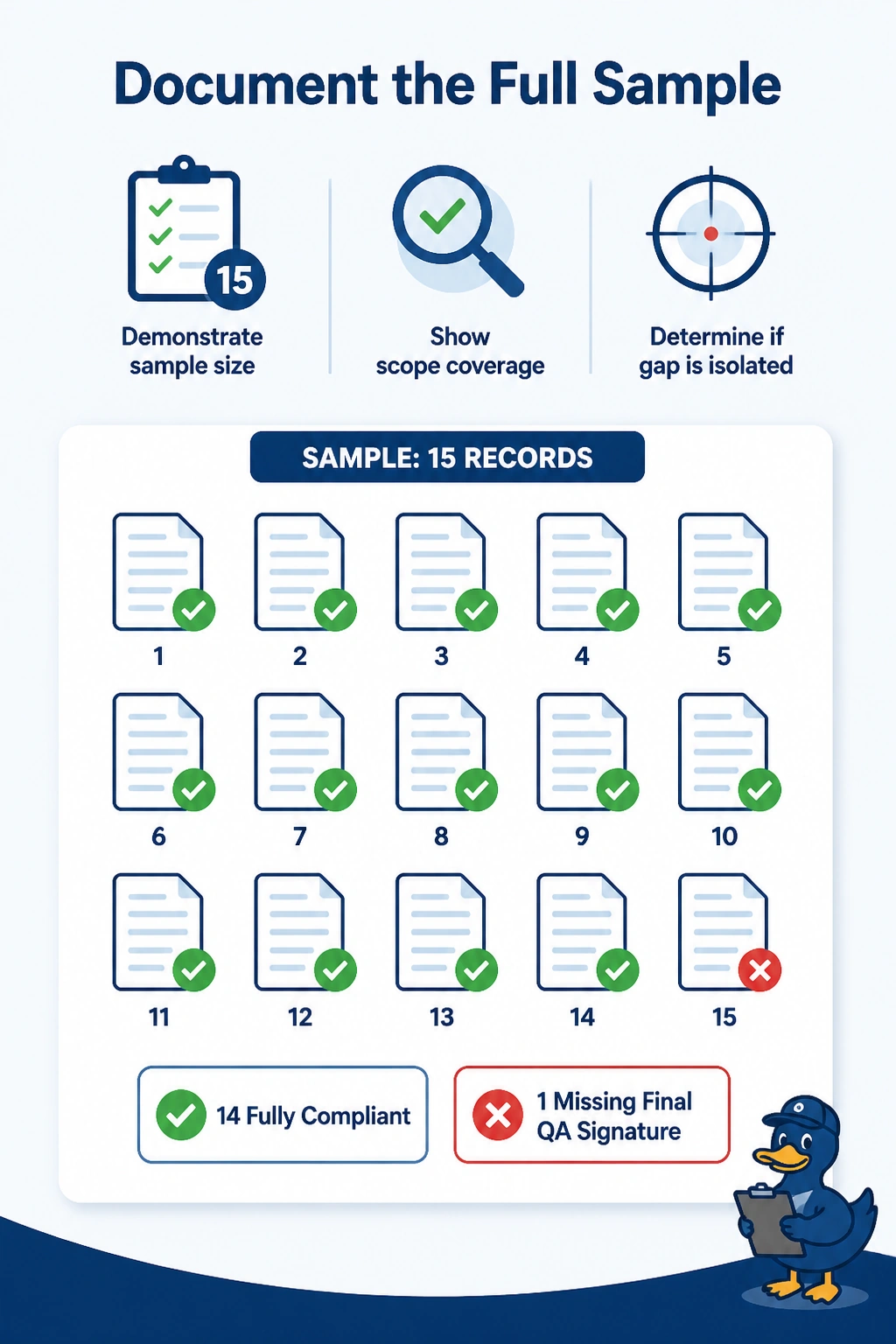
While auditing batch-release records at a dietary-supplement plant, an auditor reviews fifteen records, finds fourteen fully compliant and one missing a final QA signature, and writes notes only for the single defective record. Why should the auditor also log identifiers for the fourteen compliant records?
Select an answer to reveal the explanation.
Short Explanation
Recording only the bad batch is like a referee writing down fouls without noting how many minutes were played. If you skip logging the compliant records you checked, no one can tell whether one error came from two samples or two hundred.
Full Explanation
Auditors log identifiers for compliant samples To demonstrate sample size, scope coverage, and whether the gap is isolated. Documenting every record examined—both conforming and nonconforming—establishes an objective audit trail that supports finding severity and proves the planned area was actually tested. Claiming the notes exist To prove that the facility deserves an exemption from future annual audits is incorrect, because compliant samples during one audit never eliminate ongoing risk-based oversight. Expecting those entries To replace the need for issuing a formal nonconformity on the single missing signature misunderstands audit reporting, since verified breaches of required controls still must be documented regardless of overall pass rate. Assuming the practice is meant To allow the auditee to select which records appear in the final executive summary violates auditor independence, as the audit team controls evidence selection and reporting. As a caveat, record only non-confidential identifiers such as lot numbers or record IDs in working papers rather than copying sensitive personal or proprietary data. Before closing fieldwork, review your sampling notes to verify that every audited requirement shows both the total sample examined and the specific record IDs checked.
Prefer to study offline? Printable PDF study book + test engine ($7.50, unofficial). These questions stay free here.