
During an on-site audit of a commercial bakery, an auditor observes an unsealed allergen-ingredient bin left open next to a non-allergen mixing line. The line supervisor immediately seals and labels the bin while the auditor watches. How should the auditor handle this observation?
Select an answer to reveal the explanation.
Short Explanation
Watching a spill get mopped up does not tell you why the pipe leaked in the first place. The trap is letting a quick on-the-spot fix erase an audit finding, which hides recurring control gaps from management review.
Full Explanation
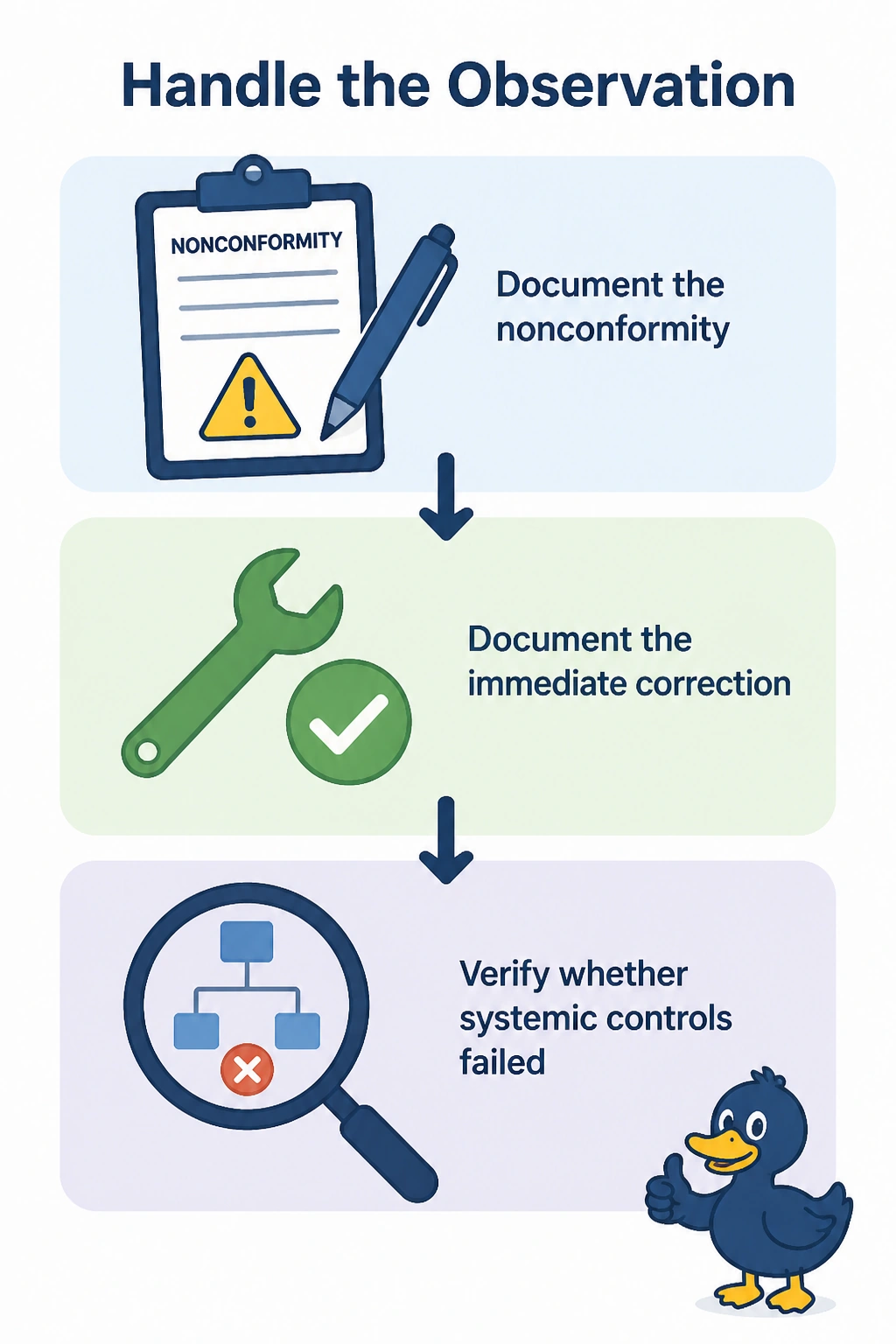
An audit evaluates whether a management system consistently prevents defects, so the auditor should Document the nonconformity and the immediate correction, then verify whether systemic controls failed. Recording both the objective evidence observed and the immediate containment preserves an accurate audit trail while prompting investigation into why the bin was left unsealed. Choosing to Omit the observation from the audit report because the supervisor corrected the condition before the closing meeting fails because hiding resolved lapses prevents root-cause analysis and masks systemic trends. Deciding to Halt the remaining audit schedule immediately and issue a formal stop-work order to the bakery plant manager fails because auditors report findings to management rather than exercising operational line authority to stop production. Choosing to Record only a positive comment praising the supervisor's rapid response without noting any procedural gap fails because it misrepresents a requirement breach as full compliance. Caveat: immediate correction addresses the symptom, not the underlying cause, so a corrective action plan may still be needed. Operational check: log the bin identifier, location, time observed, and immediate action taken, then check adjacent stations to see if open-bin lapses are widespread.
Prefer to study offline? Printable PDF study book + test engine ($7.50, unofficial). These questions stay free here.