
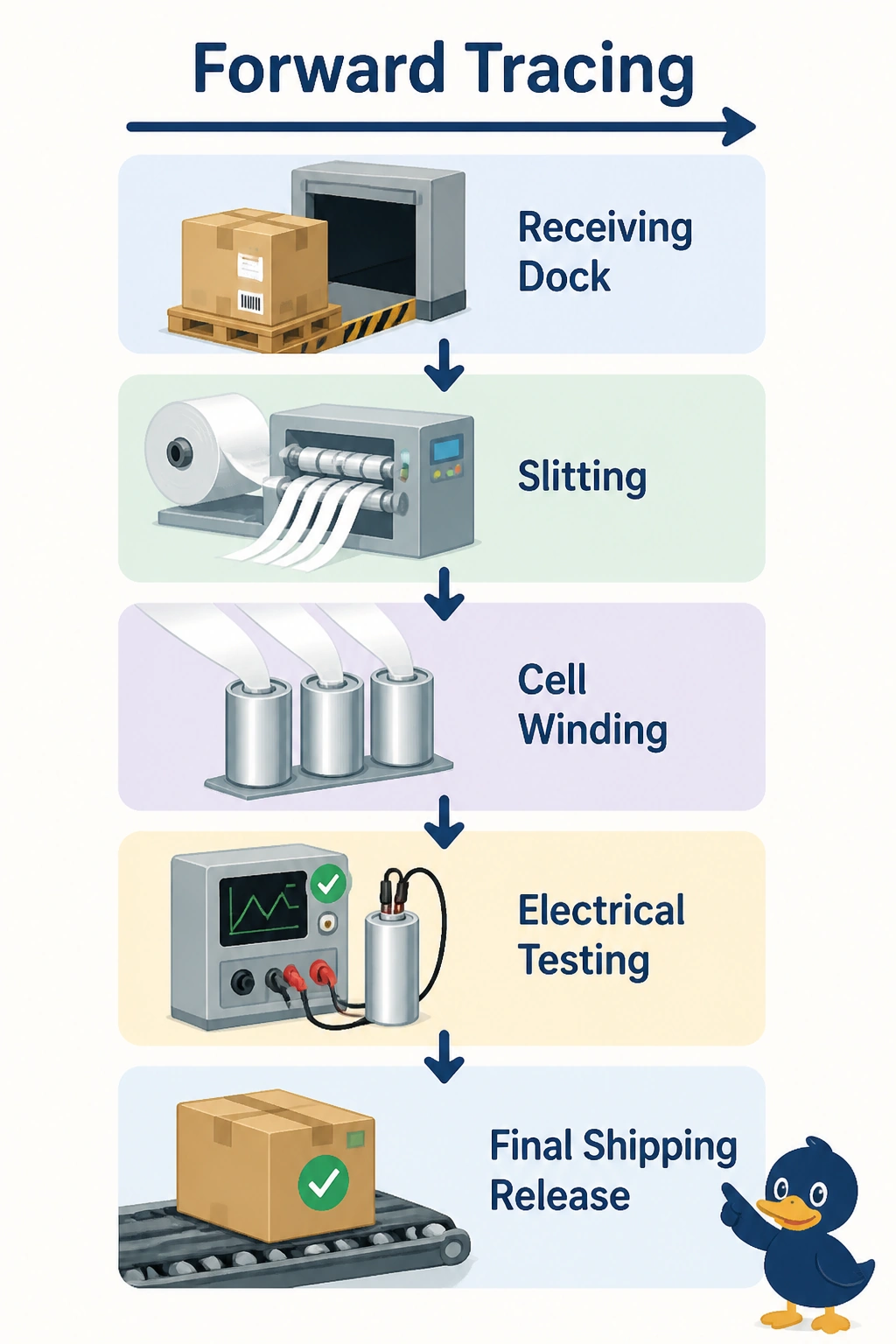
During a process audit of an automotive battery assembly plant, an auditor selects a specific incoming lot of separator film at the receiving dock and follows its documentation through slitting, cell winding, electrical testing, and final shipping release. Which audit technique is the auditor using?
Select an answer to reveal the explanation.
Short Explanation
Following a single lot from receiving to shipping is like riding a package down the conveyor belt so you see every handoff firsthand. The trap is confusing this forward flow with backward tracing, which starts at a finished defect and works in reverse.
Full Explanation
Following a chosen lot chronologically from initial receipt through each manufacturing stage to final release is Forward tracing from input receipt through downstream process controls. Forward tracing tests how well specifications, lot identification, in-process inspections, and release gates function in sequence along the value stream. Selecting Backward tracing from a customer warranty return to raw-material receiving fails because backward tracing moves in reverse from an output or complaint back to upstream inputs. Selecting Desk auditing of unexecuted draft procedures prior to visiting the facility fails because a desk audit reviews written documents off-site rather than tracing physical lots through live operations. Selecting Random acceptance sampling of finished pallets awaiting warehouse dispatch fails because acceptance sampling inspects finished units at a single point without verifying intermediate process linkages. Caveat: forward tracing one lot provides deep vertical evidence of process linkage, so pair it with broader sampling to confirm consistency across shifts. Operational check: record the receiving lot number, verify each downstream traveler sign-off in sequence, and confirm final test release matches.
Prefer to study offline? Printable PDF study book + test engine ($7.50, unofficial). These questions stay free here.