
While auditing a ready-to-eat salad packaging line, an auditor reads a detailed sanitation procedure specifying hourly metal-detector verification checks with certified test wands. What is the strongest way for the auditor to gather objective evidence of compliance?
Select an answer to reveal the explanation.
Short Explanation
A polished procedure on a clipboard never stopped a piece of metal from reaching a salad bag. You need to see the check happen on the floor and match it to real logs. The trap is settling for training summaries or verbal assurances when direct observation is right in front of you.
Full Explanation
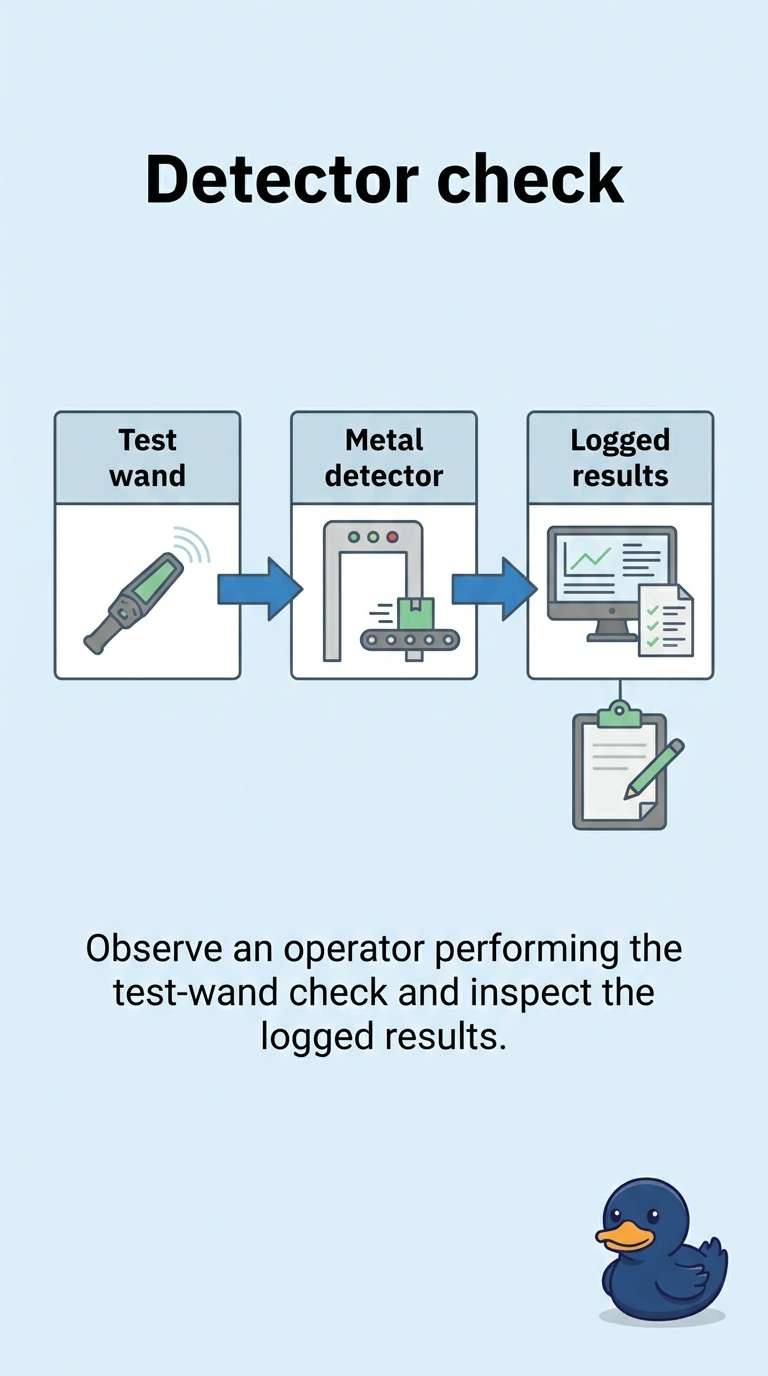
Choosing to "Observe an operator performing the test-wand check and inspect the logged results" combines direct physical observation with record verification, giving the auditor the strongest objective evidence that the control works as written. Watching the test reveals whether the operator uses the correct ferrous, non-ferrous, and stainless-steel wands, verifies reject-arm actuation, and records timestamps accurately. By contrast, "Accept the quality manager's summary of annual sanitation training" only shows that people attended a class, not that hourly checks happen during live production. Similarly, "Verify that the sanitation procedure has a current approval date" confirms document control rather than shop-floor execution. Choosing to "Ask the line lead whether operators usually complete the checks" relies on unverified hearsay and invites an optimistic answer that does not prove hourly compliance. As a caveat, a single live observation can be influenced by the Hawthorne effect, where staff perform more carefully while watched, so historical logs remain essential. During your floor check, match the wand serial numbers you saw in use against calibration records and review several prior shifts of logs for missed intervals.
Prefer to study offline? Printable PDF study book + test engine ($7.50, unofficial). These questions stay free here.