
While auditing a pharmaceutical packaging line, an auditor observes two operators skipping line-clearance sign-offs required by the batch-record SOP. Which element must the auditor include when drafting the formal nonconformity statement?
Select an answer to reveal the explanation.
Short Explanation
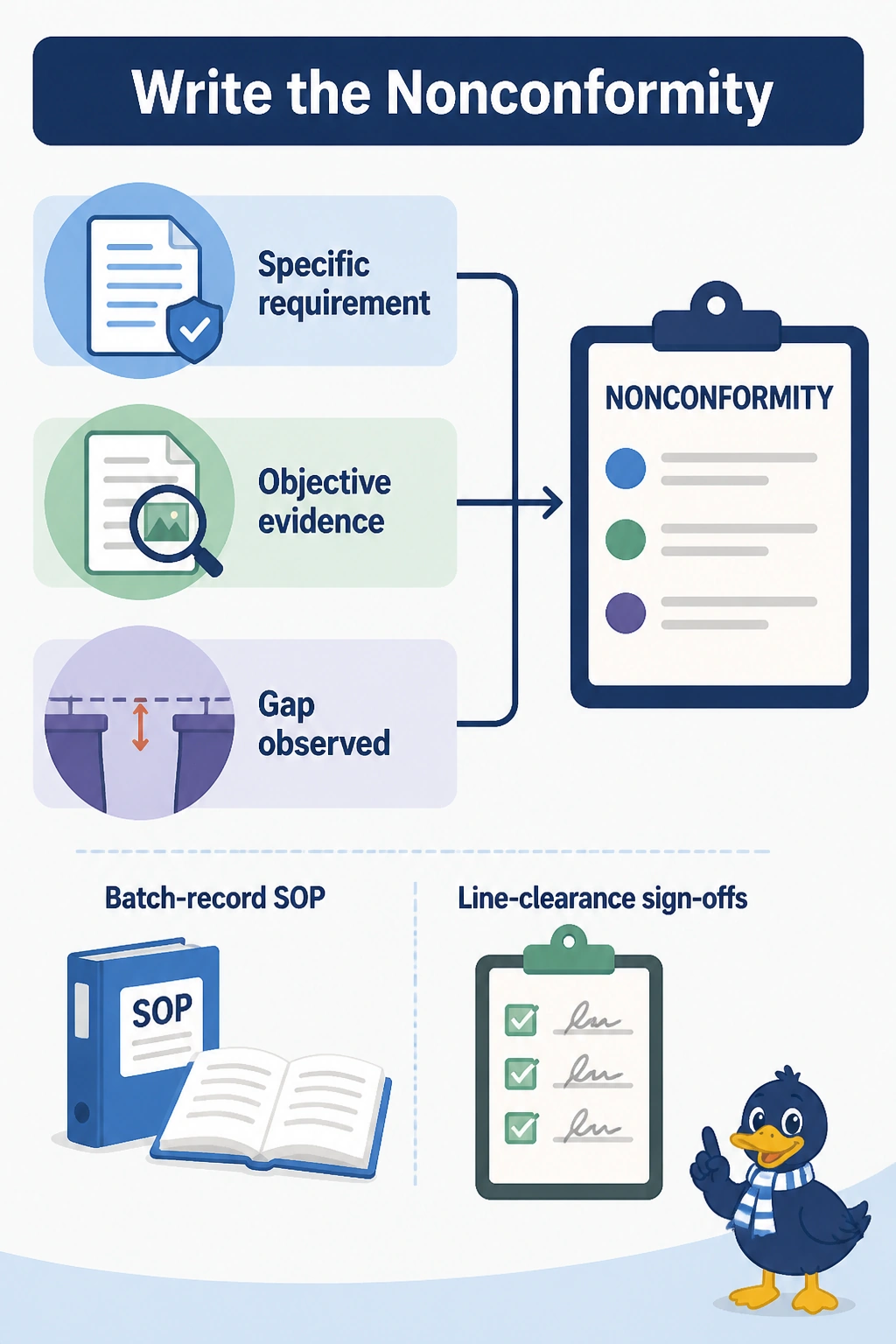
You can make the finding clear and fair by linking the requirement, the evidence, and the gap in one factual statement. Avoid guessing why operators skipped the step or directing management’s disciplinary response; keep the finding focused so the auditee can address the issue.
Full Explanation
A defensible nonconformity statement links the specific requirement, the objective evidence, and the gap observed. Citing the batch-record SOP’s line-clearance sign-off requirement, the two observed omissions, and how practice fell short gives the auditee a clear factual basis for root-cause analysis. Speculation about why the operators skipped the verification step introduces unverified opinion before the auditee investigates. A directive prescribing which disciplinary action management must take oversteps the auditor’s independent role and improperly dictates human-resources decisions. A summary of unrelated observations from a previous supplier audit muddies the scope and confuses distinct organizations and criteria. The exam caveat is to state only what you directly verified during the current audit and avoid attributing blame to named individuals. As a practical check, compare the draft with your field notes to confirm that the procedure title, batch IDs, and exact discrepancy are traceable without assumptions.
Prefer to study offline? Printable PDF study book + test engine ($7.50, unofficial). These questions stay free here.