
Two days after a closing meeting at a food-packaging plant, the plant manager emails the lead auditor to dispute a documented nonconformity on metal-detector verification logs, claiming the auditor misunderstood the shift schedule. What is the most appropriate action for the lead auditor?
Select an answer to reveal the explanation.
Short Explanation
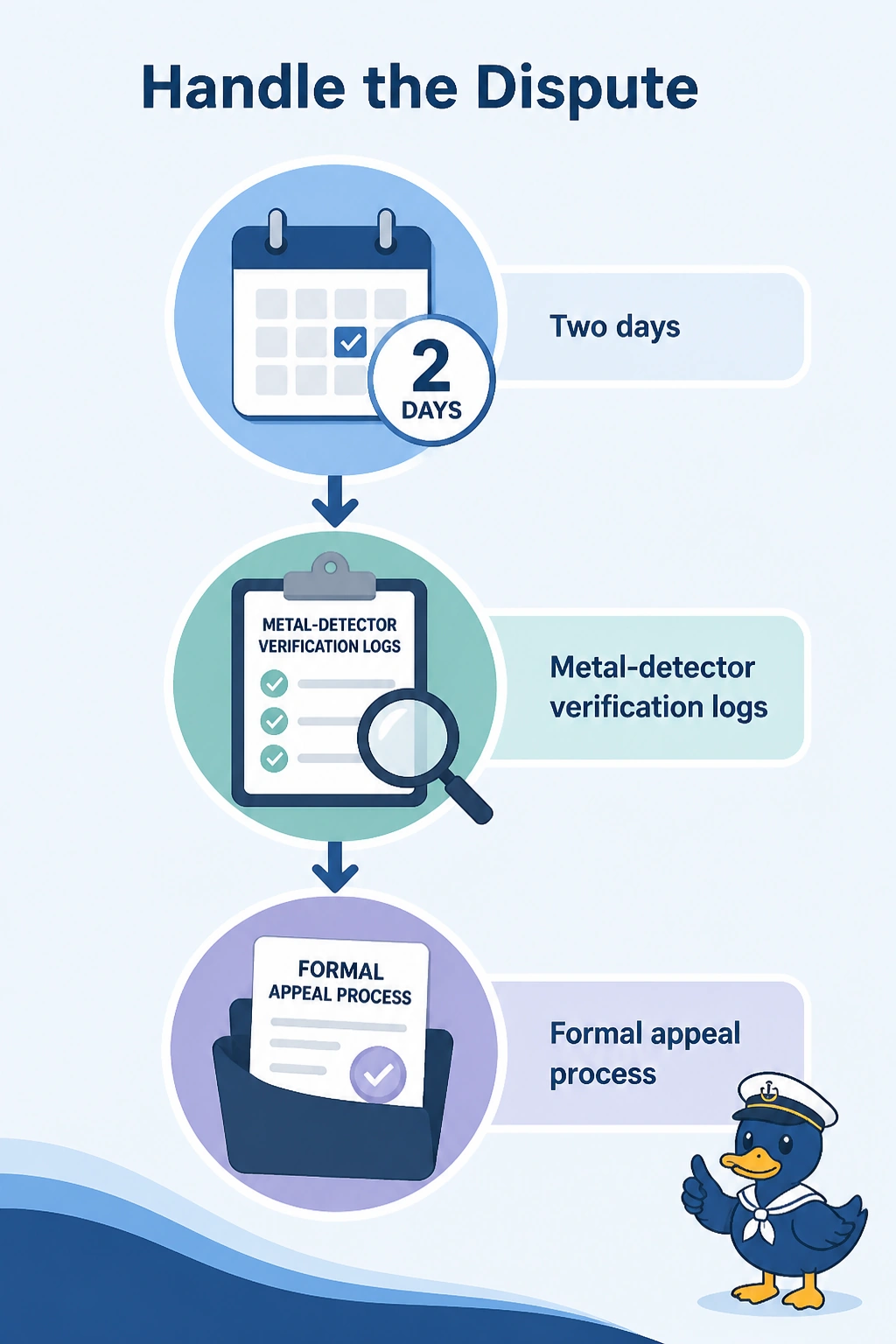
Disputes after a closing meeting are settled by the evidence in your notebook, not by who speaks loudest or who wants to keep the peace. You should review the documented facts objectively and route any unresolved disagreement through the formal appeal channel.
Full Explanation
Post-closing disagreements must be resolved transparently on the basis of verifiable facts, so the lead auditor should Re-examine the recorded objective evidence and follow the formal appeal process. Checking the exact log entries, timestamps, and criteria against the plant manager's clarification determines whether a factual error occurred; if the evidence still supports the finding, the established appeal mechanism gives the auditee a fair, documented path for review. Choosing to Delete the finding immediately to preserve a positive relationship with plant leadership compromises audit integrity and sets a dangerous precedent of withdrawing valid findings under pressure. Choosing to Refuse to review any clarification because the closing meeting already occurred is overly rigid if new, verifiable records show a genuine factual misinterpretation by the audit team. Choosing to Ask a different department manager to decide which version of events is true abdicates the audit team's responsibility and introduces internal politics into an evidence-based decision. As a caveat, any post-closing revision to a finding requires documented justification and formal re-issuance to all report recipients. As an operational check, attach specific record identifiers and timestamps to every nonconformity statement so disputes can be checked quickly without guesswork.
Prefer to study offline? Printable PDF study book + test engine ($7.50, unofficial). These questions stay free here.