
While preparing for an audit of a chemical blending facility, an auditor builds a checklist of regulatory and procedural requirements. How should the auditor use this checklist during on-site fieldwork?
Select an answer to reveal the explanation.
Short Explanation
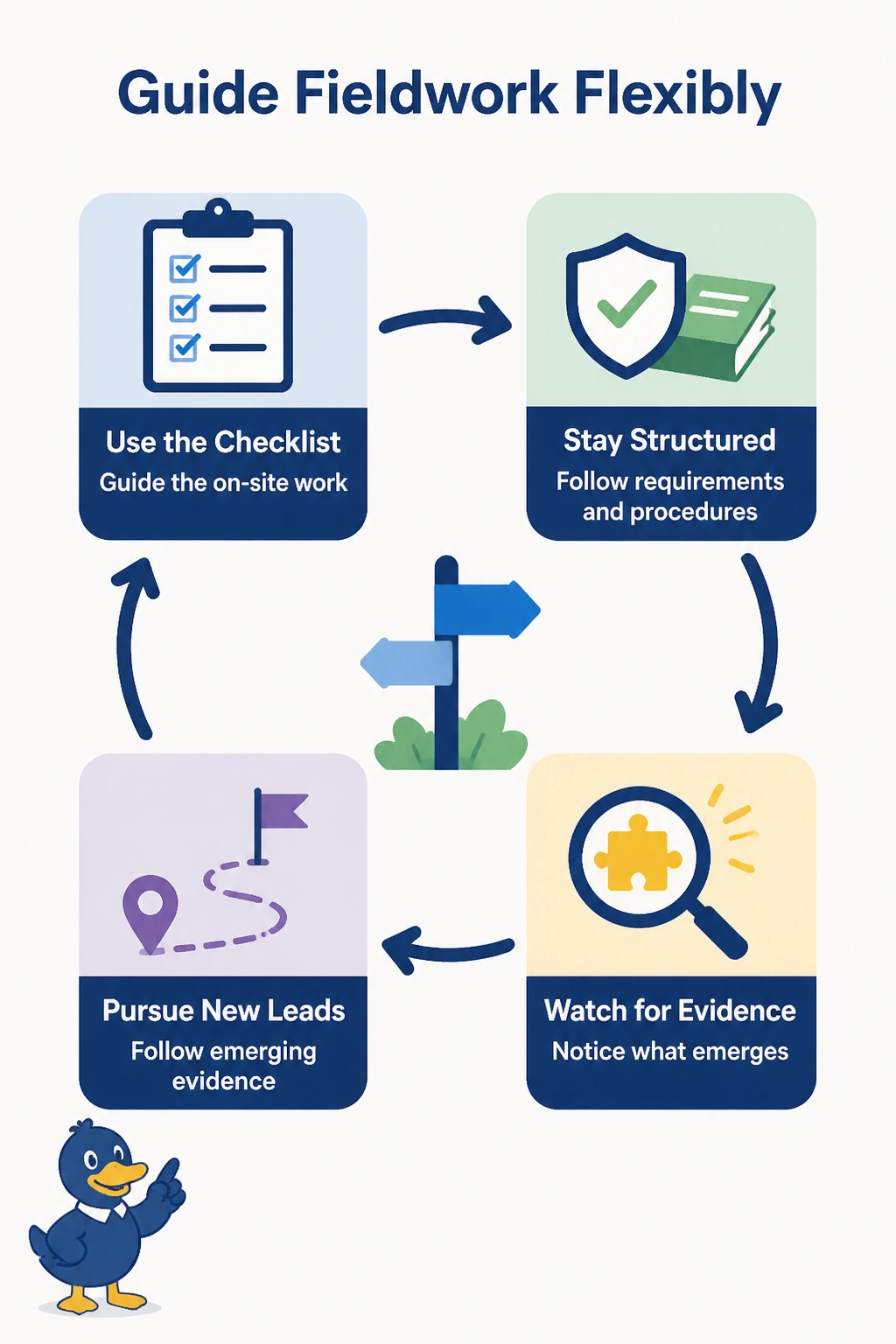
A good checklist works like a pilot's flight plan: it keeps your route organized without stopping you from reacting to sudden weather. The classic trap is treating a checklist like a rigid script and walking right past obvious red flags on the floor.
Full Explanation
Prepared checklists keep fieldwork organized without blinding the auditor to real-time risk, so they work best As a structured guide that still allows pursuing emerging evidence. When an unexpected hazard or record gap surfaces, following the trail yields far stronger insight than mechanically checking boxes. Treating the list As a rigid script that prohibits exploring unexpected leads forces the auditor to ignore red flags outside prewritten prompts. Using it As a replacement for reviewing current work instructions on-site is equally risky because procedures may have been revised or locally modified since planning. Likewise, treating the checklist As a confidential scoring sheet shared only with senior leadership misunderstands its purpose as a working aide-memoire rather than a secret grading rubric. Caveat: deviating from a checklist must still respect the approved audit scope and schedule so core areas are not skipped. Operational check: cross-reference every checklist prompt against the live controlled document revision on the shop floor before recording evidence.
Prefer to study offline? Printable PDF study book + test engine ($7.50, unofficial). These questions stay free here.