
During an on-site audit of a beverage bottling line, an auditor checks three morning-shift pasteurization logs and finds one missing operator verification signature. The line supervisor says it was a one-time oversight during a shift handoff. What should the auditor do next?
Select an answer to reveal the explanation.
Short Explanation
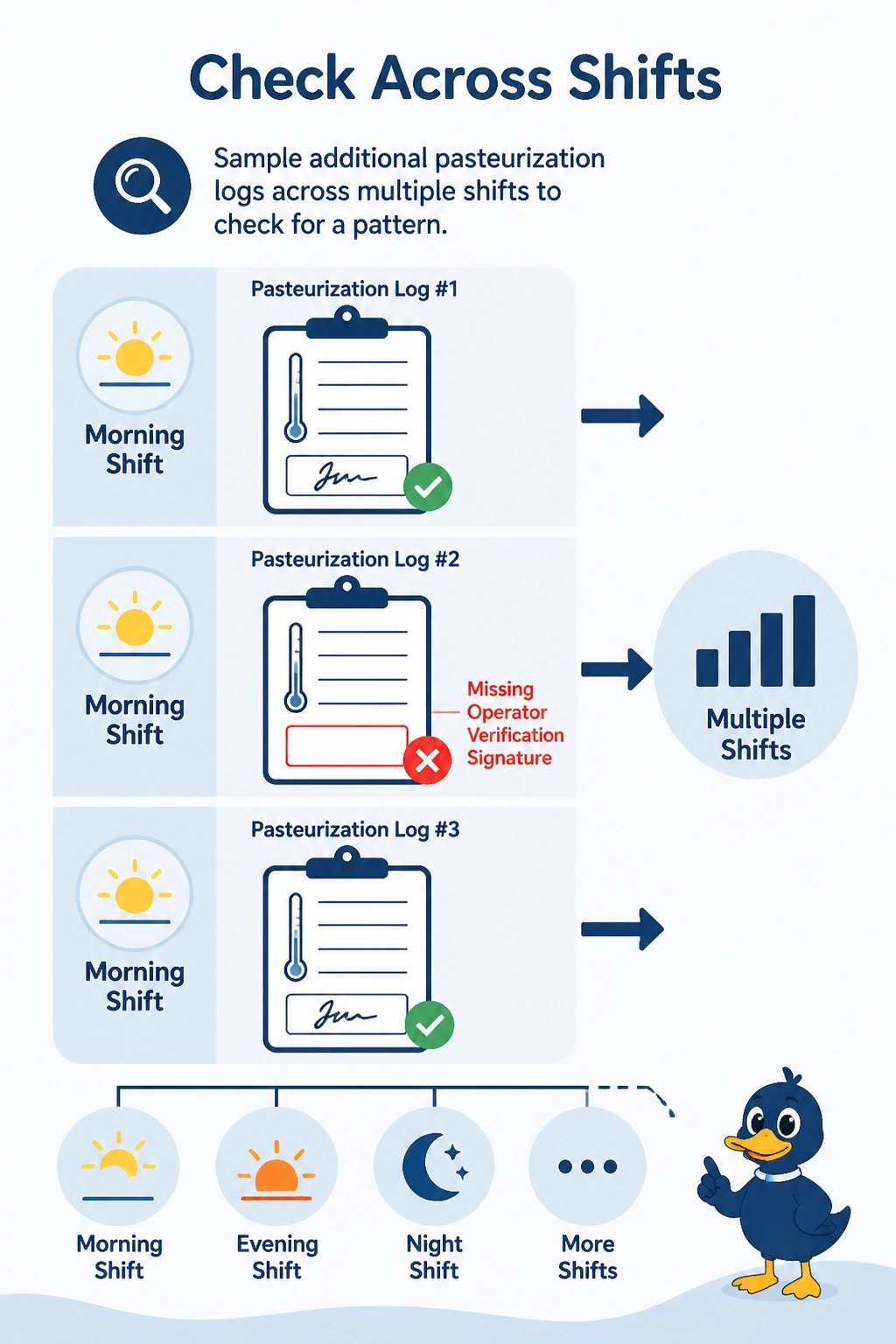
A missing signature could be a one-time oversight, or it could point to a wider problem. You can’t tell from one record alone, so check additional logs across shifts for a pattern before deciding how to classify it.
Full Explanation
Audit conclusions must rest on objective, representative evidence rather than assumptions or isolated anecdotes. When your initial sample reveals a missing verification signature, you need to determine whether the gap is an isolated clerical slip or a systemic breakdown in handoff controls. Sample additional pasteurization logs across multiple shifts to check for a pattern before classifying the issue. Accepting the supervisor’s explanation and recording the oversight as a minor observation relies on unverified verbal assurance and risks missing a widespread food-safety control failure. Immediately issuing a major nonconformity based on the single missing signature overreaches the available evidence: one record alone does not establish a systemic breakdown. Treating the batch as conforming because the other two morning logs were signed confuses separate batches; each batch requires its own verification, and signed neighboring records do not prove this batch met control limits. As an exam caveat, if expanding the sample is impossible because records are missing altogether, that absence of evidence itself becomes an objective finding. During fieldwork, document the exact sample size, dates, and shifts reviewed in your working papers so any resulting finding is fully traceable.
Prefer to study offline? Printable PDF study book + test engine ($7.50, unofficial). These questions stay free here.