
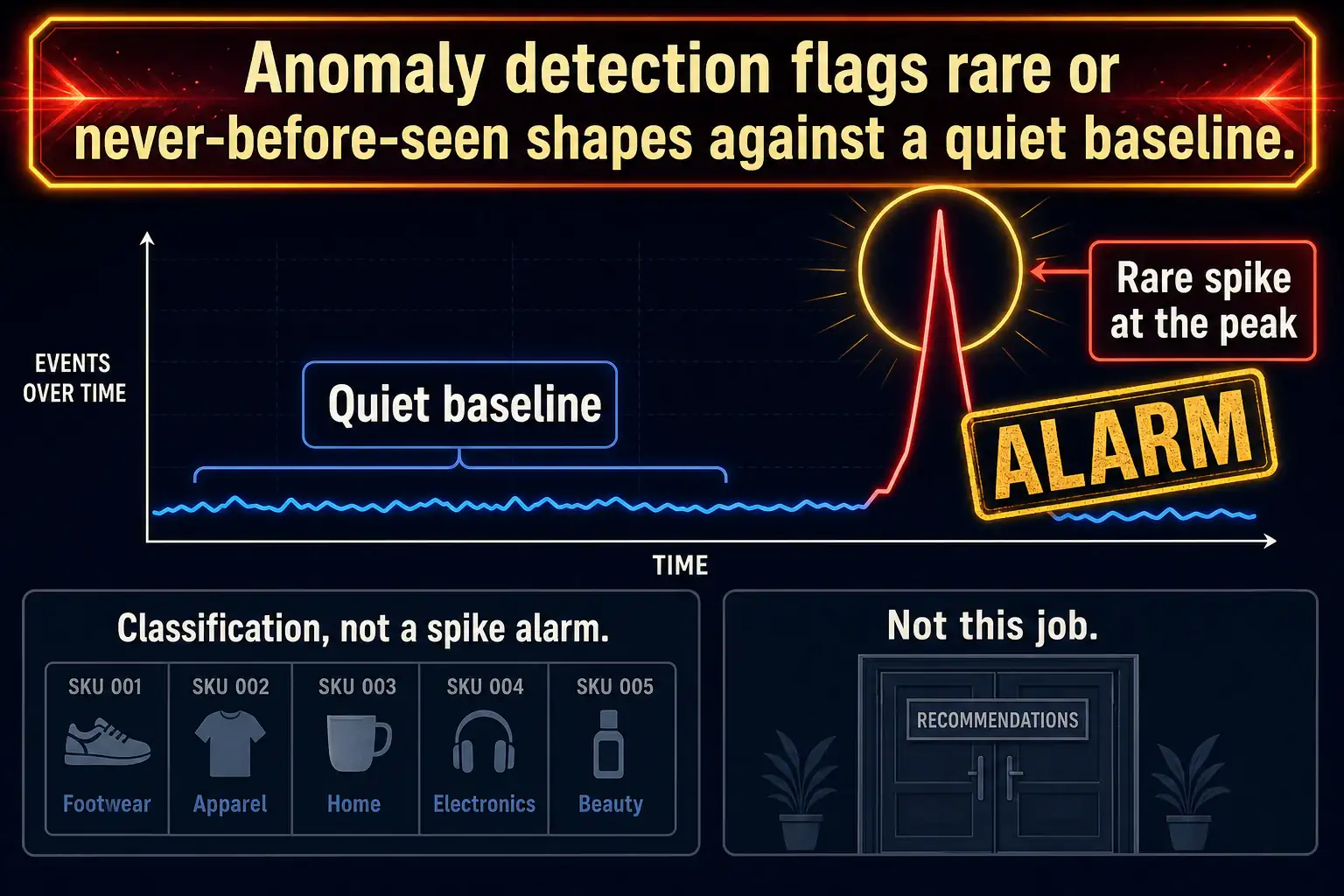
A water utility wants alarms on rare, never-before-seen overnight flow spikes that may mean theft or a break. The team is not assigning each meter to one of five pipe SKUs. Which application is this?
Select an answer to reveal the explanation.
Short Explanation
Think of a night watchman who only cares when the flow looks weird. Rare, never-seen overnight spikes are anomaly detection. Labeling pipe SKUs, recommending bottled water, or reading a bill aloud do not watch the meter.
Full Explanation
Rare, never-before-seen overnight flow spikes that may signal theft or a break are an anomaly-detection problem on a meter time series. Anomaly detection fits because the goal is to flag unusual shapes relative to normal behavior, including patterns the team has not labeled in advance, rather than assigning each reading to a known catalog class. A five-class pipe-SKU predictor solves a different problem—mapping meters to known product labels—and the stem already states the team is not doing that assignment. A recommendation list of bottled-water brands personalizes retail product suggestions and does not monitor municipal flow for safety or theft. Speech synthesis of the monthly bill turns text into audio for customer communication and never watches the overnight meter series for rare spikes. The emphasis on rare and unseen shapes is the tell that points away from fixed multi-class labeling and toward anomaly or fraud-style detection. Exam caveat: when the prompt emphasizes rare or unseen events and rejects fixed-class labeling, prefer anomaly detection over multi-class prediction or recommendations. Operational check: chart normal overnight flow bands, define how a spike is scored (residual, density, or reconstruction error), and verify alerts fire on held-out unusual days without requiring a SKU label for every meter.