
A ski-patrol desk records radio calls and needs searchable text logs. A trail kiosk will later read short hazard alerts aloud from written scripts. Which pairing names the two speech jobs correctly?
Select an answer to reveal the explanation.
Short Explanation
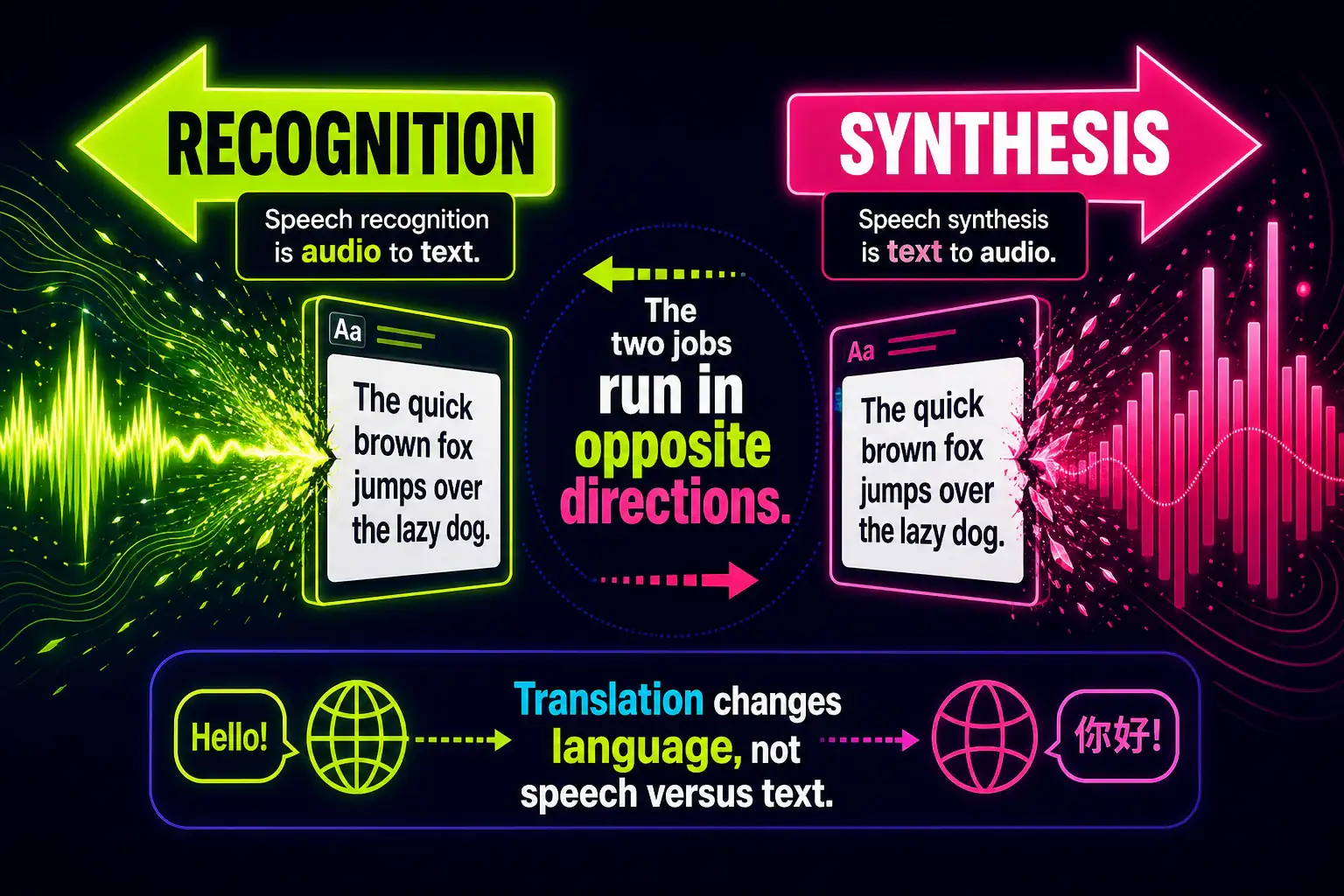
Think of two opposite translators. Radio calls to searchable logs is ear-to-page (speech recognition). The kiosk reading a written alert aloud is page-to-ear (speech synthesis). Mentioning audio or a kiosk does not smash those two directions together.
Full Explanation
The ski-patrol desk needs two opposite speech transforms that must not be collapsed into one label. Radio calls to searchable logs convert spoken audio into text, which is speech recognition. Kiosk alerts that read written hazard scripts aloud convert text into audio, which is speech synthesis. Naming both directions correctly matters because the pipelines, models, evaluation metrics, and failure modes differ even though both involve "speech." Collapsing both jobs into speech recognition solely because audio is mentioned erases the kiosk's text-to-speech direction and would leave the trail kiosk without a synthesizer. Collapsing both into speech synthesis because a kiosk is mentioned erases the radio-to-log transcription job and would leave the desk without searchable text. Calling radio-to-log machine translation is wrong because translation changes language; these jobs stay in the same language while changing representation between speech and text. Exam caveat: speech recognition is audio→text and speech synthesis is text→audio—exam items often bait you with the shared word "speech" to hide the arrow. Operational check: for each use case, write the input type and output type on one line (audio→text versus text→audio), pick the matching capability or service, and only then wire microphones or speakers.