
A city parks inbox receives free-text emails about fallen limbs, locked restrooms, and noisy events. Staff want each message routed to the right crew from the wording alone. The emails are not photos and not voice mails. Which capability should they use?
Select an answer to reveal the explanation.
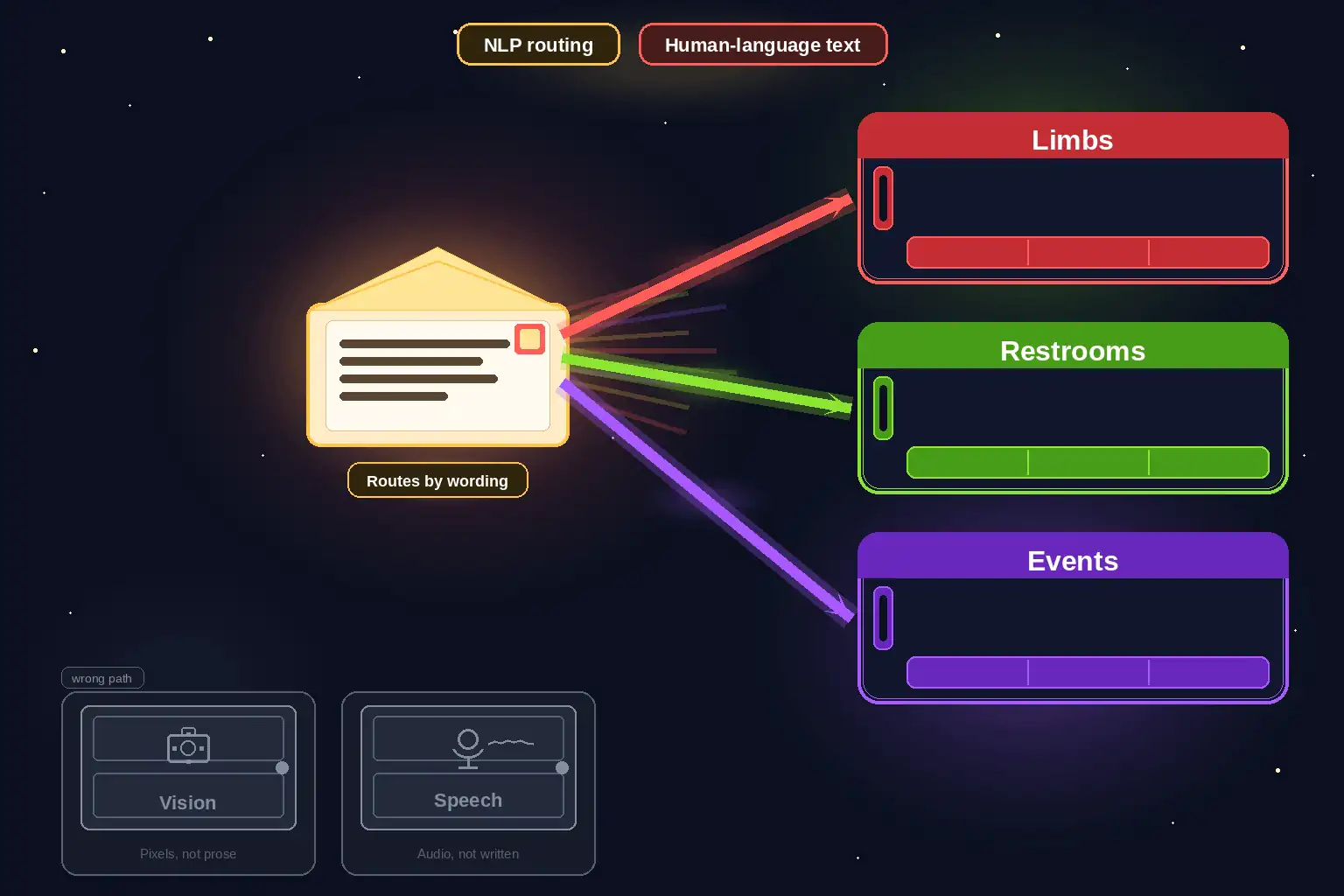
Short Explanation
Think of a dispatcher reading the email and sending the right crew. Fallen limbs, locked restrooms, noisy events: the wording is the clue, so that is natural language processing. A subject line is still text, not a photo, and a maybe-later phone call does not make today's inbox a speech job.
Full Explanation
Free-text park emails about limbs, restrooms, and noise are human-language prose that must be understood and routed, which is natural language processing. NLP fits because the routing signal lives in the wording of the message body—what broke, where, and how urgent it sounds—not in pixels or audio. Applying computer vision to a subject line is still wrong even though the subject is short: a subject line is text characters, not an image, so vision models have nothing visual to classify. Speech recognition assumes spoken audio; a possible future phone call does not turn today's written inbox into a speech problem and should not redirect the architecture. An image classifier trained on park maps would label cartographic imagery and never read the complaint text that staff actually need routed to the right crew. The emails are explicitly not photos and not voice mails, which closes the door on vision-first or speech-first designs for this inbox. Exam caveat: do not choose a modality because a related channel might appear later—choose the capability that matches the data you have now. Operational check: sample a week of inbox messages, confirm they are plain text without required photo attachments, and verify a text classifier or NLP router can map phrases to crew queues before adding vision or speech services.