
A chocolate factory wants software that looks at bar photos on the wrapping line and flags air-bubble defects. Which capability matches the job?
Select an answer to reveal the explanation.
Short Explanation
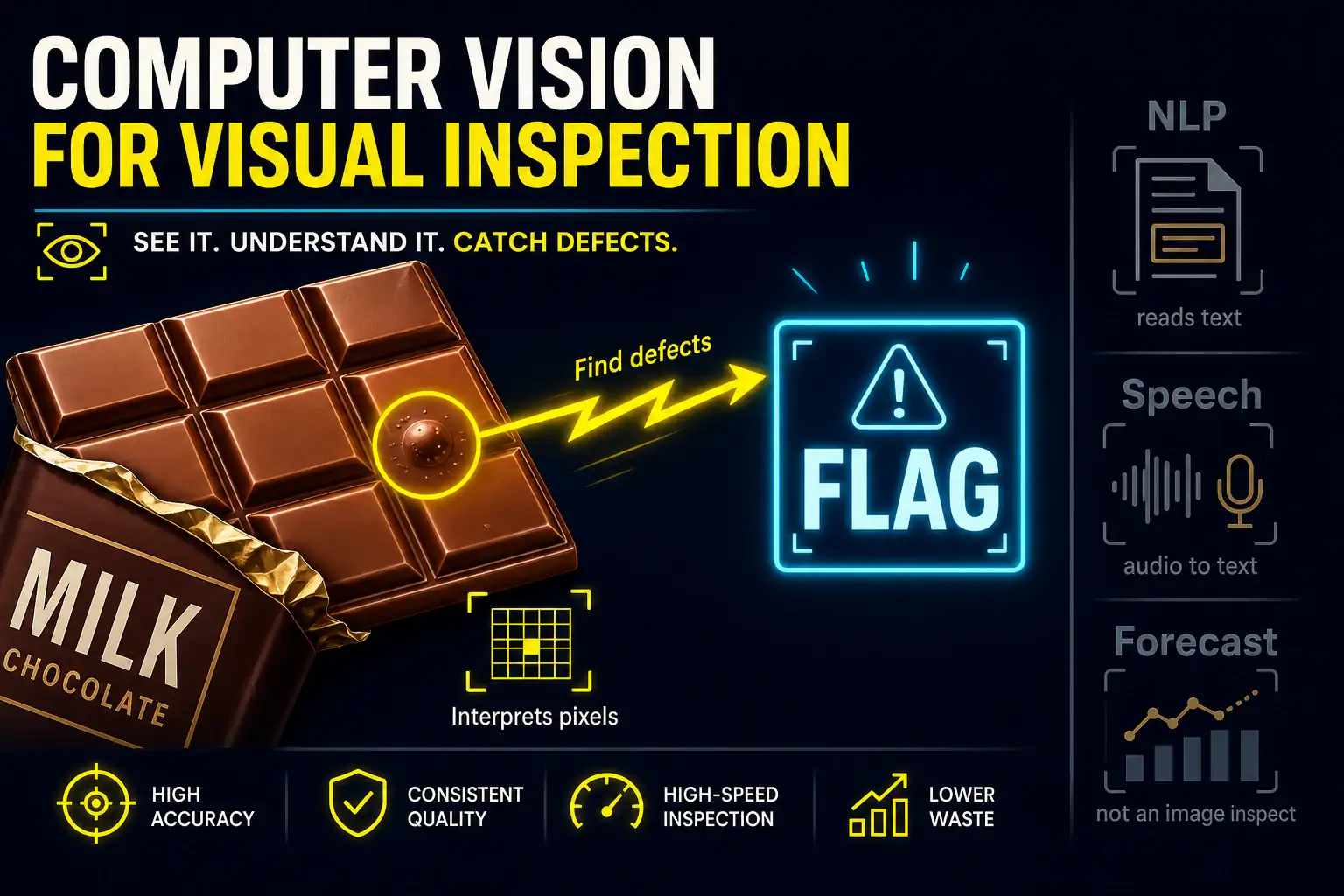
Think of a wrapping-line camera looking for air bubbles in the chocolate, not a radio or an ingredients list. The job is pixels to a defect flag, and that is computer vision. Cocoa-price forecasts and speech-to-text never look at the bar.
Full Explanation
The wrapping-line job is pixels in and a defect flag out, which is computer vision for visual inspection. That capability matches because air-bubble detection on bar photos requires interpreting image content at the moment of wrap, not reading text or forecasting a commodity price. Natural language processing of the ingredient list operates on prose and never looks at the bar surface, so it cannot flag bubbles on the line no matter how carefully the label is parsed. Speech recognition of wrapping-room radio converts audio to text and has no view of the chocolate geometry or surface defects. A time-series cocoa-price forecast predicts a future market number for procurement planning and does not inspect product appearance as bars move under the camera. Choosing vision is about matching the signal you actually have—images—to the decision you need—pass or flag. Exam caveat: map the input modality first—images, text, audio, or numeric series—before naming a capability, because exam distractors often swap a familiar AI term onto the wrong signal. Operational check: confirm the production system will receive still frames or video from the line camera, define what a bubble looks like in those frames with a few annotated examples, and verify no text or audio path is required for the defect decision.