
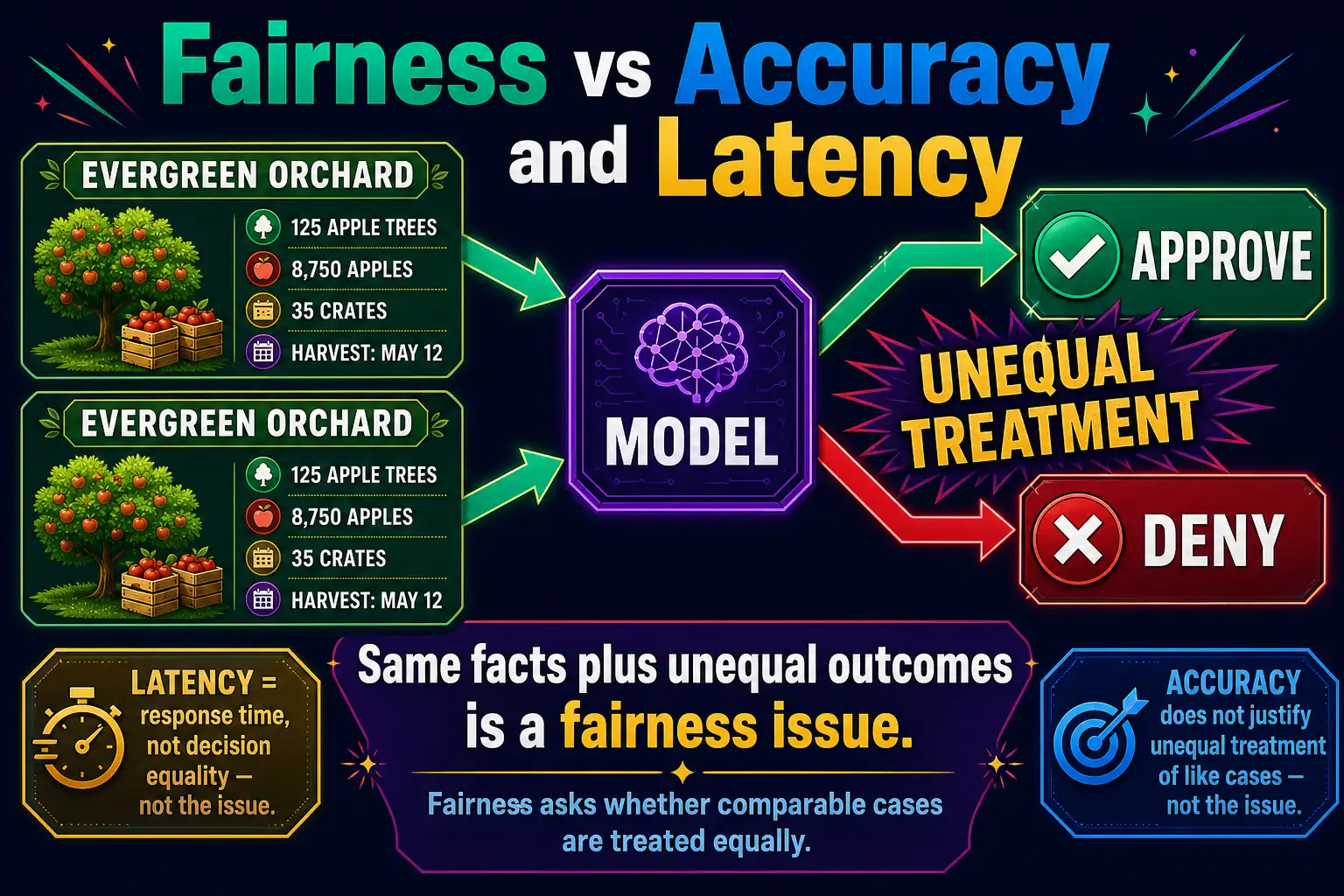
Two neighboring orchards file the same crop-insurance facts: same acreage, same cultivar, same hail-loss evidence. The model approves one and denies the other after using a ZIP code that has historically received fewer payouts. Which issue is this?
Select an answer to reveal the explanation.
Short Explanation
Think of two neighbors handing in the same hail paperwork and getting different checks because of the ZIP code. Fairness is about like cases getting like treatment. Latency is how long the score took, and unequal outcomes are not a badge of accuracy.
Full Explanation
Fairness problems appear when similarly situated applicants receive unequal outcomes for reasons that are irrelevant or proxy-driven. Two orchards present the same acreage, cultivar, and hail-loss evidence, yet the model approves one and denies the other after using a ZIP code historically tied to fewer payouts. That is unequal treatment of comparable applicants—a fairness issue driven by a geographic proxy.
Latency is about how long scoring takes, not whether the decision is equitable; unequal approvals are not explained by one request being slower. Unequal treatment is not proof of high accuracy or precision; accuracy measures correctness against labels, not ethical parity across groups. Hardware drift on the scoring server would affect availability or numeric stability broadly, not systematically favor one ZIP over an otherwise identical neighbor.
Exam caveat: ZIP code and similar proxies can encode historical disparity even when "sensitive" attributes are not named explicitly—fairness review must include proxy features. Operational check: run paired tests on otherwise identical applications that differ only by ZIP, document disparate impact, and either remove or carefully constrain geographic features under the insurer's fairness policy before the next filing season.