
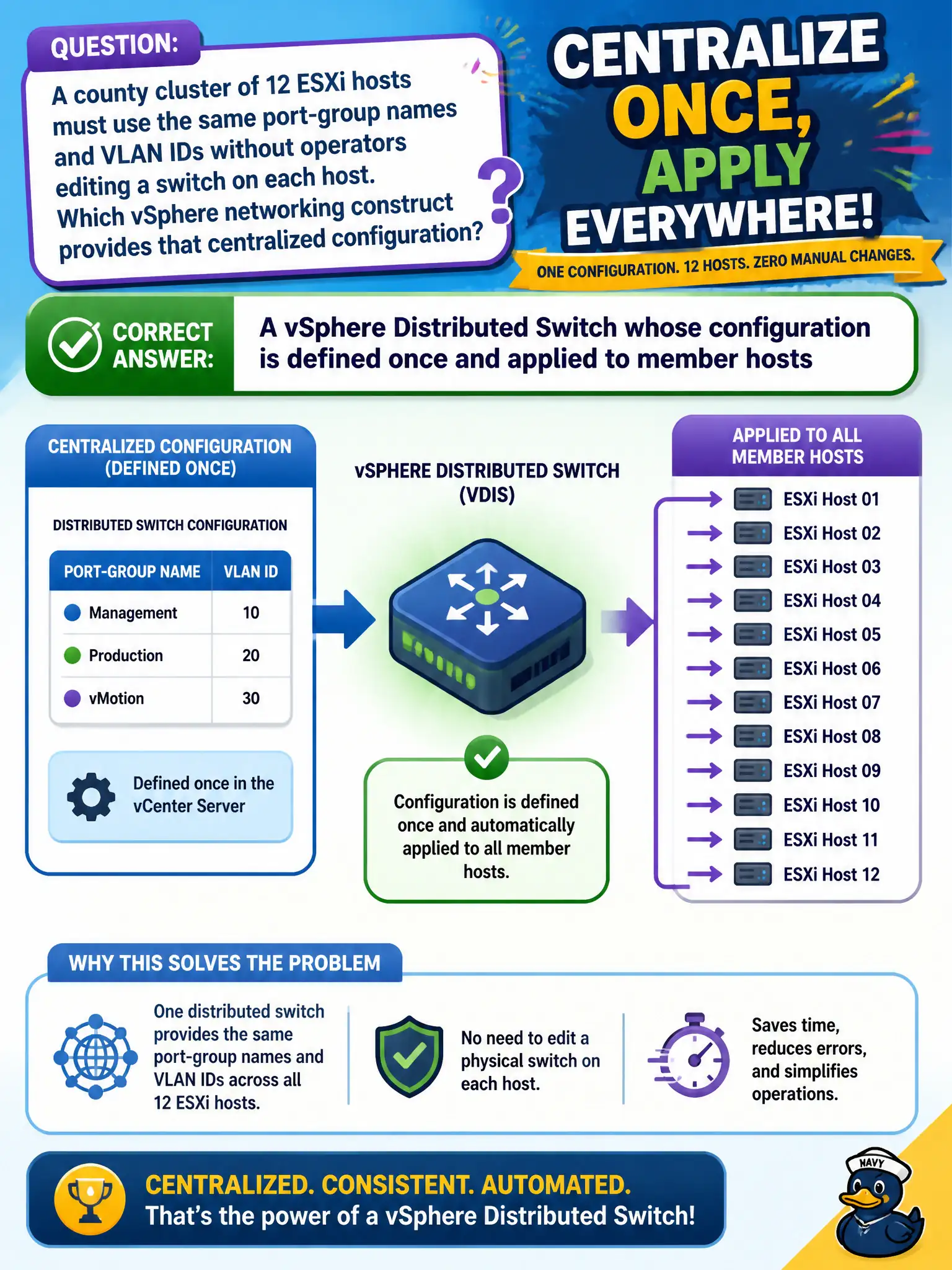
A county cluster of 12 ESXi hosts must use the same port-group names and VLAN IDs without operators editing a switch on each host. Which vSphere networking construct provides that centralized configuration?
Select an answer to reveal the explanation.
Short Explanation
Twelve hosts should share one traffic-light plan, not twelve handwritten signs. That plan is a vSphere Distributed Switch: define the port groups once and every member host follows them. A standard switch is per host, and an overlay segment or Edge is NSX, not that vSphere switch.
Full Explanation
A county cluster of twelve ESXi hosts that must share identical port-group names and VLAN IDs without editing a switch on every host needs a vSphere Distributed Switch (VDS). The VDS configuration is defined once in vCenter and applied to member hosts, so civic operators maintain one traffic-light plan instead of twelve handwritten signs. That centralized construct is the correct answer for consistent port groups and VLANs across the cluster. A vSphere Standard Switch created separately on every ESXi host forces per-host edits and drifts easily—exactly what the county wants to avoid. An NSX overlay segment is an NSX logical Layer-2 network for guest traffic after fabric preparation; it is not a substitute for the vSphere virtual-switch object that carries host and VM port groups before or alongside NSX. An NSX Edge node that advertises BGP to the physical top-of-rack switch provides north-south routing and services; it does not define cluster-wide vSphere port-group names. Exam caveat: VDS centralizes vSphere networking configuration; NSX still has its own objects (segments, uplink profiles, transport zones). Do not treat “centralized networking” as automatically meaning NSX when the stem asks for the vSphere construct. Operational check: open the VDS in vCenter, confirm all twelve hosts are members, and verify a test port group and VLAN ID appear identically on each host without local VSS edits.