
After a bad ACL, the county cannot snapshot or roll back the physical VLAN fabric the way it rolls back a VM. Which virtual-networking property addresses that missing software lifecycle?
Select an answer to reveal the explanation.
Short Explanation
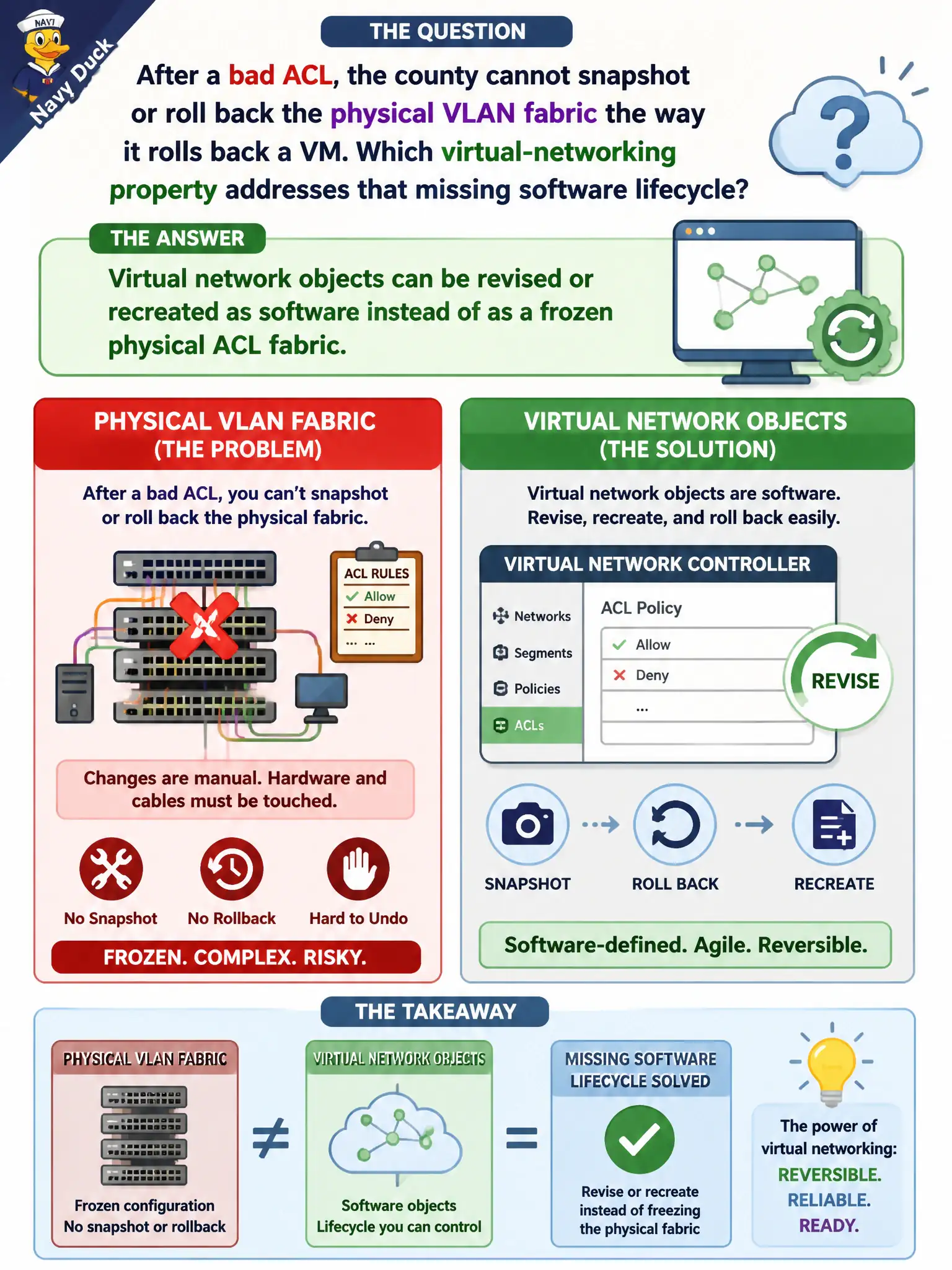
A physical ACL fabric is wet concrete—once it sets wrong, the county chips it out by hand. Virtual segments and gateways are more like documents: revise or recreate them instead of living with a frozen switch config. Printouts and Carbon Black alerts are not a rollback.
Full Explanation
Virtual network objects can be revised or recreated as software instead of as a frozen physical ACL fabric, addressing the county's inability to snapshot or roll back VLANs the way it rolls back VMs. After a bad ACL, operators restore known-good segment/gateway/DFW configuration rather than retyping ToR ACLs from printouts. Printing running-configs for manual retype is the fragile traditional recovery. Storing VLAN state only in Carbon Black alert history is not network configuration management. Converting to NSX-V DLR/ESG so hardware ACLs remain source of truth rejects the software lifecycle benefit. Exam caveat: configuration backup, RBAC, and change pipelines are still required; software lifecycle is powerful only with disciplined versioning. Operational check: break a lab ACL intentionally, then restore the prior NSX configuration objects and confirm civic test traffic matches the last known-good policy. Keep municipal naming and change tickets aligned with the software objects so civic audits can trace intent. Prefer verifying with a non-production agency workload before promoting the same pattern to life-safety systems. Record realization state and underlay health in the runbook used by on-call city operators.