
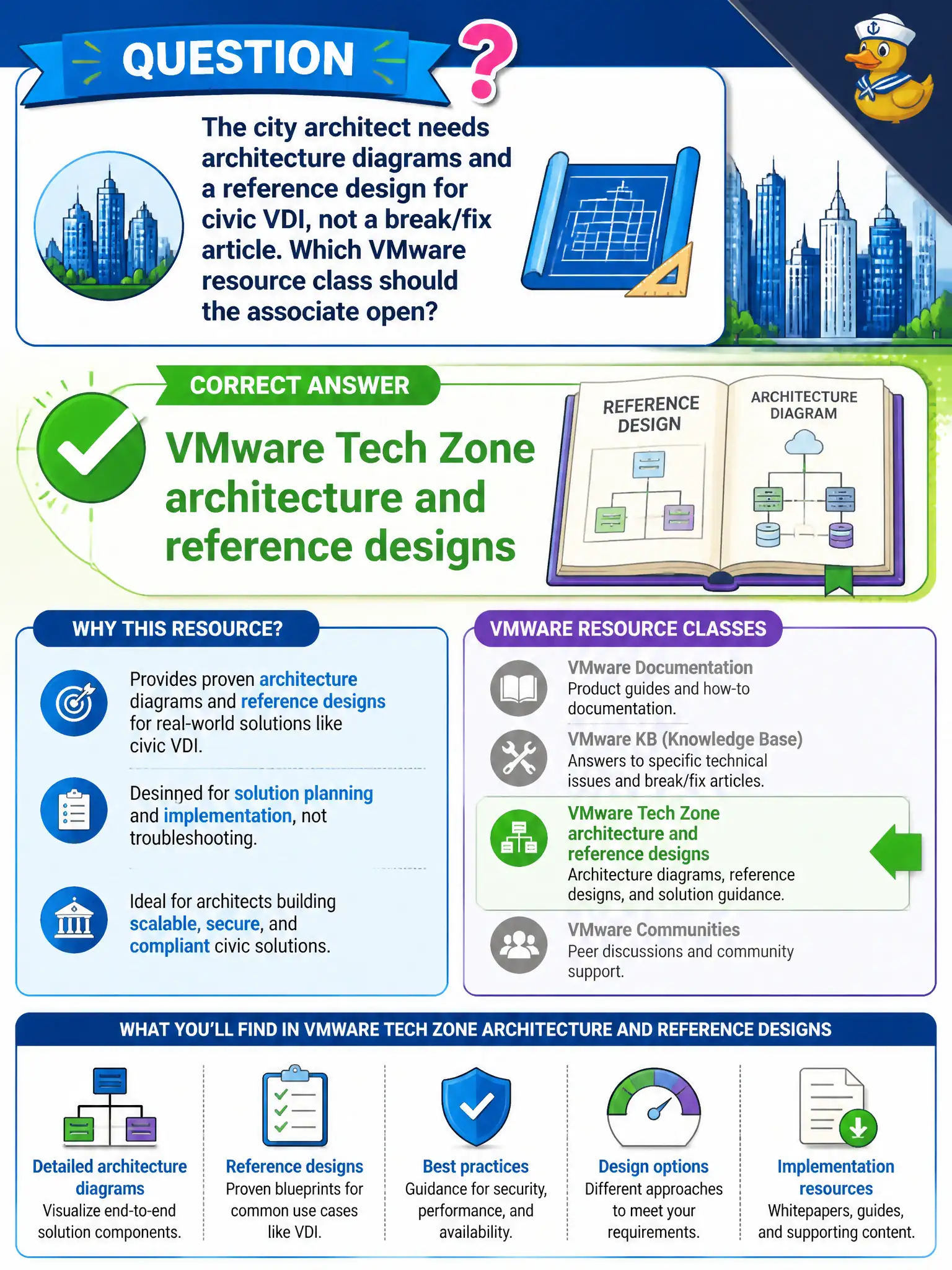
The city architect needs architecture diagrams and a reference design for civic VDI, not a break/fix article. Which VMware resource class should the associate open?
Select an answer to reveal the explanation.
Short Explanation
Blueprints live on Tech Zone; Band-Aids live in the Knowledge Base. Boxer logs and DEM helpdesk output are operational artifacts, not civic VDI reference architecture. When the ask is diagrams and design patterns, open Tech Zone.
Full Explanation
VMware Tech Zone architecture and reference designs are the resource class for architecture diagrams and civic VDI reference patterns. That is what a city architect should open when the ask is design guidance rather than a single break/fix procedure. Architecture review boards for municipal VDI projects expect Tech Zone-style reference patterns when approving Connection Server, UAG, and resource-block layouts. A Knowledge Base article aimed at one Blast error code is troubleshooting material, not a reference architecture for a municipal pod. Workspace ONE Boxer diagnostic logs help mail-client issues and do not supply VDI design blueprints. Dynamic Environment Manager helpdesk tool output shows which user-environment settings applied; it is an operational artifact, not a pod design guide. Exam caveat: Tech Zone versus Knowledge Base is a classic resource-matching contrast—blueprints versus Band-Aids—and the stem's request for diagrams selects Tech Zone. Operational check: Open Tech Zone Horizon or EUC reference architecture content, pull diagrams that match the city's broker, UAG, and pod pattern, and keep Knowledge Base reserved for subsequent error-driven troubleshooting. Selecting Tech Zone first keeps architects from treating a single KB error article as a substitute for pod design.