
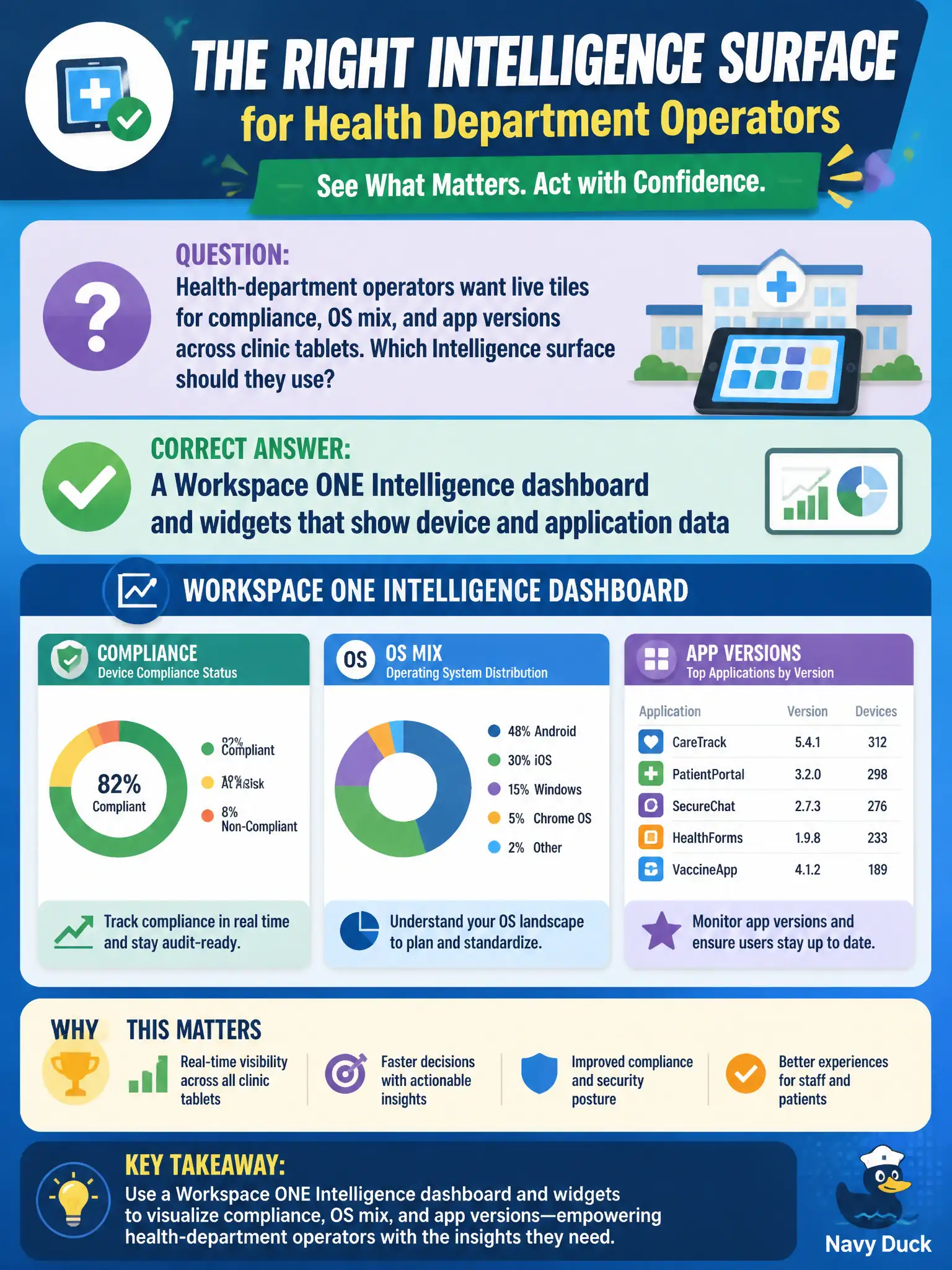
Health-department operators want live tiles for compliance, OS mix, and app versions across clinic tablets. Which Intelligence surface should they use?
Select an answer to reveal the explanation.
Short Explanation
Those tiles are the clinic fleet's weather map. Intelligence dashboards and widgets are the visual admin surface, not Help Desk and not the content locker.
Full Explanation
Health-department operators who need live tiles for compliance, OS mix, and app versions across clinic tablets should use a Workspace ONE Intelligence dashboard with widgets that display device and application data. That surface is designed for continuous fleet analytics rather than one-off console grids. Horizon Help Desk fails by concept because it is per-session VDI support, not a fleet compliance and OS-mix wallboard. The UEM Content Dashboard tracks mobile content repositories and installs, not OS-mix analytics widgets. App Volumes Manager stores packages and assignments for Windows desktops; it does not host UEM compliance tiles for clinic tablets. Exam caveat: widgets reflect last sync of underlying data sources—confirm refresh expectations before clinic leadership treats a tile as real-time second-by-second truth. Operational check: open or create an Intelligence dashboard, add compliance, OS-mix, and app-version widgets scoped to clinic tablet groups, verify sample values against a known device, and share the dashboard with health-department operators. In municipal EUC operations, record the console path and the rejected alternatives in the change ticket so the next on-call technician repeats the same evidence-first workflow for city staff.