
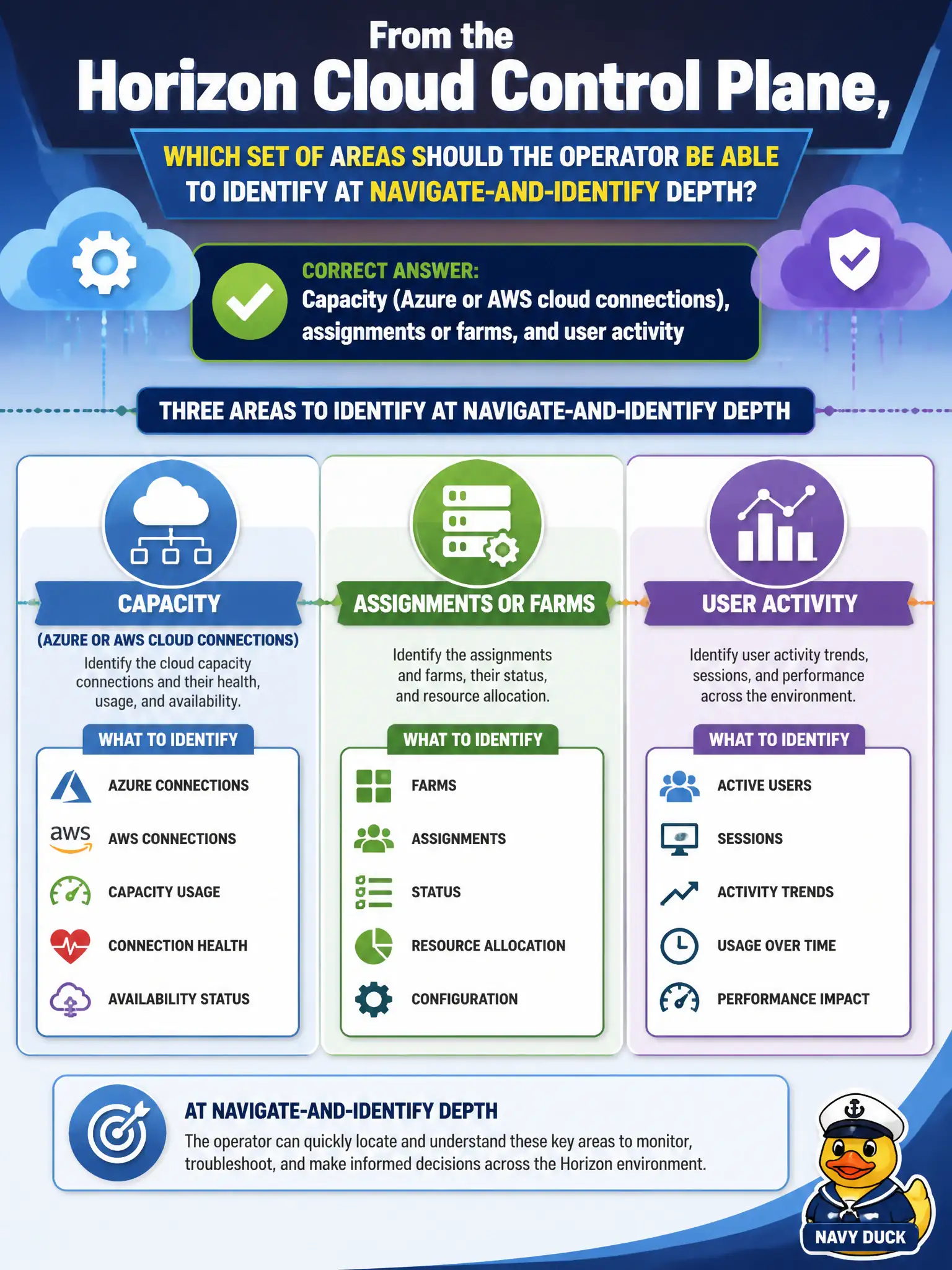
From the Horizon Cloud Control Plane, which set of areas should the operator be able to identify at navigate-and-identify depth?
Select an answer to reveal the explanation.
Short Explanation
Control Plane is the cloud operations wall: capacity (the Azure or AWS hookup), assignments or farms, and who is in session. NSX, Boxer mail, and DEM drawers live in other buildings.
Full Explanation
At navigate-and-identify depth, an operator working in the Horizon Cloud Control Plane should be able to recognize capacity areas that reflect Azure or AWS cloud connections, assignments or farms that deliver desktops or published apps, and user-activity or monitoring views that show session-oriented status. Those areas define how cloud Horizon capacity is connected, how users are assigned resources, and how operators observe activity for civic DaaS desktops. NSX Tier-0 gateways, overlay segments, and Distributed Firewall sections belong to the NSX networking and security console, not Horizon Cloud Control Plane navigation. UEM Mail dashboard queues, Boxer enrollment tokens, and ENS badges are Workspace ONE UEM email-management concepts, not Horizon Cloud capacity or assignment objects. DEM condition sets, ADMX templates, and personalization archives live in Dynamic Environment Manager, a separate product console. Exam caveat: associate exams test whether you can map product surfaces correctly under time pressure without diving into deep design. Operational check: sign into Horizon Cloud Control Plane for the civic tenant, identify capacity/cloud-connection views, open assignments or farms, open user-activity monitoring, and note each path in the municipal EUC runbook.