
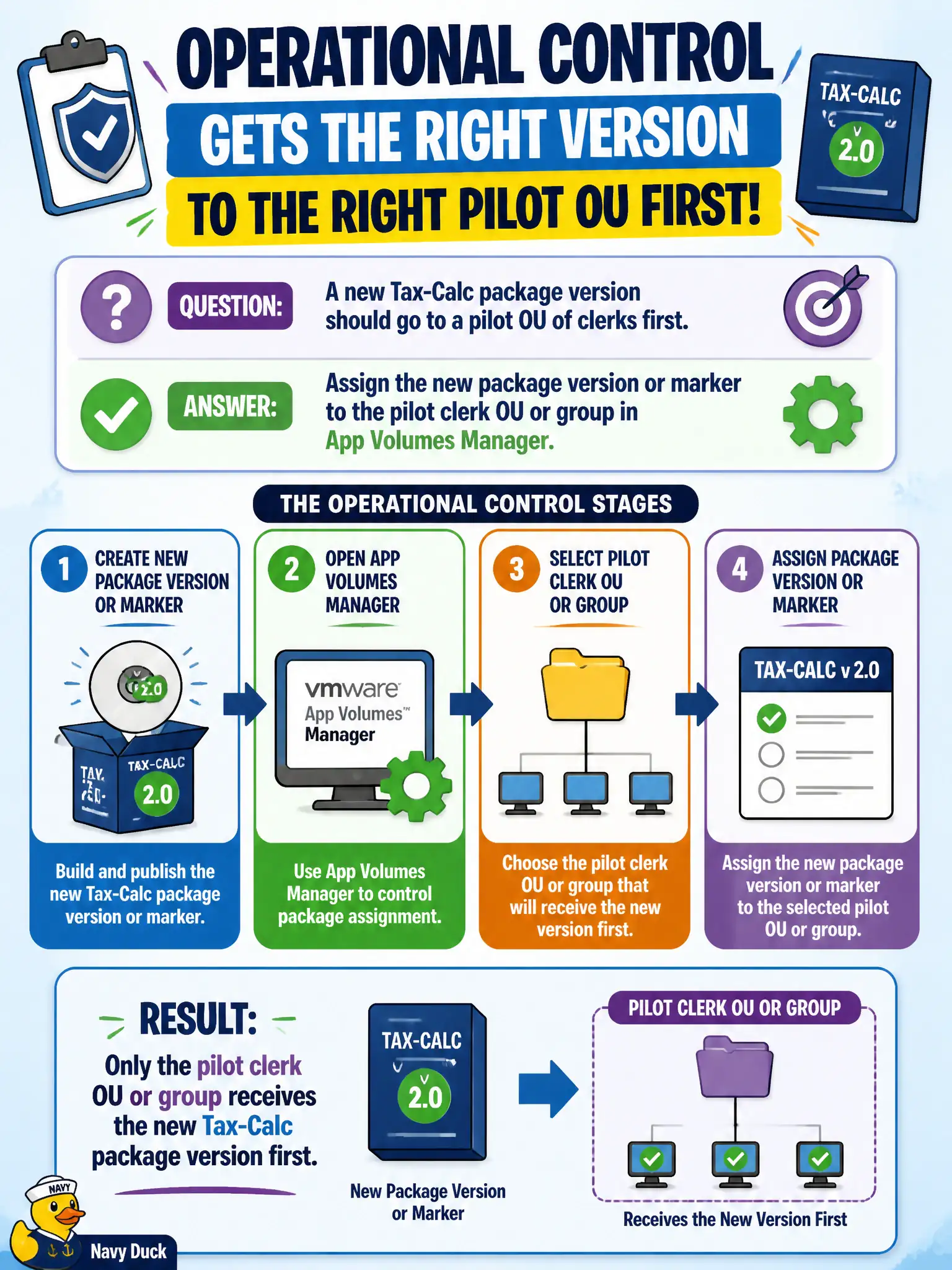
A new Tax-Calc package version should go to a pilot OU of clerks first. What operational control stages that?
Select an answer to reveal the explanation.
Short Explanation
Staging a new Tax-Calc build is inviting only the pilot clerks to the new clip-on, not rewriting DRS or NSX. Assignment in App Volumes Manager — package version or marker to that OU or group — is the operational control. Compliance policies do not stage App Volumes markers.
Full Explanation
When a new Tax-Calc package version should go to a pilot OU of clerks first, the operational control that stages that rollout is assigning the new package version or marker to the pilot clerk OU or group in App Volumes Manager. Assignment scope is the staging mechanism for package versions. Tax-calc upgrades during filing season need pilot assignment so a bad build cannot hit every clerk overnight across the municipal estate. Changing vSphere DRS rules so only pilot VMs boot does not stage App Volumes package versions for users. Authoring a new NSX security group named Pilot-Clerks does not assign App Volumes packages or markers. Pushing a Workspace ONE compliance policy that installs MSI packages is a UEM software distribution pattern, not App Volumes version staging for VDI packages. Exam caveat: Stage App Volumes versions by assignment to pilot OU or group; do not misuse DRS, NSX, or UEM compliance as the package stage control. Operational check: In App Volumes Manager, assign the new Tax-Calc version or marker to the pilot clerk OU or group, validate launch for pilots, then expand assignment citywide. Document the collection source and timestamp in the municipal ticket so the next operator can continue without rework.