
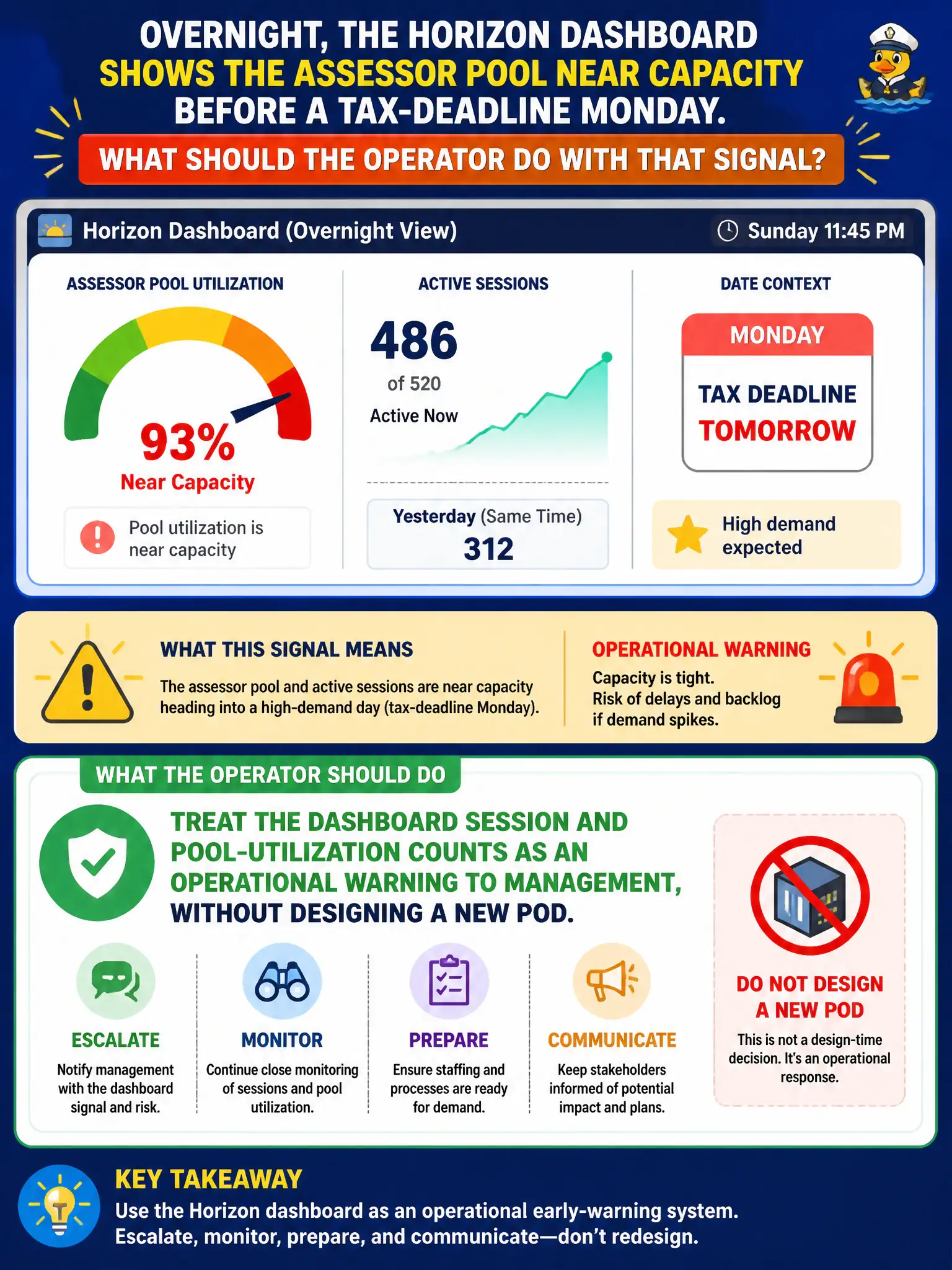
Overnight, the Horizon dashboard shows the assessor pool near capacity before a tax-deadline Monday. What should the operator do with that signal?
Select an answer to reveal the explanation.
Short Explanation
The dashboard is the overnight occupancy sign on the tax-office door — it tells you the pool is almost full, it does not ask you to pour a new building. Warn management with those session counts. Do not design Cloud Pod Architecture, stand up a replica server, or jump to Citrix as the first move.
Full Explanation
When overnight the Horizon dashboard shows the assessor pool near capacity before a tax-deadline Monday, the operator should treat the dashboard session and pool-utilization counts as an operational warning to management without designing a new pod. The associate response is to communicate capacity risk from the signal already visible. Assessor season surges are expected; treating the dashboard as an early-warning siren protects public tax services without premature rebuilds. Opening a greenfield Cloud Pod Architecture design for a second civic site exceeds associate depth as the immediate response to a utilization warning. Installing a replica Connection Server is not the first response to a high session count reading on the dashboard. Switching the pool to Citrix Virtual Apps because Horizon dashboards cannot show utilization is false and abandons the Horizon estate. Exam caveat: Dashboard near-capacity readings are warnings to escalate operationally, not automatic triggers to redesign pods or change vendors. Operational check: Capture the assessor pool utilization from the Horizon dashboard, notify management of Monday tax-deadline risk, and follow the city's capacity runbook without inventing a new architecture in the ticket.