
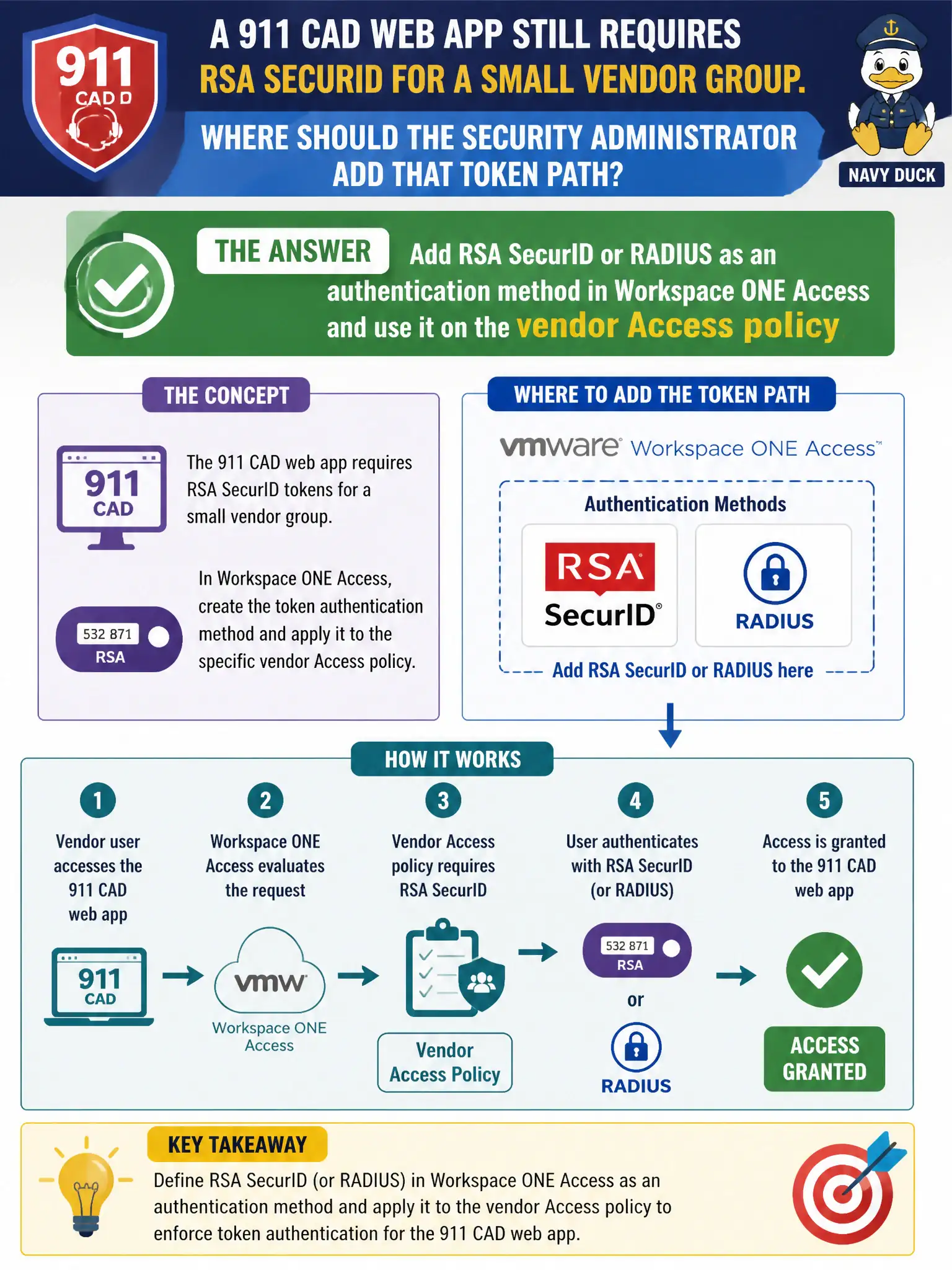
A 911 CAD web app still requires RSA SecurID for a small vendor group. Where should the security administrator add that token path?
Select an answer to reveal the explanation.
Short Explanation
A SecurID fob is just another Access method—think of it as a second lock you bolt onto the vendor door, not a malware alert. Add RSA or RADIUS in Access authentication methods and hang that method on the vendor policy.
Full Explanation
Add RSA SecurID or RADIUS as an authentication method in Workspace ONE Access and attach that method to the vendor Access policy protecting the 911 CAD web app. Hardware-token MFA for a small vendor population is configured as an Access authentication method and policy association, not as an endpoint detection rule. A Carbon Black watchlist that pages the SOC when a vendor opens CAD is monitoring and response, not the authentication factor the CAD path requires. Enabling Mobile SSO (for iOS) on the CAD policy mismatches vendors who authenticate with hardware tokens rather than iOS Mobile SSO. Putting the CAD URL on an NSX identity firewall rule may constrain network access by identity but is not multi-factor authentication inside Access for Hub or web app login. Exam caveat: third-party OTP/RADIUS methods live under Access authentication methods and are scoped per Access policy—do not confuse them with NSX or Carbon Black controls. Operational check: register SecurID/RADIUS in Access, bind it to the vendor policy for CAD, test a vendor token login, confirm staff policies remain unchanged, and document the vendor MFA path in the 911 change record so emergency-services continuity stays auditable for the civic PSAP.