
A county public works department is preparing a multi-year solicitation for traffic paint and glass reflective beads, and past contracts suffered from severe mid-year shortages and unused minimums. Which pre-solicitation analysis should the buyer complete before publishing estimated quantities?
Select an answer to reveal the explanation.
Short Explanation
Forecasting contract quantities without checking past usage is like packing for a trip without checking the weather—you either haul too much or run out halfway there. The trap is copying last year's numbers or asking vendors to guess, when your own historical consumption and project schedules hold the real answer.
Full Explanation
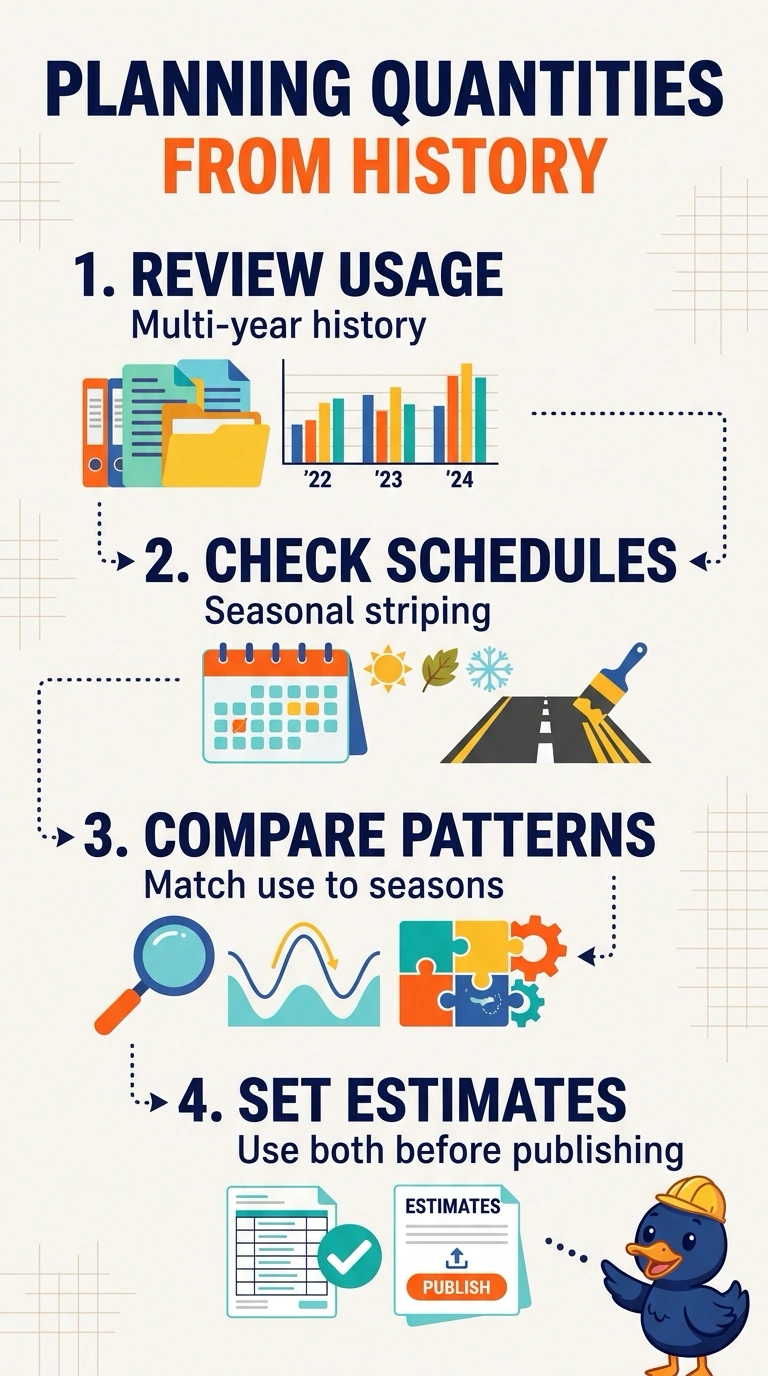
Accurate quantity estimates reduce vendor risk premiums and prevent supply disruptions during peak maintenance seasons. Reviewing multi-year historical usage and seasonal striping schedules gives the buyer an evidence-based demand profile that accounts for weather delays, roadway expansions, and peak spring-summer application windows. Surveying competing paint manufacturers about their preferred minimum order sizes reflects supplier production preferences rather than the county's actual operational need. Copying the prior contract's annual quantity figures after adding a standard inflation percentage perpetuates past forecasting errors and confuses price inflation with changes in lane miles and maintenance plans. Requiring bidders to commit to a single flat annual price for whatever quantity the county orders creates open-ended financial exposure that forces responsible suppliers to inflate unit prices or decline to bid. As a caveat, estimated quantities in term contracts should be explicitly labeled as non-binding estimates unless a guaranteed minimum is budgeted and approved. Operationally, extract three years of warehouse issue records, reconcile them with upcoming road-striping work orders, and state both estimated annual volume and peak-month delivery expectations in the solicitation.
Prefer to study offline? Printable PDF study book + test engine ($7.50, unofficial). These questions stay free here.