
A county fleet department needs twelve utility trucks and finds an active statewide cooperative contract offering the exact vehicle model. Before deciding whether to use the cooperative contract or issue a standalone Invitation for Bids, what should the buyer evaluate?
Select an answer to reveal the explanation.
Short Explanation
A cooperative contract can save you weeks of work, but it is a tool, not an automatic green light. The trap is assuming cooperative pricing and terms always beat a local bid without checking the numbers and rules first.
Full Explanation
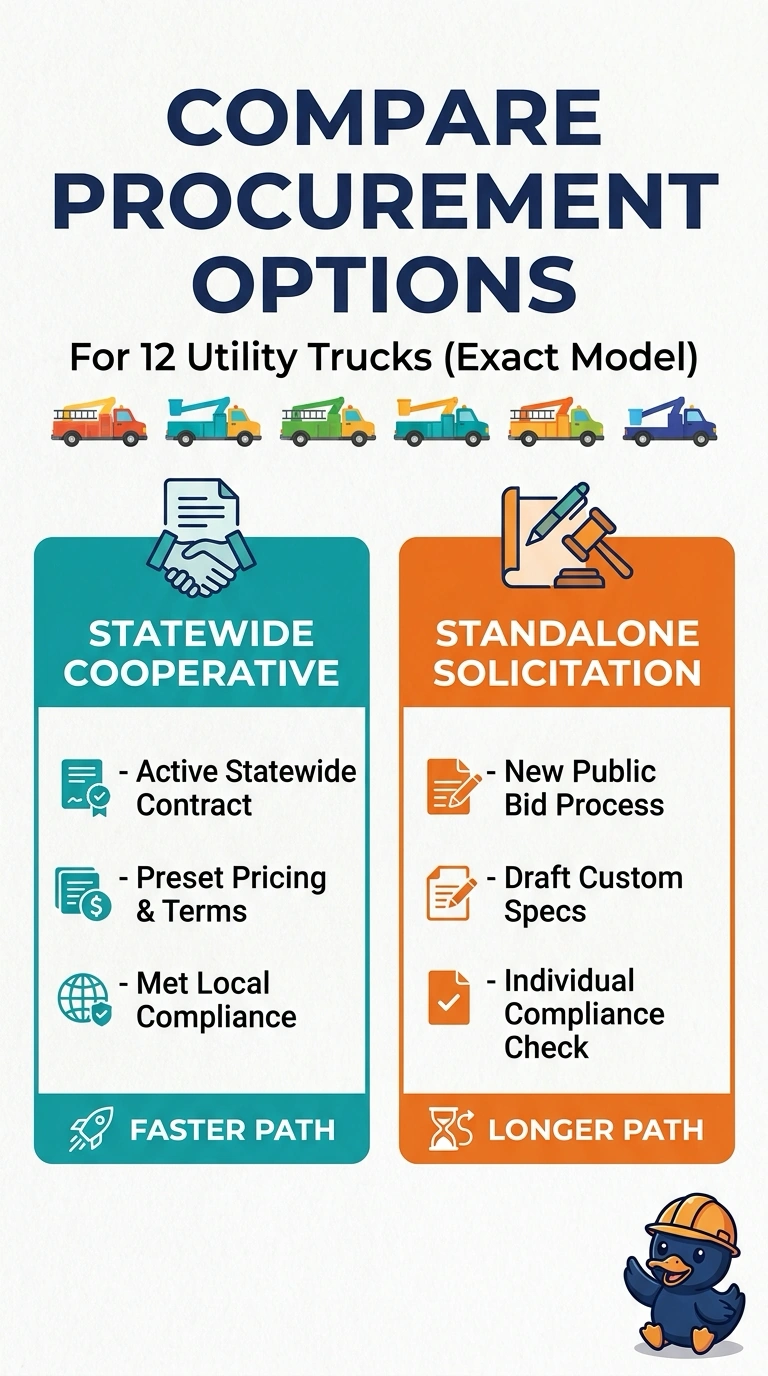
During pre-solicitation planning, choosing a sourcing path requires comparing How cooperative pricing, terms, and local compliance compare with a standalone solicitation rather than assuming piggybacking is always optimal. A twelve-truck order may attract sharper volume discounts locally, or the cooperative's terms may conflict with county insurance, delivery, or statutory requirements. Checking Whether the cooperative contract is advertised on the vendor's commercial website does not verify public-agency award documentation or competitive value. Checking whether the cooperative unit price beats the fleet's last purchase treats a favorable historical price as decisive when the decision requires current comparison of pricing, terms, and local requirements. Focusing on How quickly the dealer can deliver the twelve trucks elevates delivery speed alone over total value and compliance. One caveat is that cooperative use is only valid when the agency's own statutes and the lead agency's solicitation explicitly permit cooperative participation. As an operational check, document a side-by-side comparison of cooperative unit pricing, delivery terms, and local compliance requirements in the pre-solicitation file before selecting the sourcing method.
Prefer to study offline? Printable PDF study book + test engine ($7.50, unofficial). These questions stay free here.