
A school district plans to build a new career-technical education center and is debating whether to award one general construction contract or separate prime contracts for electrical, mechanical, and site work. Which factor should primarily guide this pre-solicitation choice?
Select an answer to reveal the explanation.
Short Explanation
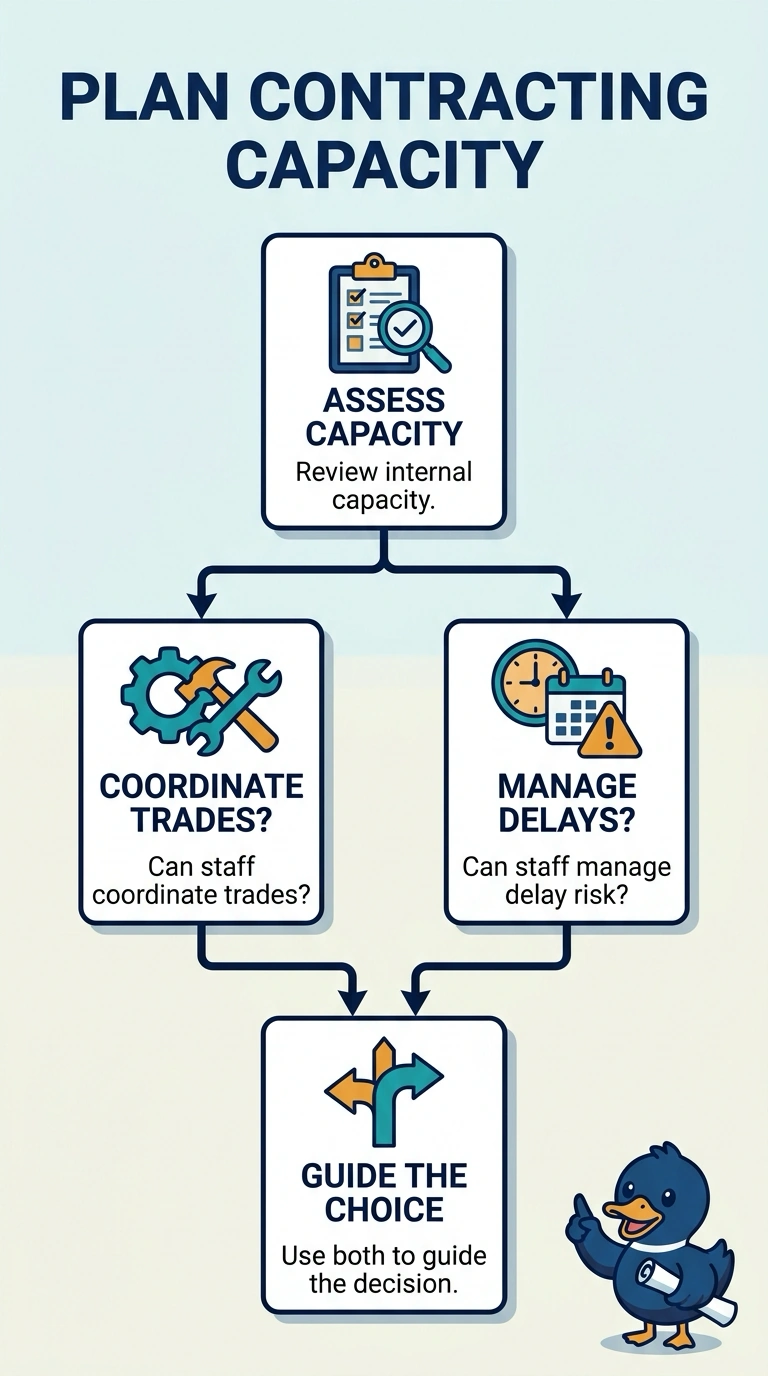
Splitting a building into separate prime contracts only works if you have the staff to conduct the entire construction orchestra. Your trap is assuming multi-prime contracting lets you skip performance bonding or overlook trade scheduling instead of weighing whether your district can actually manage cross-trade delays.
Full Explanation
The decisive planning factor when structuring construction contracting is The district's internal capacity to coordinate trades and manage delay risk. Under a single-prime contract, one general contractor coordinates all subcontractors and bears schedule-integration risk, whereas multi-prime contracting shifts cross-trade coordination, interference claims, and schedule sequencing directly onto the public owner unless a construction manager is engaged. Focusing on Which delivery approach lets the district publish the solicitation earliest confuses issuance speed with project value. Considering Whether local trade contractors prefer smaller prime contract packages treats contractor preference as decisive while ignoring the owner's responsibility for coordination and delay management. Assuming Whether the district can skip performance bonding under a multi-prime model is flawed because statutory bonding thresholds apply to prime contracts regardless of trade splitting. One caveat is that some state laws mandate separate prime bids for public building trades above statutory thresholds. As an operational check, assess internal project-management staffing and statutory trade-bidding rules before finalizing the solicitation structure.
Prefer to study offline? Printable PDF study book + test engine ($7.50, unofficial). These questions stay free here.