
A state corrections agency's food service buyer is offered a steep volume discount to purchase a twelve-month supply of shelf-stable dry goods and canned provisions in a single upfront shipment. What should the buyer do before committing to the bulk order?
Select an answer to reveal the explanation.
Short Explanation
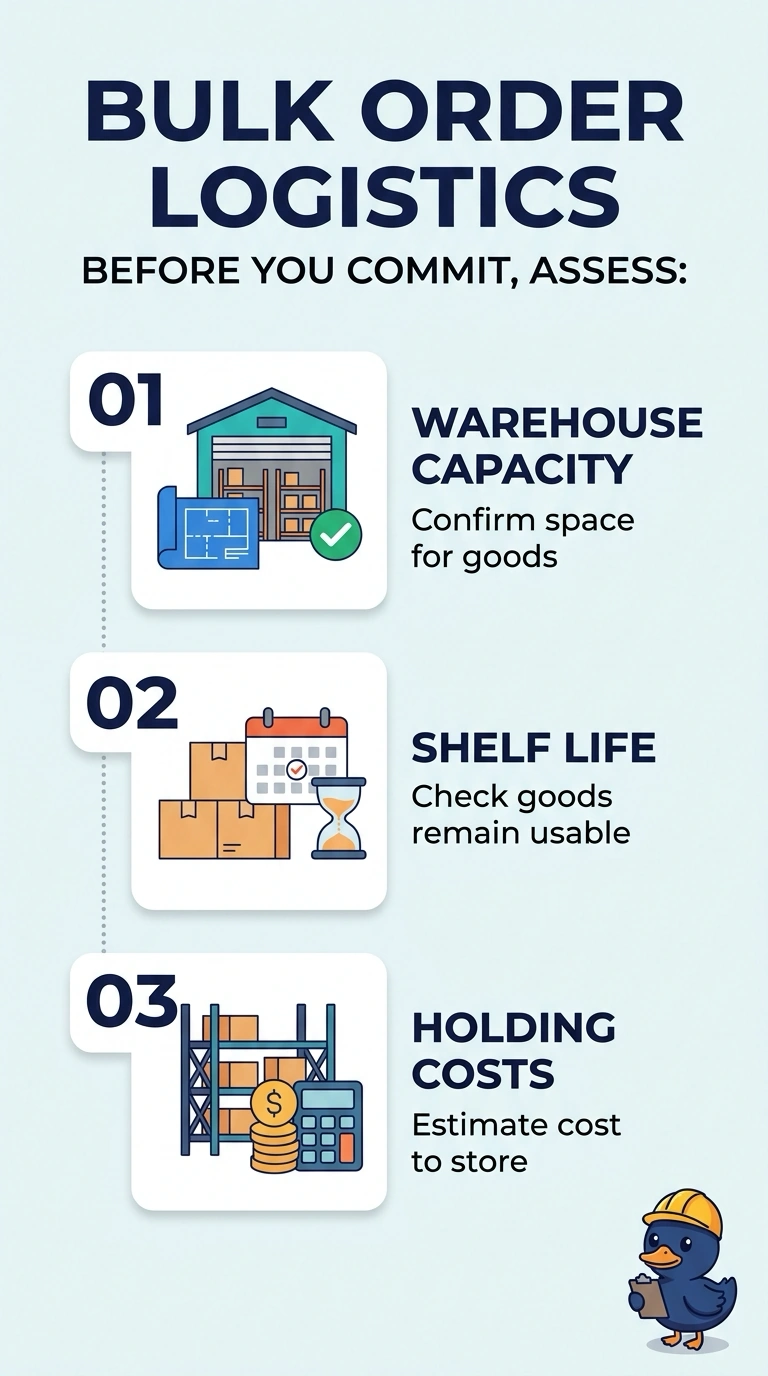
A steep bulk discount can lose its shine if your kitchens cannot use the goods before they spoil. Before you commit, check warehouse capacity, shelf life, and holding costs rather than accepting the discount immediately without checking capacity.
Full Explanation
The buyer must assess warehouse capacity, shelf life, and holding costs to verify that the agency can safely store, rotate, and consume the inventory before spoilage, damage, or handling expenses erase the unit-price discount. Accepting the bulk discount to lower unit costs risks overcrowded aisles, inadequate storage conditions, and spoiled inventory write-offs. Comparing the discount only with last year's unit price understates total cost because warehousing, handling, insurance, and spoilage write-offs can erase the apparent unit-price saving. Paying in full now but having the supplier hold the goods is problematic because off-site vendor storage of paid goods creates title, insurance, and verification problems. The key pre-solicitation decision is whether the agency can accommodate and use the full shipment economically, not simply whether the per-unit price is lower. Caveat: verify whether grant or fiscal-year budget rules restrict prepaying for goods consumed in a later period. As a practical check, confirm available pallet positions and historical monthly usage rates with warehouse staff before committing to the order quantity.
Prefer to study offline? Printable PDF study book + test engine ($7.50, unofficial). These questions stay free here.