
A municipal public works department makes dozens of small, urgent hardware and fastener purchases each month from local suppliers, creating heavy purchase-order paperwork for low-dollar items. Which pre-solicitation arrangement best streamlines these recurring buys while maintaining spending controls?
Select an answer to reveal the explanation.
Short Explanation
Picture a pre-approved charge tab at the hardware store that automatically stops when it hits your monthly limit. The trap is reaching for full formal bidding on every small purchase, which buries your buyers in paperwork instead of using a controlled blanket agreement.
Full Explanation
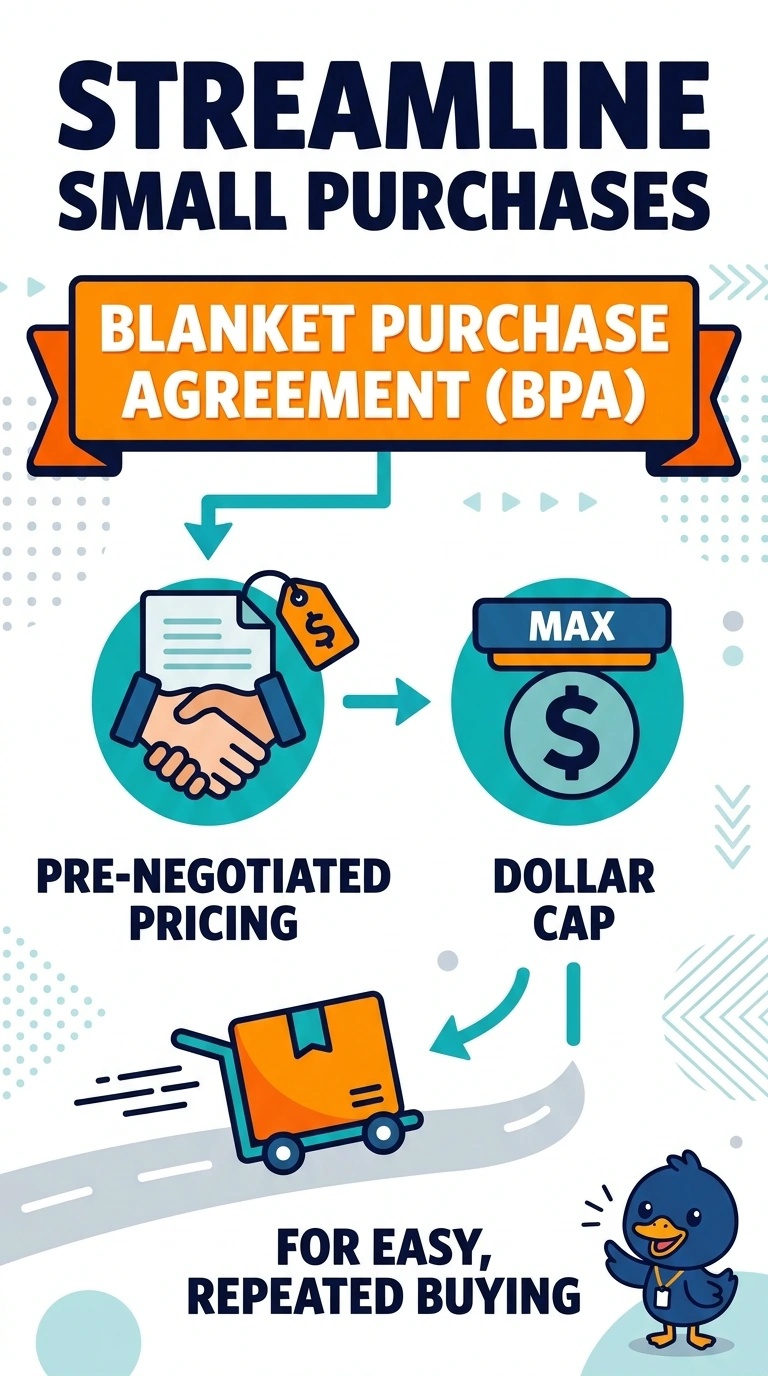
The most effective tool for repetitive, low-dollar, unpredictable supply needs is A Blanket Purchase Agreement with pre-negotiated pricing and a dollar cap. This structure establishes unit pricing, authorized buyers, per-order limits, and an overall ceiling in advance, allowing field crews to pick up supplies quickly while finance retains strict audit and budget control. Running A formal Invitation for Bids issued separately for each monthly hardware order creates administrative bottlenecks and transaction costs that exceed the value of the fasteners. Awarding A single-vendor standing order awarded to the nearest store after one informal phone quote fails to provide adequate competition and ongoing price controls when multiple local hardware vendors can supply standard items. Using A time-and-materials agreement that reimburses fastener purchases at cost plus a markup leaves total cost open-ended and rewards higher spending instead of locking in firm pricing under a ceiling. As a caveat, blanket agreements must still be competed or rotated fairly according to local threshold rules. For an operational check, audit monthly statements against authorized-buyer lists and remaining ceiling balances before approving payment.
Prefer to study offline? Printable PDF study book + test engine ($7.50, unofficial). These questions stay free here.