
A regional transit authority wants to upgrade bus stop lighting to reduce energy use and improve nighttime visibility. Which specification approach best supports competition and innovation?
Select an answer to reveal the explanation.
Short Explanation
When you tell vendors what outcome you need instead of how to build every bolt, you invite better ideas and sharper pricing. The trap is over-specifying design details that unintentionally disqualify newer, more efficient solutions.
Full Explanation
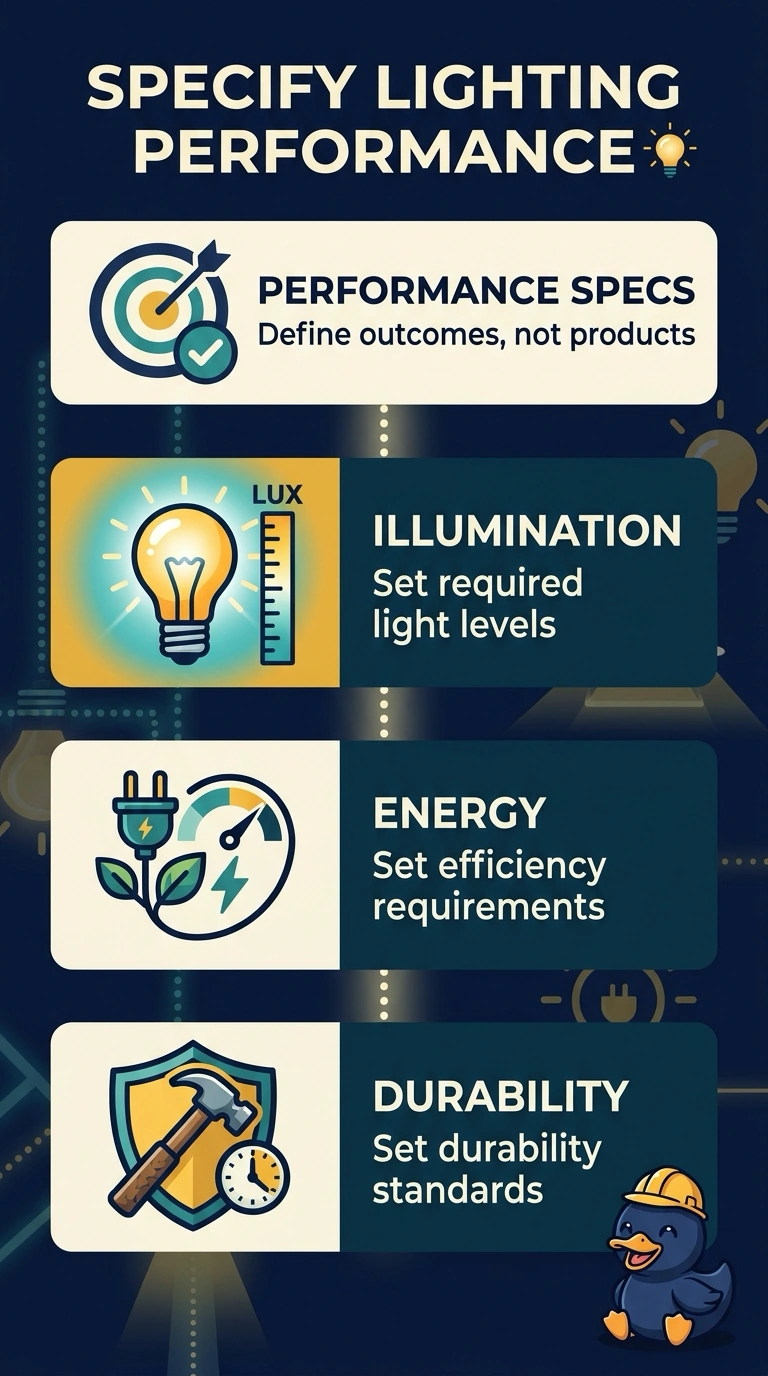
Selecting Performance specifications defining required illumination levels, energy efficiency, and durability standards focuses competition on measurable results rather than a single technical method, allowing vendors to propose innovative LED, solar, or adaptive lighting systems that meet the agency's operational needs. By contrast, Design specifications detailing exact housing dimensions, wiring gauges, and mounting brackets prescribe how the product must be built, which shifts performance risk onto the transit authority and blocks alternative technologies. Using Brand-name specifications naming the incumbent manufacturer's newest LED model with an or-equal clause still anchors competition to one manufacturer's design as the baseline, which can discourage different approaches even though equals are permitted and requires evaluators to judge equivalency. Similarly, Proprietary specifications drafted directly from a single local distributor's catalog undermine fair and open competition by tailoring requirements to one seller. As a caveat, performance specifications still require objective testing or certification criteria so evaluators can verify claims consistently across bids. Operationally, collaborate with facilities engineers to establish minimum lumen, weather-resistance, and warranty benchmarks, then confirm during market research that multiple suppliers can meet them.
Prefer to study offline? Printable PDF study book + test engine ($7.50, unofficial). These questions stay free here.