
A county road department knows it will need asphalt patching materials throughout the coming fiscal year, but exact tonnages and delivery dates depend on unpredictable winter weather damage. Which contract structure best accommodates this uncertainty?
Select an answer to reveal the explanation.
Short Explanation
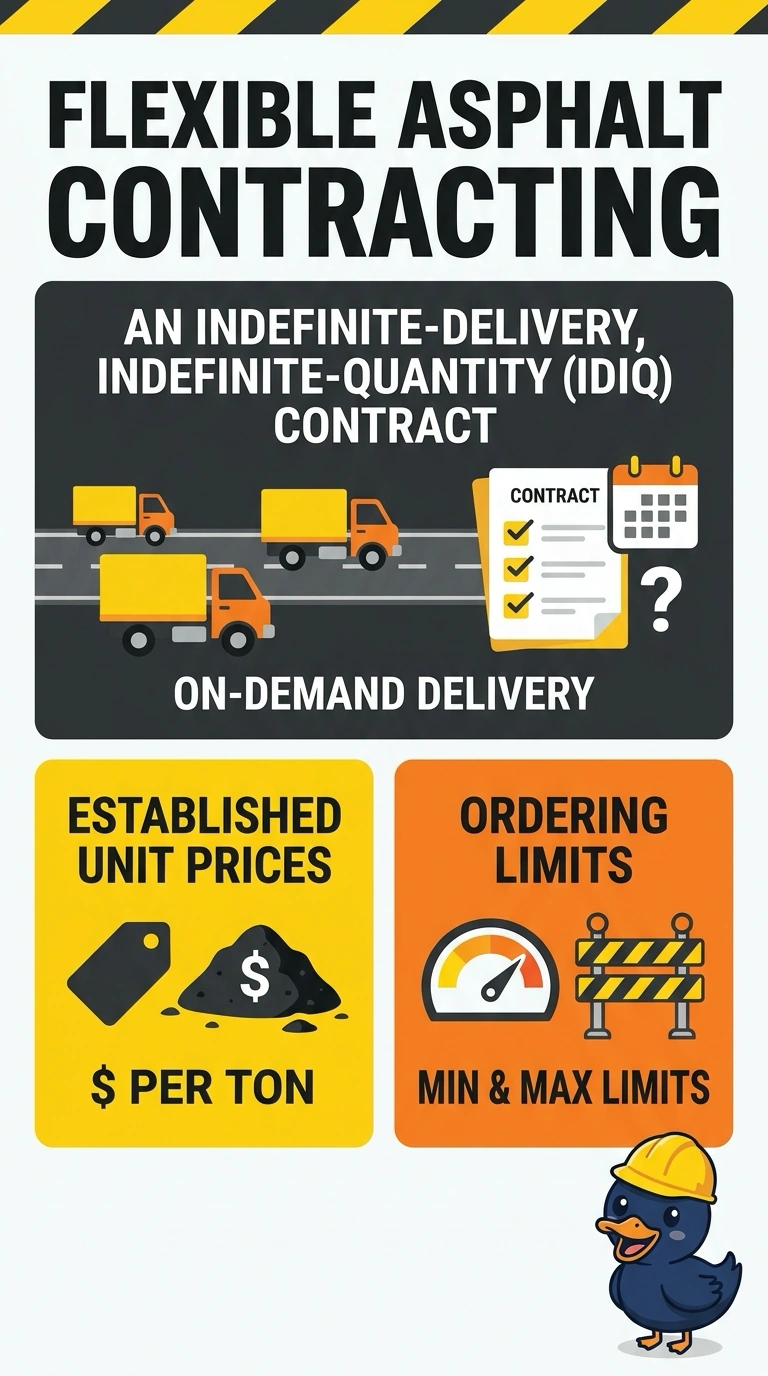
When you know what you need to buy but cannot predict how much or when, locking into a rigid lump sum wastes money. An indefinite-delivery, indefinite-quantity contract gives your crews pre-competed unit prices on demand. The trap is splitting your routine seasonal need into small buys to stay under bidding rules or signing an open-ended cost-plus tab.
Full Explanation
Public agencies frequently face recurring operational needs whose exact timing and volume fluctuate with weather or usage. An indefinite-delivery, indefinite-quantity contract with established unit prices and ordering limits locks in competitive unit pricing upfront while allowing the county to issue task or delivery orders only when potholes require repair, bounded by minimum and maximum quantity guardrails. A firm-fixed-price lump-sum contract for the maximum estimated tonnage, paid in one annual installment forces taxpayers to pay for unused material if winter weather is mild. A cost-plus-percentage-of-cost contract that reimburses the supplier's actual costs plus an uncapped fee is generally prohibited in public procurement because it gives the vendor a financial incentive to inflate costs. A series of small open-market purchase orders issued each time patching material is needed, kept under the formal bid threshold improperly splits a foreseeable annual requirement to avoid competition and sacrifices volume pricing. As a caveat, state realistic estimated quantities in the solicitation so bidders can price unit rates accurately without excessive risk premiums. As an operational check, track cumulative order totals against the contract's maximum ceiling before issuing each new delivery order.
Prefer to study offline? Printable PDF study book + test engine ($7.50, unofficial). These questions stay free here.