
A state university's procurement team notices that twelve academic departments buy laboratory consumables independently from various distributors using procurement cards and small purchase orders. Which pre-solicitation analysis should the team conduct first to quantify consolidation opportunities and support a strategic sourcing plan?
Select an answer to reveal the explanation.
Short Explanation
Buying without looking at your historical spend is like grocery shopping without checking your receipts: you never realize how much you are overpaying in small trips. The trap is jumping straight to a solicitation, cutting off cards, or picking a single supplier without data. Map your actual spend first so your sourcing strategy rests on facts.
Full Explanation
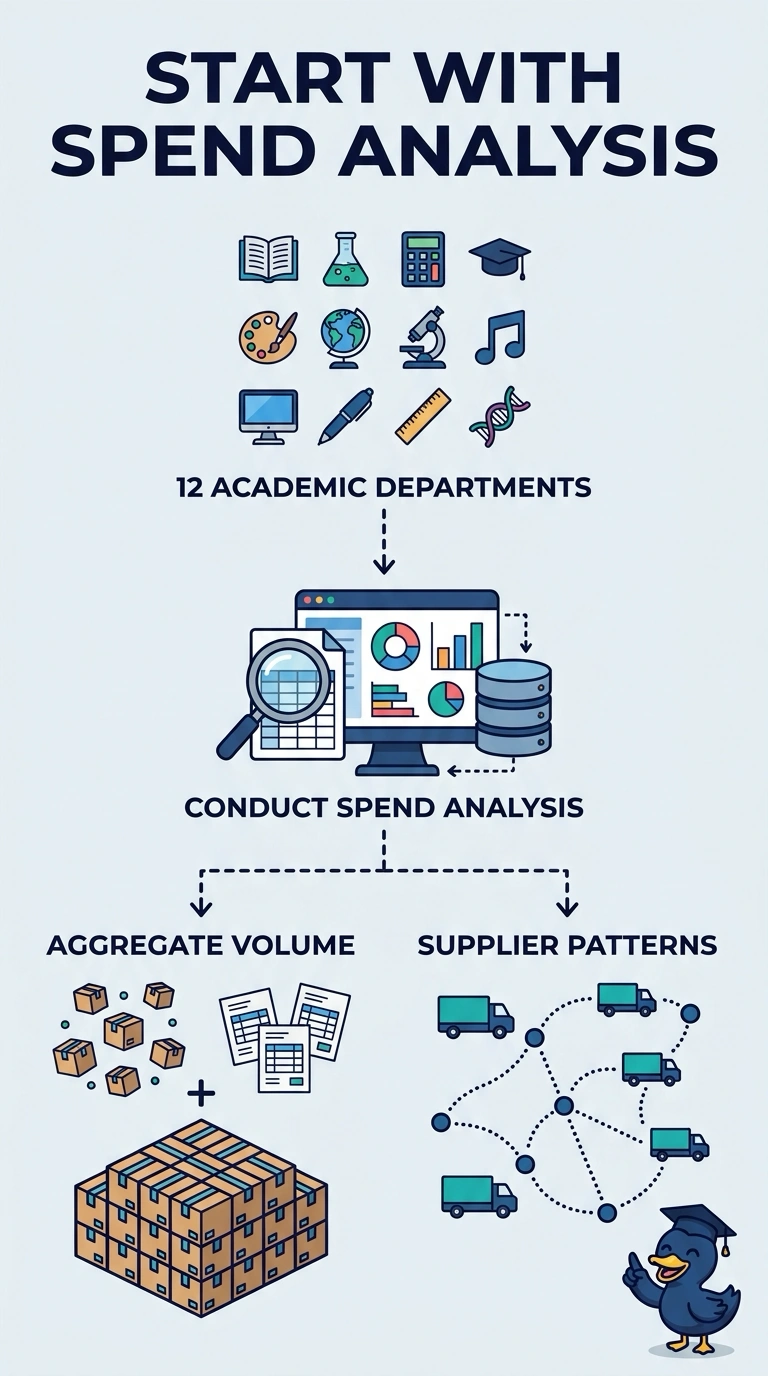
Effective pre-solicitation planning starts with reliable demand data, so the university should Conduct a spend analysis across departments to aggregate volume and supplier patterns before designing a solicitation. Examining historical transactions by commodity, department, and supplier reveals fragmented buying, price variance, and high-volume items suitable for a consolidated term contract. Choosing to Issue a formal sealed bid using estimated quantities from one lab risks inaccurate volume commitments, skewed pricing, and unmet requirements across the remaining departments. Deciding to Suspend laboratory procurement cards and require central purchasing approval of consumable orders imposes centralized control without analyzing volume or supplier patterns to justify consolidation. Asking the largest current distributor to propose a volume discount for all twelve departments favors an incumbent without competition and locks in pricing without testing the market. Even after compiling spend data, buyers must still validate future research schedules and specialized technical requirements with lab managers because historical purchases do not always reflect upcoming changes. As an operational check, extract twelve to twenty-four months of purchase order and card transactions, group items by commodity code, and review the top spend categories with departmental stakeholders.
Prefer to study offline? Printable PDF study book + test engine ($7.50, unofficial). These questions stay free here.