
A state university's facilities department is debating whether to hire two full-time in-house plumbers or outsource routine campus plumbing repairs to a term contractor over the next three years. Which pre-solicitation analysis should the buyer facilitate first?
Select an answer to reveal the explanation.
Short Explanation
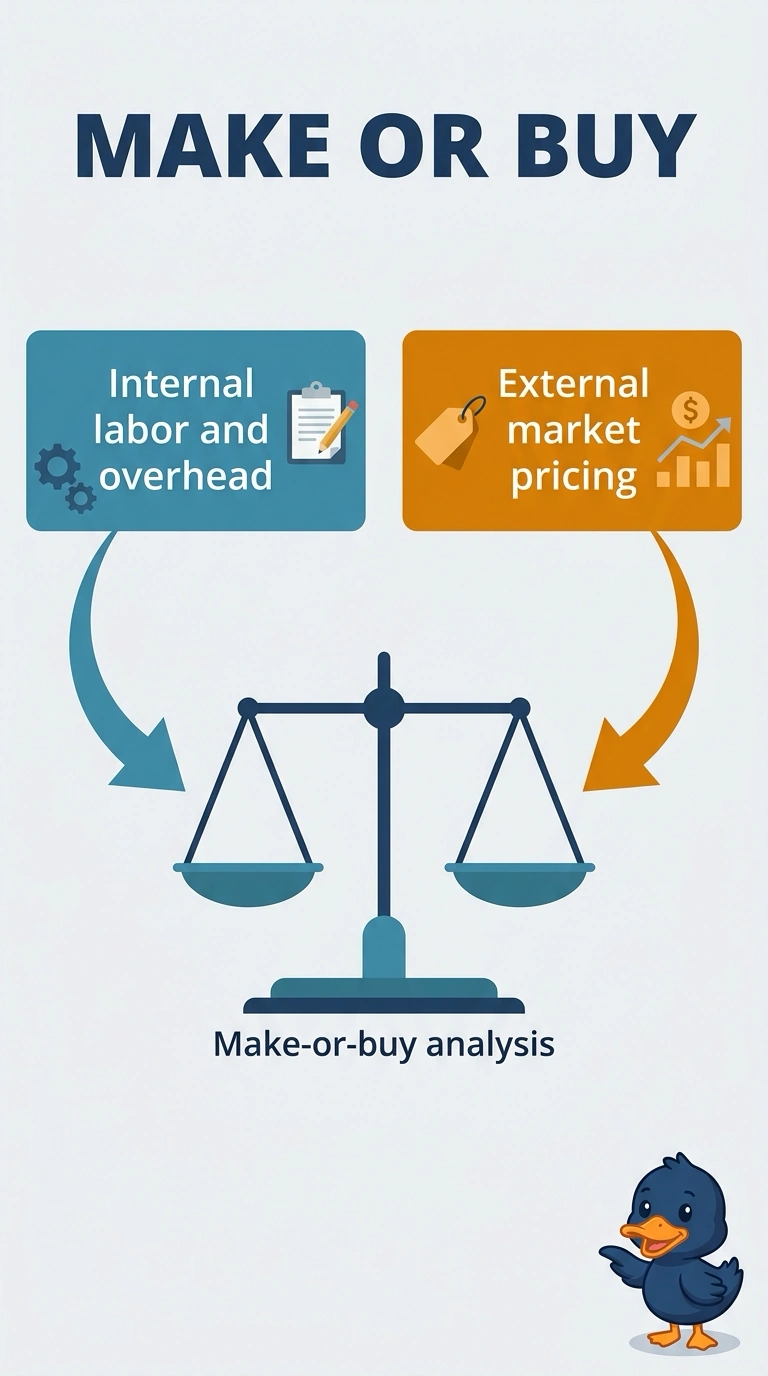
Before you shop the market or add staff, you have to run the numbers on both sides of the fence. A make-or-buy analysis weighs true internal costs—salaries, benefits, tools, and supervision—against what contractors charge. The trap is jumping straight into a sourcing event before deciding whether to buy at all.
Full Explanation
During pre-solicitation planning, agencies must determine whether fulfilling a need internally or contracting externally delivers better value and operational control. A make-or-buy analysis comparing internal labor and overhead costs against external market pricing evaluates full burdened employee expenses, equipment, supervision, response-time requirements, and market rates before committing to either hiring or solicitation. A reverse auction to drive down hourly labor rates before deciding whether to outsource the work puts a competitive bidding tool ahead of the fundamental sourcing strategy decision and risks lowball bids without defined scope. A sole-source justification arguing that in-house staff lack familiarity with campus building layouts is illogical because internal staff typically know campus facilities best and many qualified plumbing firms can compete. A post-award contract audit reviewing invoices from previous emergency plumbing repairs across campus looks backward at past emergencies rather than modeling total three-year routine service costs. As a caveat, include non-financial factors such as union agreements, peak workload capacity, and institutional knowledge. As an operational check, validate internal benefit rates and overhead assumptions with budget staff before presenting the comparison.
Prefer to study offline? Printable PDF study book + test engine ($7.50, unofficial). These questions stay free here.