
A school district's accounts payable clerk receives an email from a regular construction contractor requesting an urgent change to its electronic bank-routing and remit-to details. Which business control best protects the district against payment-diversion fraud?
Select an answer to reveal the explanation.
Short Explanation
An email asking you to wire money to a new account is like a stranger wearing your neighbor's hat at the bank window. Your trap is trusting a reply or logo inside the same email, when safe verification requires calling a trusted number already on file.
Full Explanation
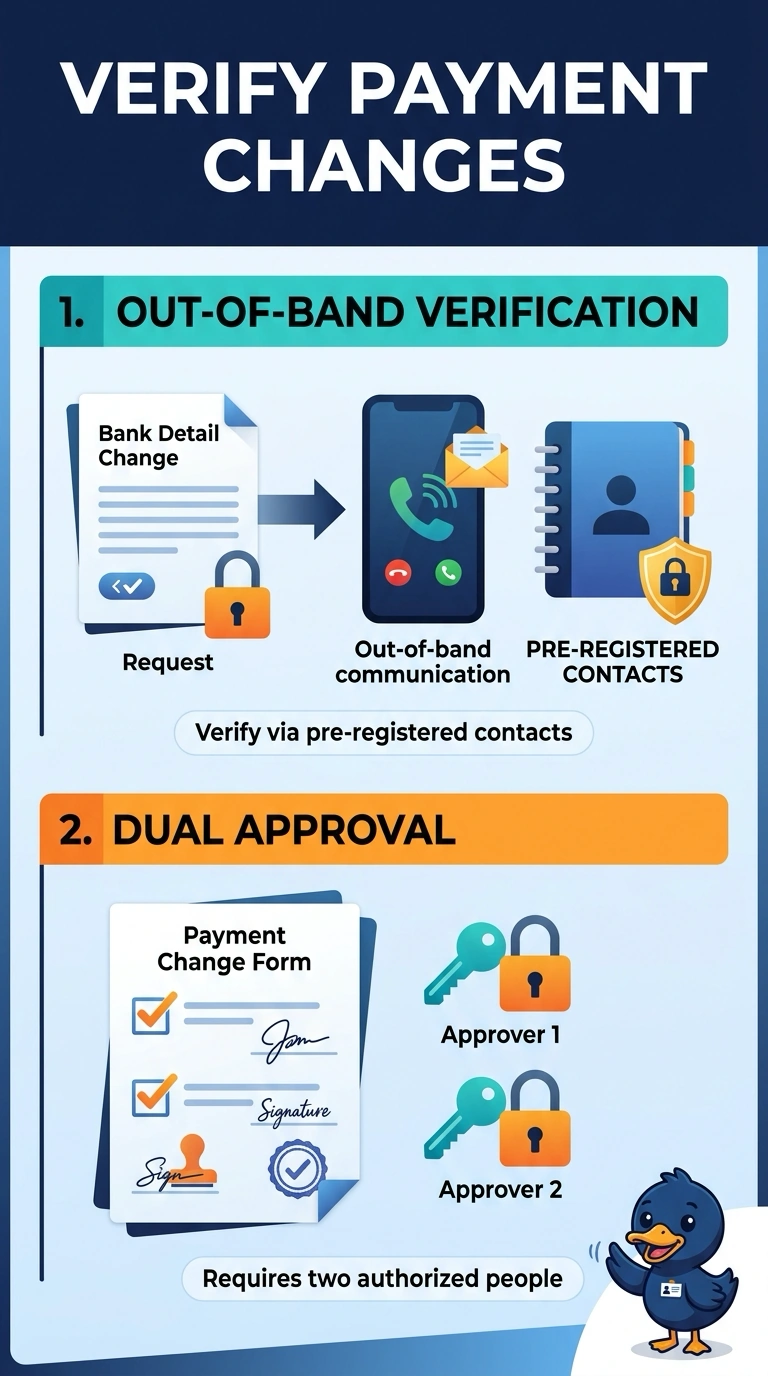
Choosing to Require out-of-band verification via pre-registered contacts and dual approval defeats business-email-compromise schemes by confirming the change through an independent phone number stored in the verified vendor master record, paired with a second-person review. Choosing to Update the routing number after the clerk replies to the same email and the sender repeats the account number still relies on in-band confirmation because a repeated account number from the same compromised thread does not prove the legitimate vendor authorized it. Choosing to Reply directly to the incoming email thread asking the sender to confirm the new account simply asks the potential attacker to validate their own fraudulent request. Choosing to Call the phone number in the email signature and update the bank account if that person agrees still uses in-band verification because that number may belong to the fraudster, not the legitimate vendor. As a caveat, verification must use contact details captured during initial vendor onboarding rather than any phone number listed inside the suspicious change-request email. Operationally, enforce a written vendor-change policy requiring documented callback verification to the pre-registered primary contact and secondary finance sign-off before releasing any electronic payment.
Prefer to study offline? Printable PDF study book + test engine ($7.50, unofficial). These questions stay free here.