
A county procurement office struggles with inaccurate category spend reports because departmental staff enter vague free-text item descriptions and arbitrary expense codes on purchase requisitions. Which business practice best resolves this data-quality issue?
Select an answer to reveal the explanation.
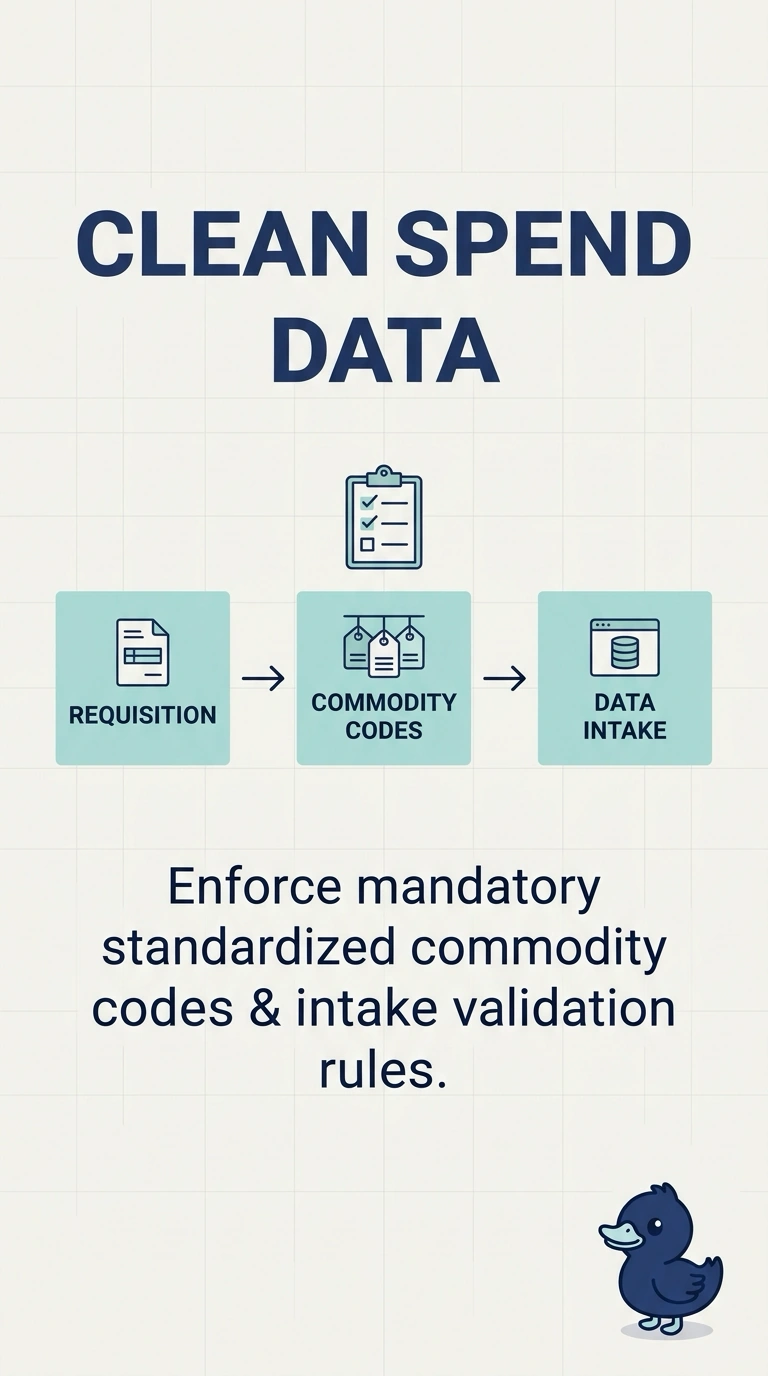
Short Explanation
Clean spend analytics start at the front door of your purchasing workflow, not in a year-end cleanup spreadsheet. The trap is trying to fix messy requisition data downstream after hundreds of poorly coded orders have already been paid. When you enforce structured commodity codes at intake, every report stays reliable from day one.
Full Explanation
Reliable procurement analytics depend on capturing clean, consistent data at the point of requisition entry, which is why the office should Enforce mandatory standardized commodity codes and intake validation rules in the e-procurement system. Structured classification prevents vague free-text entries and ensures spend rolls up accurately across departments for strategic sourcing and compliance reporting. Choosing to Instruct accounts payable clerks to manually recategorize invoices at fiscal year-end shifts a preventable data-entry problem onto finance staff, introducing delays and human classification errors. Trying to Restrict departmental buyers from submitting purchase requisitions without prior finance director approval adds an administrative bottleneck without fixing the underlying lack of standardized item coding. Likewise, deciding to Export raw purchase-order text quarterly and estimate category totals using manual spreadsheet sampling produces approximate figures rather than auditable spend records. As a caveat, overly granular code lists can frustrate occasional requisitioners, so pair system validation with a concise, searchable catalog of common agency codes. Operationally, run a monthly exception report on miscellaneous or catch-all commodity codes to coach departments and refine validation rules.
Prefer to study offline? Printable PDF study book + test engine ($7.50, unofficial). These questions stay free here.