
A public school district is retiring 250 obsolete desktop computers and servers that no longer have resale value and contain student and payroll records. Which surplus disposition practice best protects district data and environmental compliance?
Select an answer to reveal the explanation.
Short Explanation
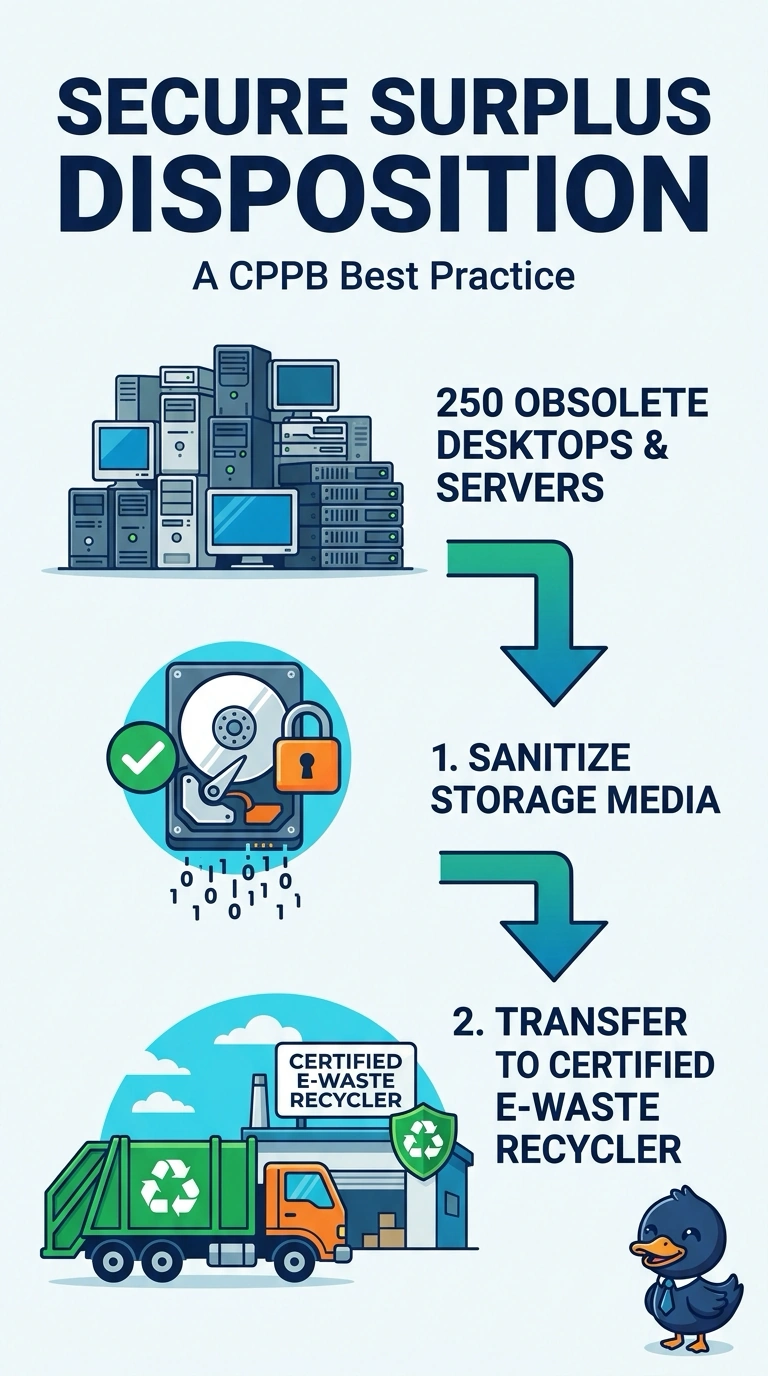
Tossing old computers into the trash or handing them out with intact drives is like donating a filing cabinet full of your agency's payroll folders. Sanitizing the drives and using a certified e-waste recycler protects student privacy and keeps hazardous materials out of landfills. A local scrap yard is not a certified sanitizer or recycler and gives you no destruction certificate.
Full Explanation
End-of-life IT hardware carries dual compliance obligations: preventing unauthorized disclosure of sensitive records and complying with environmental disposal rules for electronic components. Sanitizing storage media and transferring hardware to a certified e-waste recycler ensures all confidential student and payroll data is permanently wiped or physically destroyed while heavy metals and circuit boards are processed under environmental standards. Donating the computers immediately to local community groups for reuse creates a severe data-breach liability because recoverable student and payroll records remain accessible to unauthorized recipients. Placing the obsolete hardware in regular municipal solid-waste roll-off bins can violate state electronic-waste rules where those bans apply, and either way skips certified handling of circuit boards and heavy metals and risks environmental contamination. Shipping the drives to a local scrap yard for recycling provides no verifiable sanitization, chain of custody, or environmental processing and leaves data exposed to theft. One caveat is that asset-management records must be updated so serialized equipment is formally removed from inventory. As a concrete operational check, obtain written certificates of data destruction and e-waste recycling from the disposition vendor and attach them to the district's surplus property log.
Prefer to study offline? Printable PDF study book + test engine ($7.50, unofficial). These questions stay free here.