
After a regional wildfire exposed confusion over who could approve urgent purchases and what records were required, a county procurement office wants to strengthen disaster readiness. Which proactive business practice best prepares the agency?
Select an answer to reveal the explanation.
Short Explanation
Waiting until a disaster hits to figure out emergency buying rules is like writing a fire-escape plan while the building is already smoking—your team needs clear authority and checklists beforehand. The trap is either freezing critical response with normal timelines or abandoning all controls and audit trails.
Full Explanation
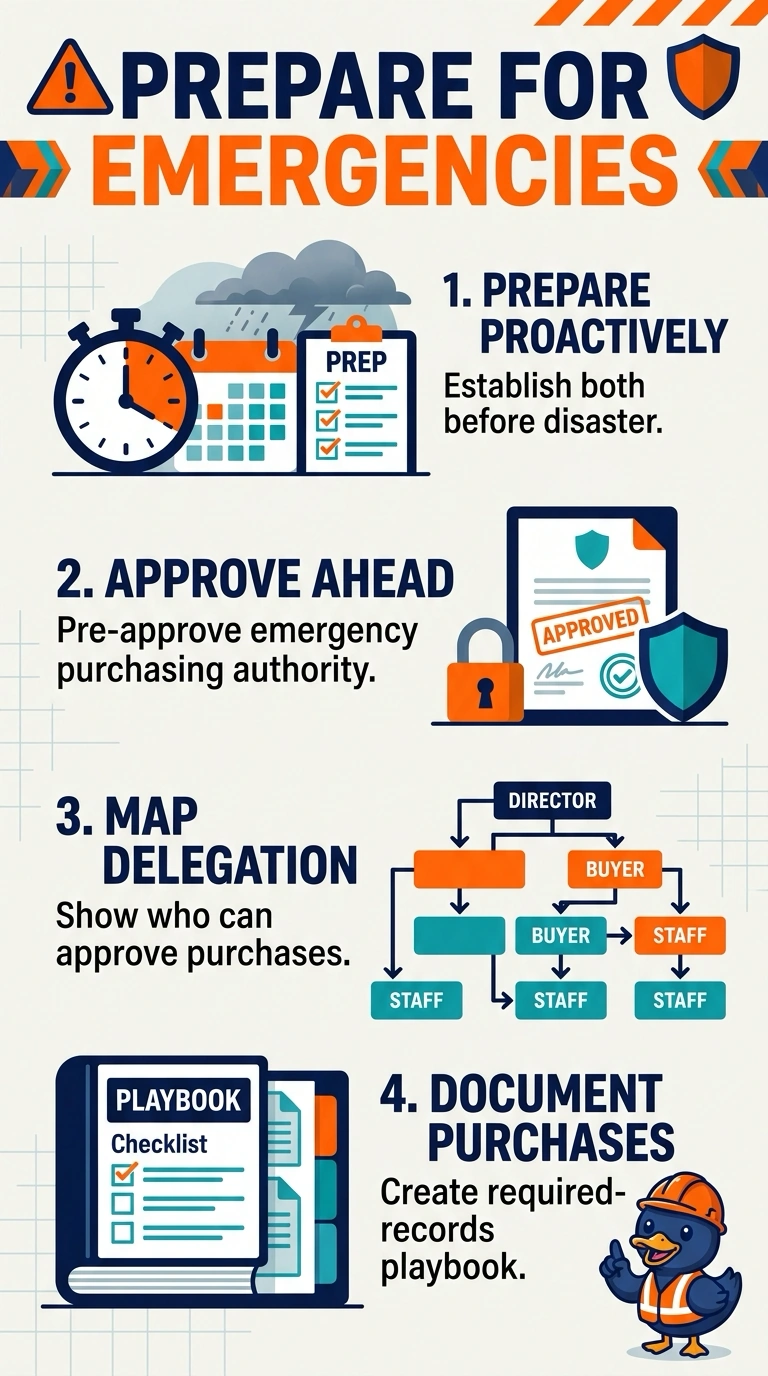
Effective disaster readiness balances rapid response with clear accountability and auditability, especially when federal or state reimbursement funds may be sought later. Establishing a pre-approved emergency delegation matrix and documentation playbook ensures designated officials know their exact spending caps, approval paths, and required justification forms before a crisis begins. Suspending all procurement recordkeeping rules whenever a weather advisory is issued invites fraud, waste, and disallowed disaster-grant reimbursements. Requiring full 30-day sealed bidding even during active life-safety evacuations endangers public safety and ignores lawful emergency procurement exceptions. Giving every field supervisor a standing purchasing card with a raised single-transaction limit for use whenever a weather advisory is posted distributes broad spending authority without a documented delegation, approval path, or required justification and triggers emergency buying on a routine advisory without proper limits or accountability. As a caveat, emergency authority must remain tied to an official declaration or documented imminent threat and be strictly limited in scope and duration. Operationally, review the delegation matrix annually with finance and emergency management, pre-stage simplified emergency justification forms, and train backup approvers.
Prefer to study offline? Printable PDF study book + test engine ($7.50, unofficial). These questions stay free here.