
A city-hall FOIA class is scheduled during a known fire drill. What unique-event plan should the instructor have?
Select an answer to reveal the explanation.
Short Explanation
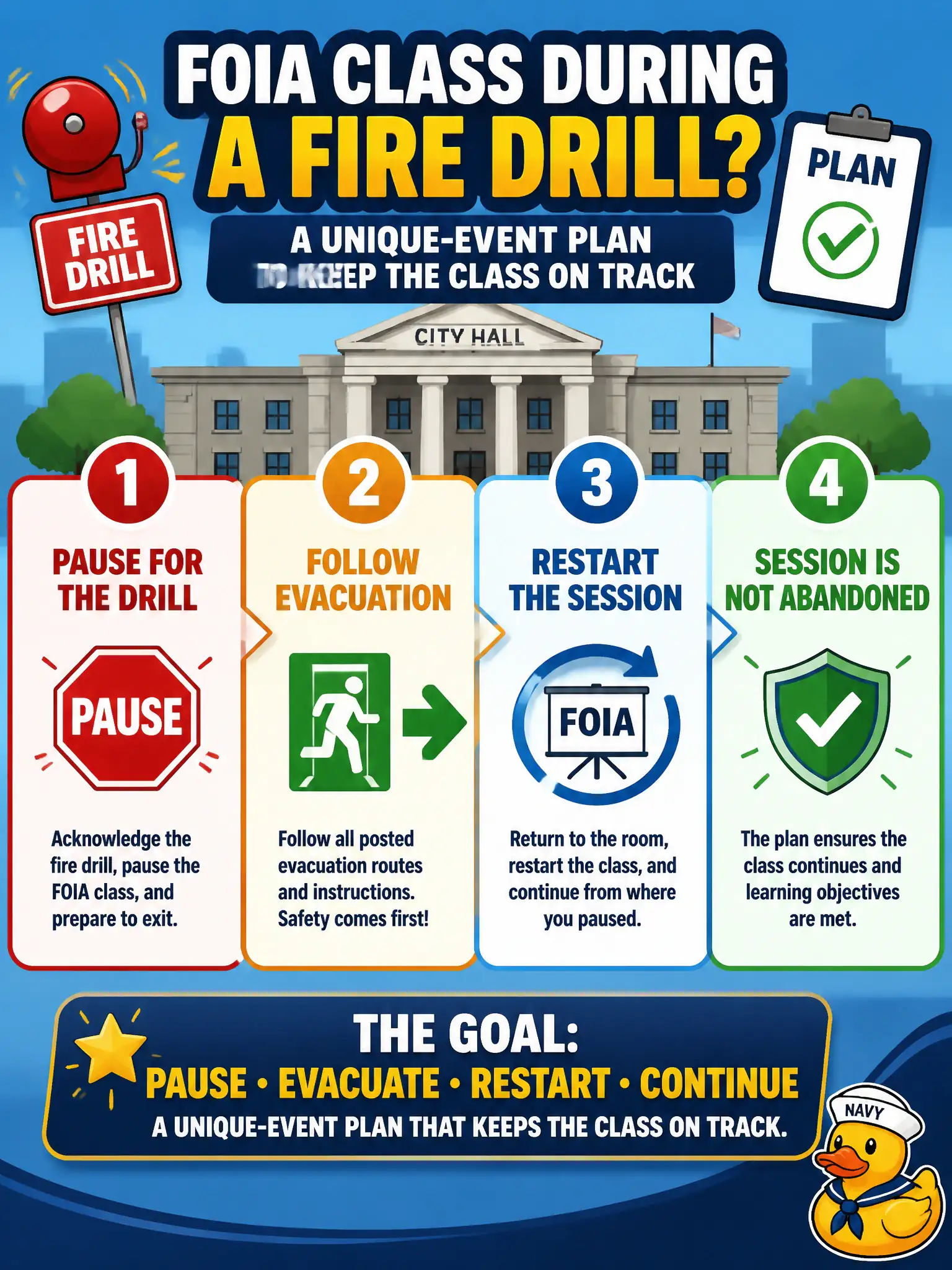
A scheduled fire drill is a known speed bump, not the end of the road. Pause, evacuate with the building, then restart so the FOIA class is delayed—not discarded.
Full Explanation
Known unique events need pause-and-restart plans. A city-hall FOIA class scheduled during a known fire drill should pause for the drill, follow evacuation, and restart so the session is not abandoned. Teaching through the alarm endangers learners and models unsafe behavior. Dismissing permanently once the drill begins and emailing slides afterward abandons remaining objectives without cause. Moving outdoors before the drill and skipping remaining objectives to “save time” uses the drill as an excuse to truncate design. Exam caveat: CTT+ unique-event planning treats drills and alarms as interruptible moments with orderly resume, not as automatic course cancellation. Operational check: note the drill window on the agenda, brief the exit path at open, mark the last completed objective before exit, and resume from that point after all-clear. Known fire drills are unique events you schedule around, not teach through. Pause, evacuate, resume from the last objective. CTT+ unique-event planning rejects both alarm-ignoring and permanent dismissal. Keep a sticky note of the last completed FOIA objective on the podium so restart is crisp after all-clear. Maintain that civic standard in the session file so auditors and future instructors can see how design integrity was preserved under real municipal constraints.