
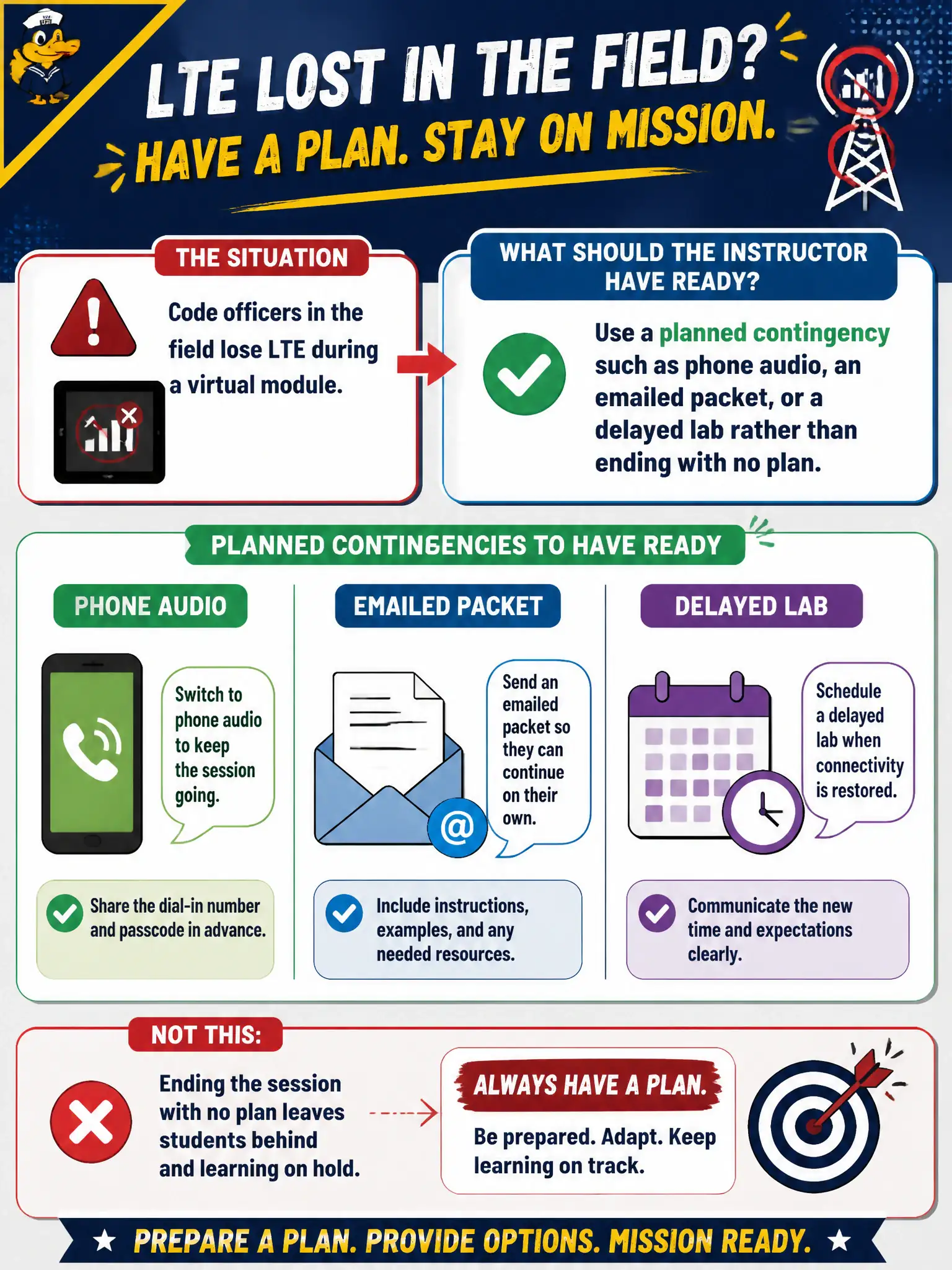
Code officers in the field lose LTE during a virtual module. What should the instructor have ready?
Select an answer to reveal the explanation.
Short Explanation
Field LTE dies the way a picnic loses the sun—you do not throw away the food; you move under the tent. Have a phone-audio, emailed-packet, or delayed-lab backup so the module still has a path.
Full Explanation
Connectivity loss in the field demands a planned contingency. When code officers lose LTE during a virtual module, the instructor should use a prepared fallback—phone audio, an emailed packet, or a delayed lab—rather than ending with no plan. Canceling the remainder and rescheduling only if the county issues a new purchase order turns a transient network blip into procurement theater. Continuing video-only lecture and telling disconnected officers to catch up from memory abandons learners who cannot hear or interact. Requiring officers to drive to headquarters immediately so the virtual design continues unchanged may be impossible mid-shift and ignores planned remote contingencies. Exam caveat: CTT+ virtual delivery expects contingency plans for common municipal network failures. Operational check: pre-stage a phone bridge and offline packet, announce the failover trigger, and practice switching once before the live field cohort. Field LTE drops are normal for code officers between towers and basements. Planned contingencies—phone audio, packets, delayed labs—preserve the module. CTT+ virtual delivery assumes failover thinking. Pre-load the packet on devices before officers leave the yard so offline mode is one tap away when the link dies.