
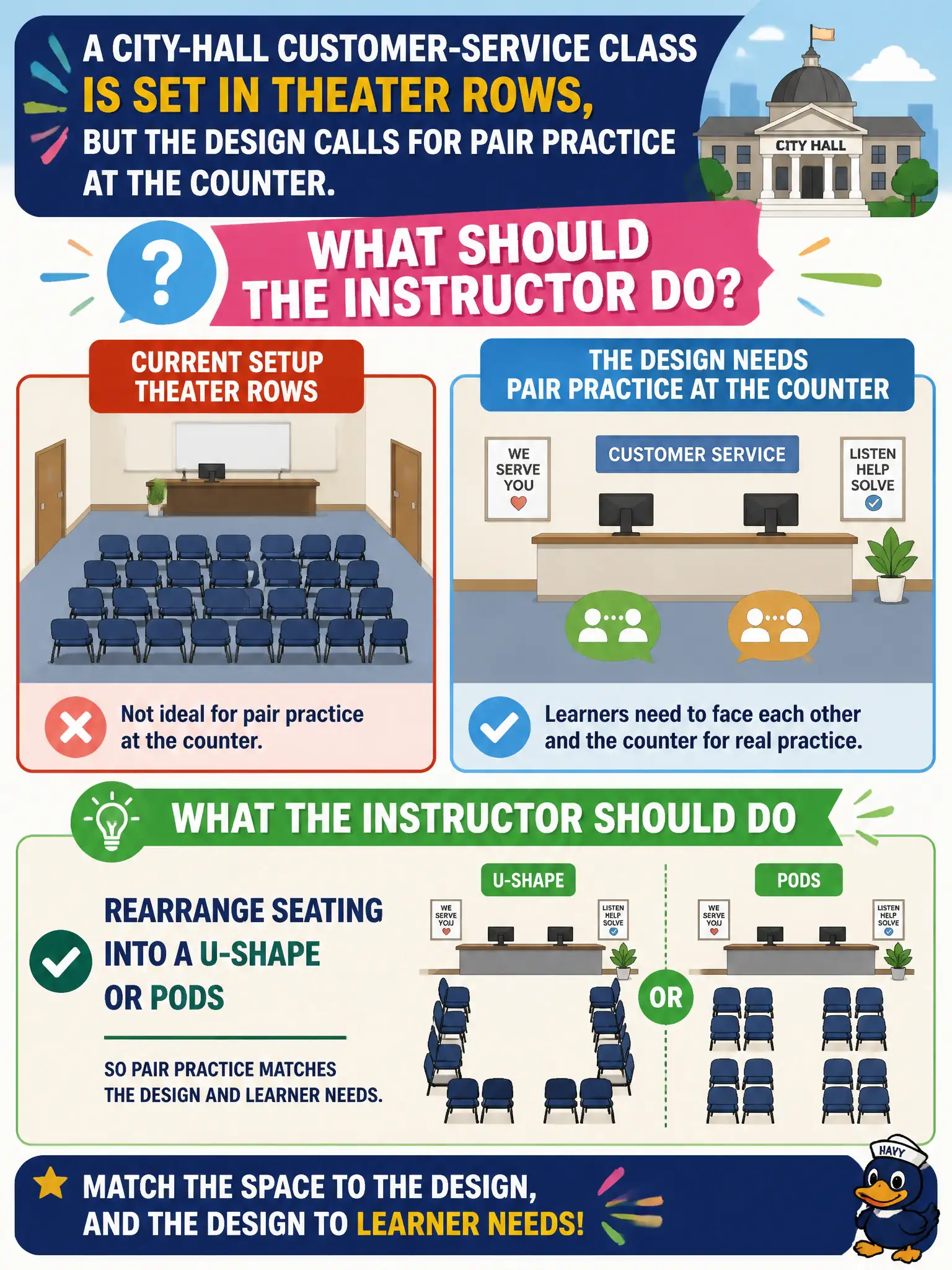
A city-hall customer-service class is set in theater rows, but the design calls for pair practice at the counter. What should the instructor do?
Select an answer to reveal the explanation.
Short Explanation
Theater rows are great for a speech and terrible for pair practice. Move the chairs into a U or pods so people can actually work the counter scenario. The furniture should follow the design, not the other way around.
Full Explanation
Classroom arrangement is an instructional variable. When a city-hall customer-service class is set in theater rows but the design calls for pair practice at the counter, the instructor should rearrange into a U-shape or pods so pair practice matches the design and learner needs. Keeping theater rows because the room arrived that way subordinates learning to furniture inertia. Canceling pair practice to avoid moving furniture abandons a designed participatory method. Asking learners to practice in the hallway after class so the room stays formal pushes required practice outside instructional time and supervision. Exam caveat: CTT+ environment setup includes seating that enables the chosen method. Operational check: arrive early, reconfigure seats for pairs, test sight lines and volume, and restore the room only after practice objectives are met. Customer-service pair practice dies in theater rows because partners cannot face each other or hear counterscripts. Furniture is pedagogy. CTT+ environment setup includes arranging seats for the designed method before content begins. Photograph the reset layout for facilities, restore after class if required, and do not accept “the room was already set” as a reason to cancel practice.