
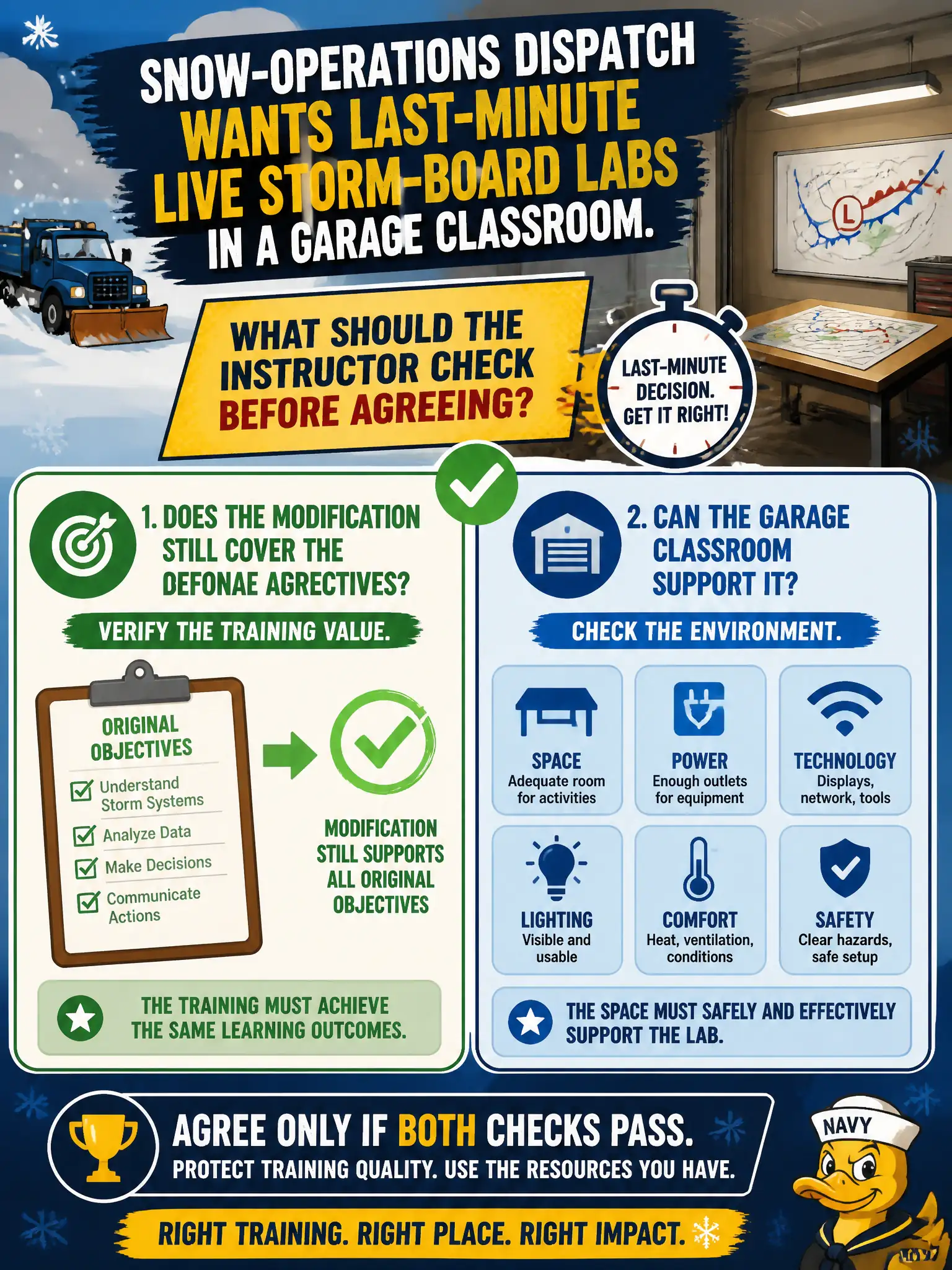
Snow-operations dispatch wants last-minute live storm-board labs in a garage classroom. What should the instructor check before agreeing?
Select an answer to reveal the explanation.
Short Explanation
A live storm board is a cool lab only if it still teaches what the course promised and the garage can actually run it. Check both before you say yes. Last-minute theater is not a substitute for design integrity.
Full Explanation
Last-minute situational labs are acceptable only when they still cover original objectives and the environment can support them. Snow-operations dispatch wanting live storm-board labs in a garage classroom requires the instructor to check both design coverage and garage resource feasibility before agreeing. Letting the live board replace all original objectives regardless of design abandons the course. Treating project-manager critical-path placement as the sole approval criterion confuses project scheduling with instructional integrity. Claiming the vendor forbids any situational change even when resources exist rejects legitimate within-design adaptation. Exam caveat: CTT+ modification decisions weigh objective coverage and logistics together. Operational check: map storm-board labs to each original objective, verify garage power, displays, and accounts, run a dry demo, and approve only if both design and environment checks pass. Storm boards are vivid, but garage classrooms may lack displays, accounts, or safe viewing distance. Dual checks—objective coverage and resource support—decide whether a last-minute lab is adaptation or design breakage. CTT+ modification items often hide that second check. Dry-run the storm-board view from the garage seats; if unreadable or off-objective, keep a simulation alternate rather than forcing a broken live lab.