
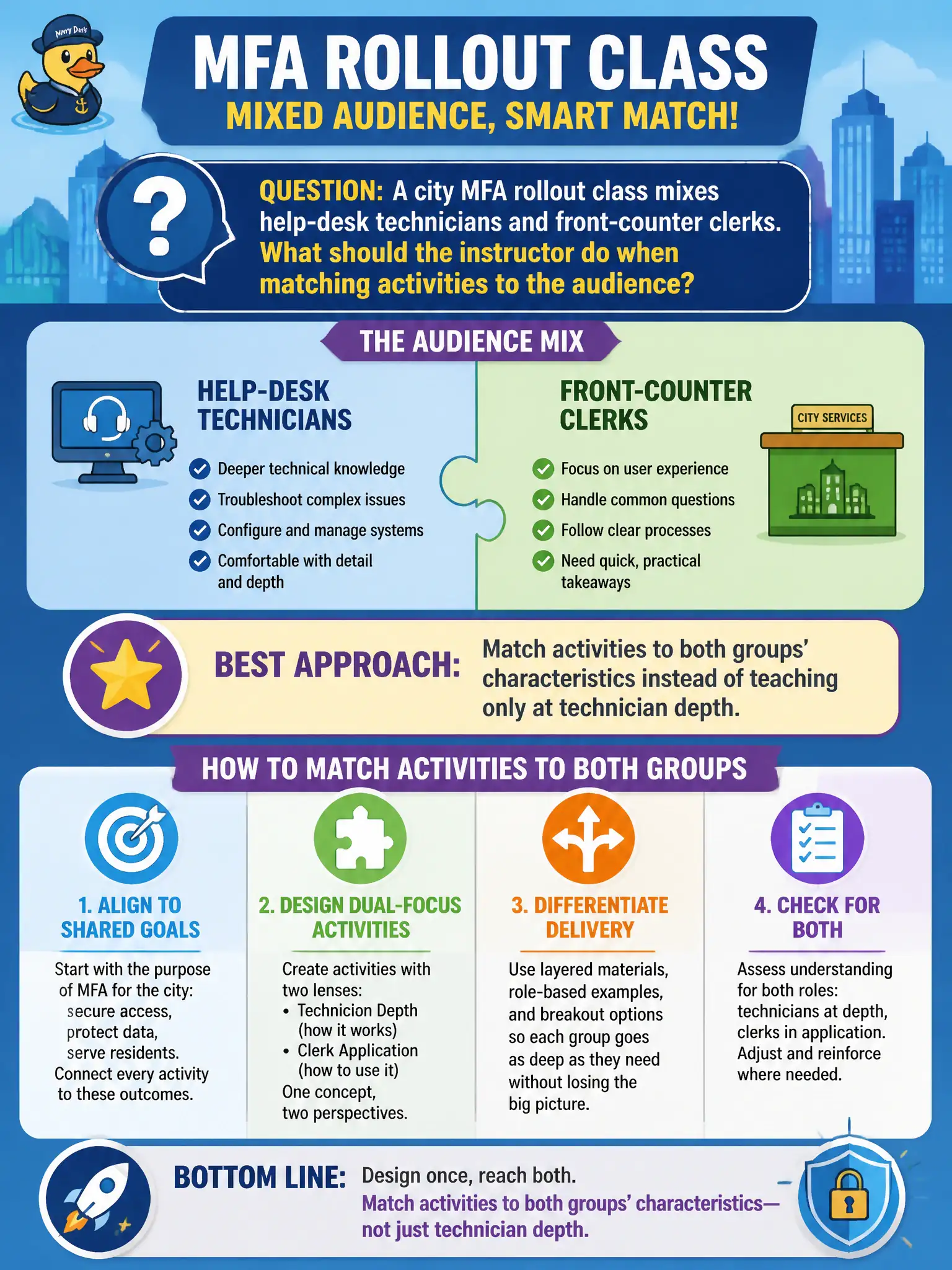
A city MFA rollout class mixes help-desk technicians and front-counter clerks. What should the instructor do when matching activities to the audience?
Select an answer to reveal the explanation.
Short Explanation
Clerks need to enroll a token, not design the identity platform. Aim activities so both the help desk and the front counter can succeed. Teaching only at technician depth leaves the counter lost.
Full Explanation
Mixed audiences require activities matched to learner characteristics across the room. A city MFA rollout class mixing help-desk technicians and front-counter clerks should match activities to both groups’ characteristics instead of teaching only at technician depth. Clerks need usable enrollment and recovery paths; technicians may need deeper troubleshooting without stranding clerks. Lecturing at technician depth so clerks “rise” abandons audience analysis. Splitting clerks out and canceling their MFA requirement undermines the citywide security outcome. Giving technicians a separate technical-cert module during the same hour fragments the offering and may orphan clerks without facilitation. Exam caveat: CTT+ audience analysis for mixed municipal cohorts expects differentiated activities under shared objectives, not retargeting to the strongest subgroup. Operational check: tag each activity as clerk-essential, tech-extension, or shared; sequence shared practice first; add optional deep-dive tasks for technicians without removing clerk practice time. Security rollouts fail when clerks cannot enroll devices even if technicians can troubleshoot RADIUS. Matching activities to both profiles under shared MFA objectives is audience analysis in action. CTT+ penalizes teaching only to the strongest subgroup. Build a common enrollment lab for everyone, then an optional ticket-triage extension for help-desk staff that does not consume clerks’ practice minutes.