
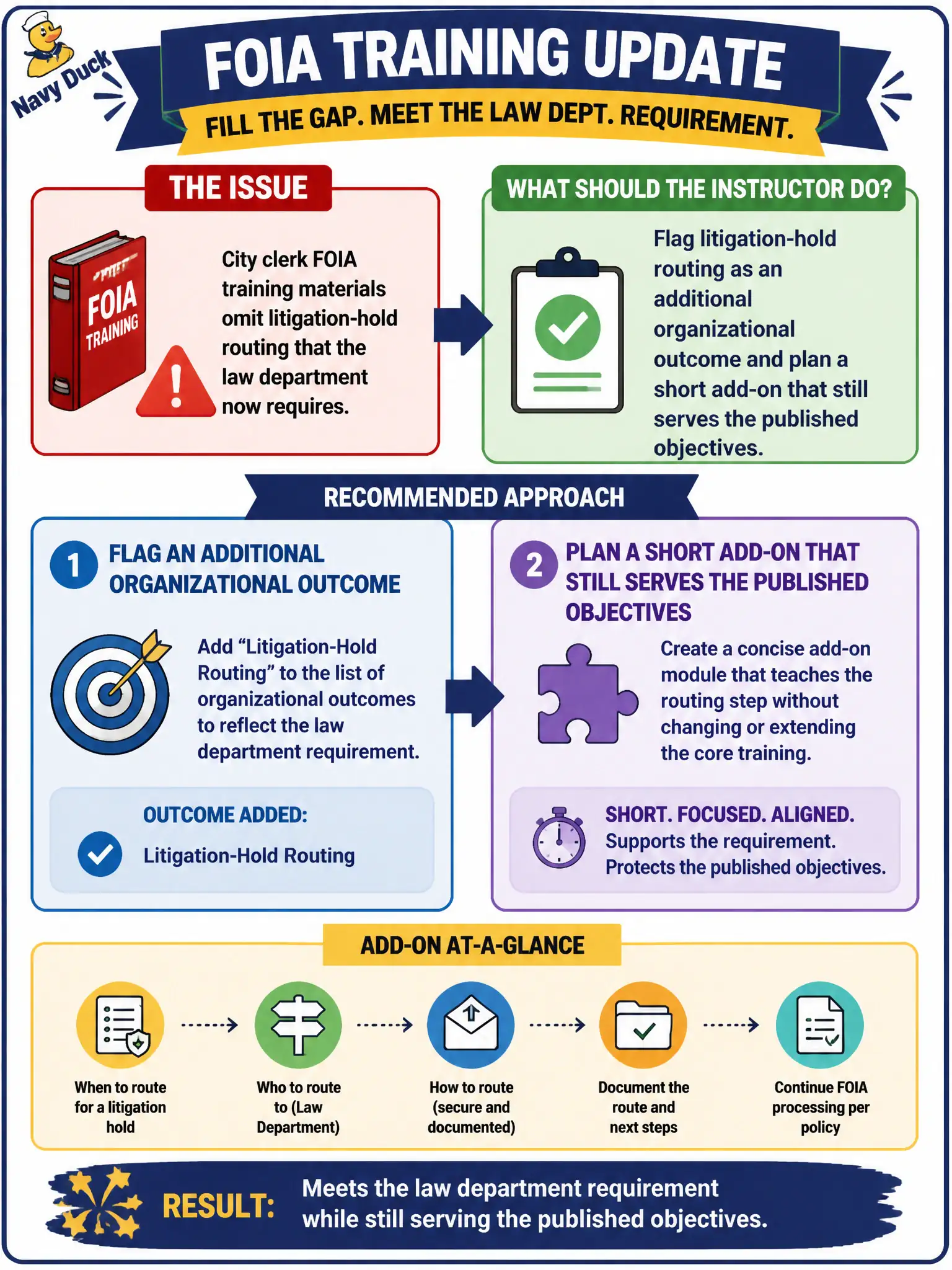
City clerk FOIA training materials omit litigation-hold routing that the law department now requires. What should the instructor do?
Select an answer to reveal the explanation.
Short Explanation
The law department just named an extra outcome, not a reason to torch the FOIA course. Park a short add-on for litigation-hold routing and keep the published objectives. Waiting a year for a new binder is not a plan.
Full Explanation
Litigation-hold routing that city clerk FOIA materials omit, but the law department now requires, is an additional organizational outcome. The instructor should flag it and plan a short add-on that still serves the published FOIA objectives rather than discarding those objectives or refusing the need. Discarding published FOIA objectives to become a litigation seminar compromises design. Telling the law department that missing slides mean the topic is forever out of scope ignores legitimate organizational outcomes. Delaying until the vendor publishes a new edition next year leaves current clerks untrained on a live compliance path. Exam caveat: CTT+ planning accommodates extra organizational outcomes when add-ons preserve core objectives and legality. Operational check: confirm the litigation-hold routing steps with law, design a brief add-on activity, keep published FOIA objectives on the agenda, and document both in the session plan. Litigation holds sit at the intersection of records and counsel; FOIA classes often need a lawful bridge when vendor slides lag policy. A short add-on that preserves published FOIA objectives satisfies both design and compliance. CTT+ frames that as an additional organizational outcome, not a pretext to scrap FOIA fundamentals. Co-author the add-on steps with the law department and keep them on a single job aid clerks can reuse after class.