
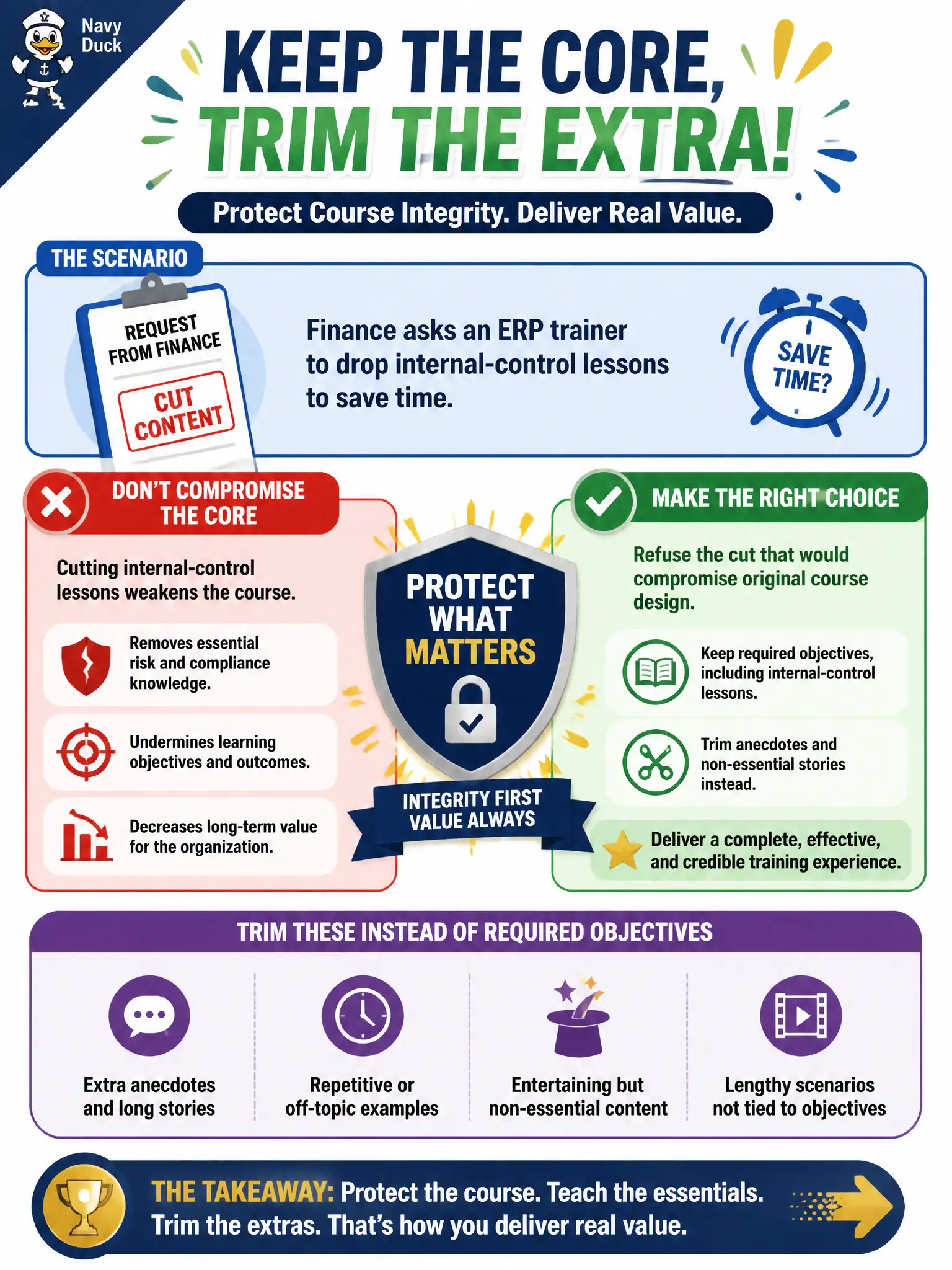
Finance asks an ERP trainer to drop internal-control lessons to save time. What should the instructor do?
Select an answer to reveal the explanation.
Short Explanation
Sponsors can ask to shave time; they cannot ask you to gut required objectives. Cut the war stories, not the internal-control lessons. The original design is the guardrail.
Full Explanation
Instructors protect original course design when sponsors pressure for time cuts that would remove required objectives. If finance asks an ERP trainer to drop internal-control lessons to save time, the correct response is to refuse the cut that would compromise design and trim anecdotes or optional enrichments instead of required objectives. Dropping internal-control objectives because the sponsor “owns the clock” cedes design integrity to schedule pressure and weakens civic financial controls training. Shortening by skipping all practice so lecture can cover every slide preserves slides at the expense of application. Removing internal control from the city’s ERP program charter so the class matches finance’s request rewrites organizational curriculum to avoid a hard conversation. Exam caveat: CTT+ distinguishes negotiable enrichment from non-negotiable designed objectives; time pressure does not authorize silent objective deletion. Operational check: identify which agenda items are required versus optional, propose trimming stories first, and escalate any request to drop internal-control objectives to the curriculum owner in writing. Internal controls in ERP training protect public funds; sponsors sometimes undervalue them when calendars tighten. Refusing to delete required control objectives while trimming anecdotes is the CTT+ integrity move. Document the refused cut and the alternate time savings in an email to the curriculum owner and finance sponsor so the decision trail is clear if pressure returns the morning of class.